In His Own Words: Albert Einstein

Since I’m in Seattle today, this post is short. But with Einstein, short is relative, right? 


For being a scientist, this famous brainiac sure had good things to say about all parts of life. Living from 1879-1955, he received the Nobel Prize and made enormous contributions to science, especially theoretical physics. But I realized, as I began to accumulate quotations by him, that he was also insightful on subjects from politics to imagination. 


Here he is, in his own words. Take a moment to read over these quotations, then think, digest, and weigh in.
·
“The hardest thing to understand in the world is the income tax.”


“Make everything as simple as possible, but not simpler.”


I don’t believe in mathematics.”  


“An empty stomach is not a good political advisor.”


“Imagination is more important than knowledge.” 
(quotations found on brainyquote.com and thinkexist.com)


Which quotation is your favorite? What do you think it means? Let’s discuss!

Thinking Places

Last week my family and I got away for a few days together. We scampered all around Northern California, experiencing new towns and possibly discovering every possible way to become carsick on winding back roads. However, it was refreshing to get some quality time together and a change of scenery. A bit of vacation also proved good for my writing.

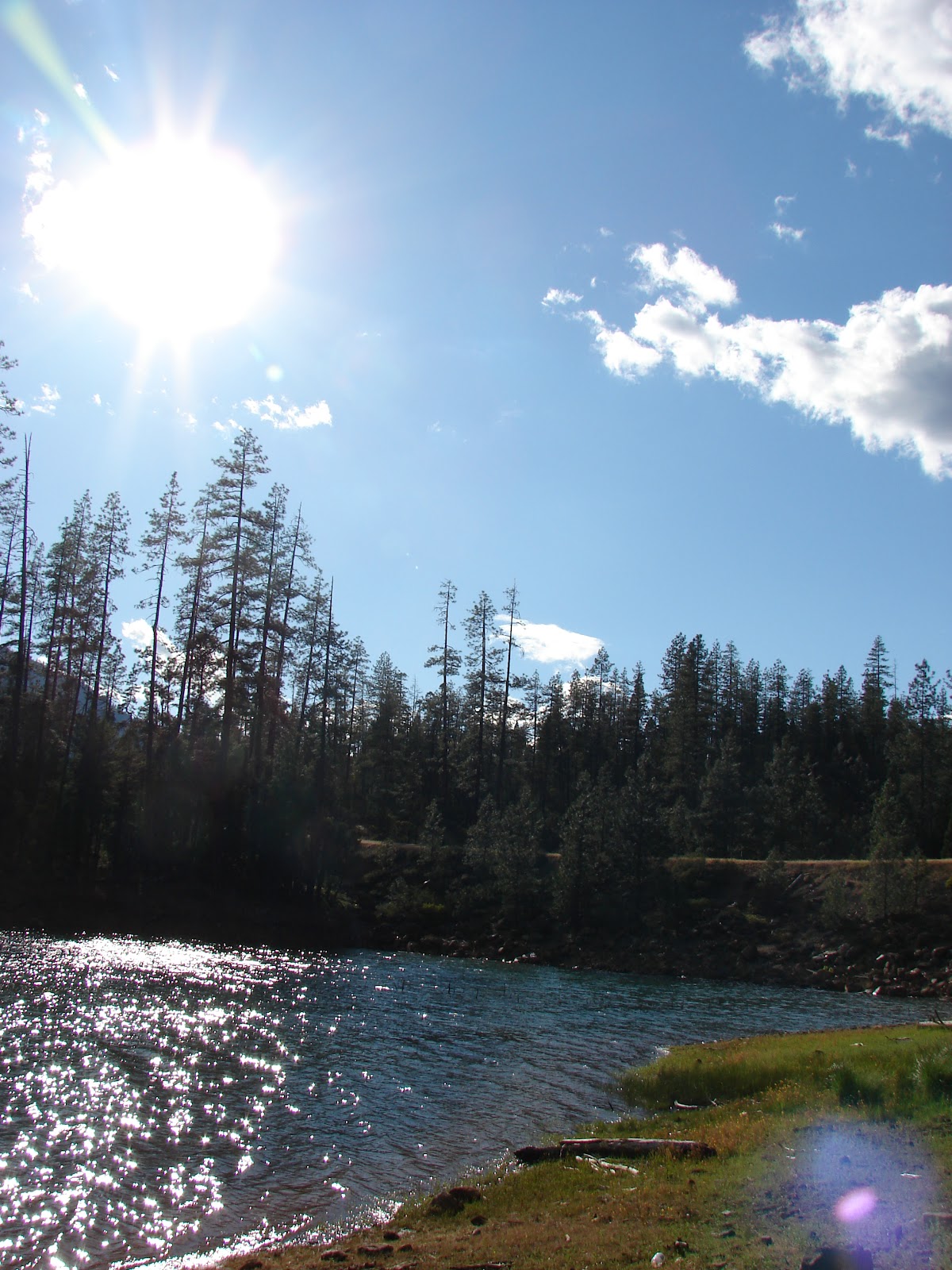
One afternoon my family sat on the shores of a jade-green lake (interestingly named “Trinity Lake”) and sat in silence, each member absorbed in a different creative project. I took the time to soak in the silence, slowing down after nearly a month of nonstop work (and almost no time for my novel). I scribbled out a poem, a first response to the beautiful place and the quiet moment of being still and noticing. It felt like a drink of cold Gatorade after a hard run or hike.

One of our stops was at the charming Blackberry Inn in the coastal town of Mendocino. Caressed by the foggy, temperate marine layer, lush with dozens of varieties of colorful flowers, and deliciously out of range of cell phone service, it was the perfect place to stop and rest and write. Our adorable little room looked like a life-sized dollhouse, complete with a sunny window and a pair of wing-back chairs.

In my home office, the writing time I eke out is often interrupted by the phone ringing, the dryer beeping, new e-mails, the front door. In this quiet room in Mendocino, I was cut off from those interruptions. Sure, there were all my usual mental distractions (read a book! what do I need to do tomorrow? oh look, a seagull!), but in a one-room enclosure with almost no technology, I found it easier to center down and blurt out eleven pages of new novel material, written longhand in a pink journal. It helped to sit at this old-fashioned wooden desk under a painting of a thatch-roofed English cottage. I felt a bit like Jane Austen or one of the Bronte sisters.

What I realized most was that my normal life is full of multitasking. It’s a skill that makes getting multiple mindless things done at the same time possible, but it really kills deep, original thinking. Writing is one way we mortals imitate our Father God, who breathed a world into being ex nihilo, out of nothing. That takes focus. When my attention is on fifty different things, it’s hard to get below surface-level maintenance writing and think of anything new

Creative thought, like a relationship with God, requires some periods of silence, solitude, and centering. (Hot tea, fuzzy socks, and a beautiful view don’t hurt either.) Sometimes it’s important to retreat from routine to create a nurturing environment where creativity can grow. For me, it was a time of peace and releasing the story within. It left me refreshed and a little readier to return to the daily world of multitasking.

Does the world of multitasking ever leave you in need of a retreat? Where do you go to refresh your creative side?

A Splendid Supply of Surprising Sweets

The adventurous and interesting Tami Clayton invited me to play a game of letters (my favorite kind). The rules: reveal 10 of your favorite things that begin with a certain letter of the alphabet.

My letter (in case the post title didn’t give it away): S!

Ready?

Stories: Escape into magical worlds. Power to change the real world. What I want to spend my life writing and reading.

Spices: Cooking has never been so interesting!

Sliding ladders: Ohhh, I want one so much!! Or I could just move into a library that has them.

Shakespeare: The love of my literary life (minus the earring). The genius bard of the Western world. Themes as relevant today as they were in the 16th century. Need I say more?

Sunshine: Just one of the many great reasons to be living in California again!

Scotland: The windswept land of bagpipes and legends, monks and poets, caber tossing and lovely accents–my second-favorite place in the world (after home, of course).

Springtime: My favorite season of the year!

Singing: I like to shatter windows with the high notes. (Actually, I just like imitating Hayley Westenra in the shower, on my church praise team, and when I have the house to myself.)

Sincerity: One of the characteristics I value most in friends (and in literary characters).

Socks: These are not my feet. But I kind of wish they were. My favorite Tinker Bell pair got a hole in them, but I do have a pretty awesome pair of knee-high blue-and-green argyles.

What are your favorite S-things? If you have a blog and want to play the letter game, leave me a comment and I’ll send you a starting letter via Facebook or Twitter!

Confessions from a Home Office

After almost 9 months of chugging away as a freelance writer, editor, and English tutor, I feel that it’s time to share my perspective on working from a home/office…er, home office. It’s often glorified as the ultimate work situation, but it’s certainly not free from challenges. 
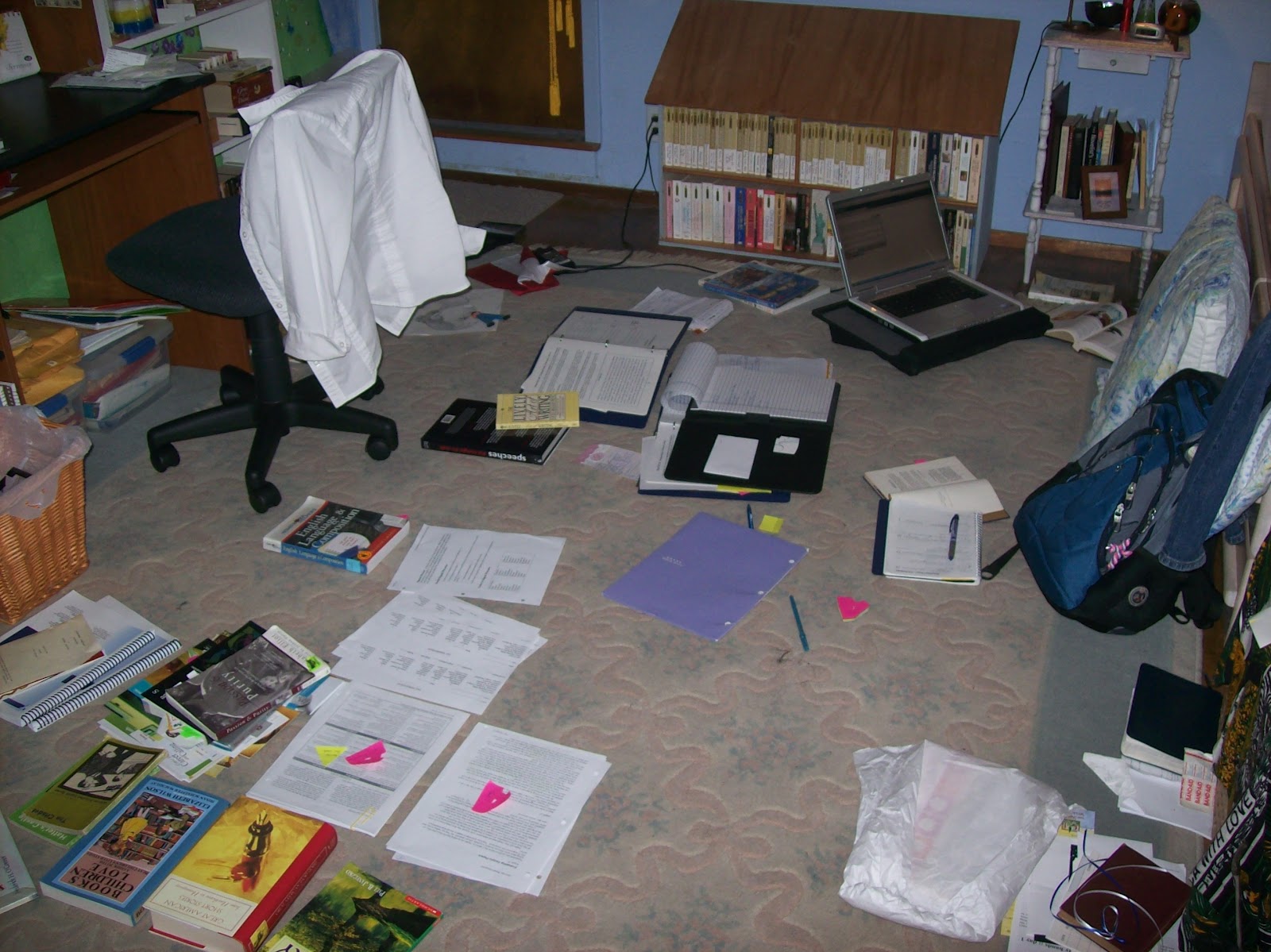
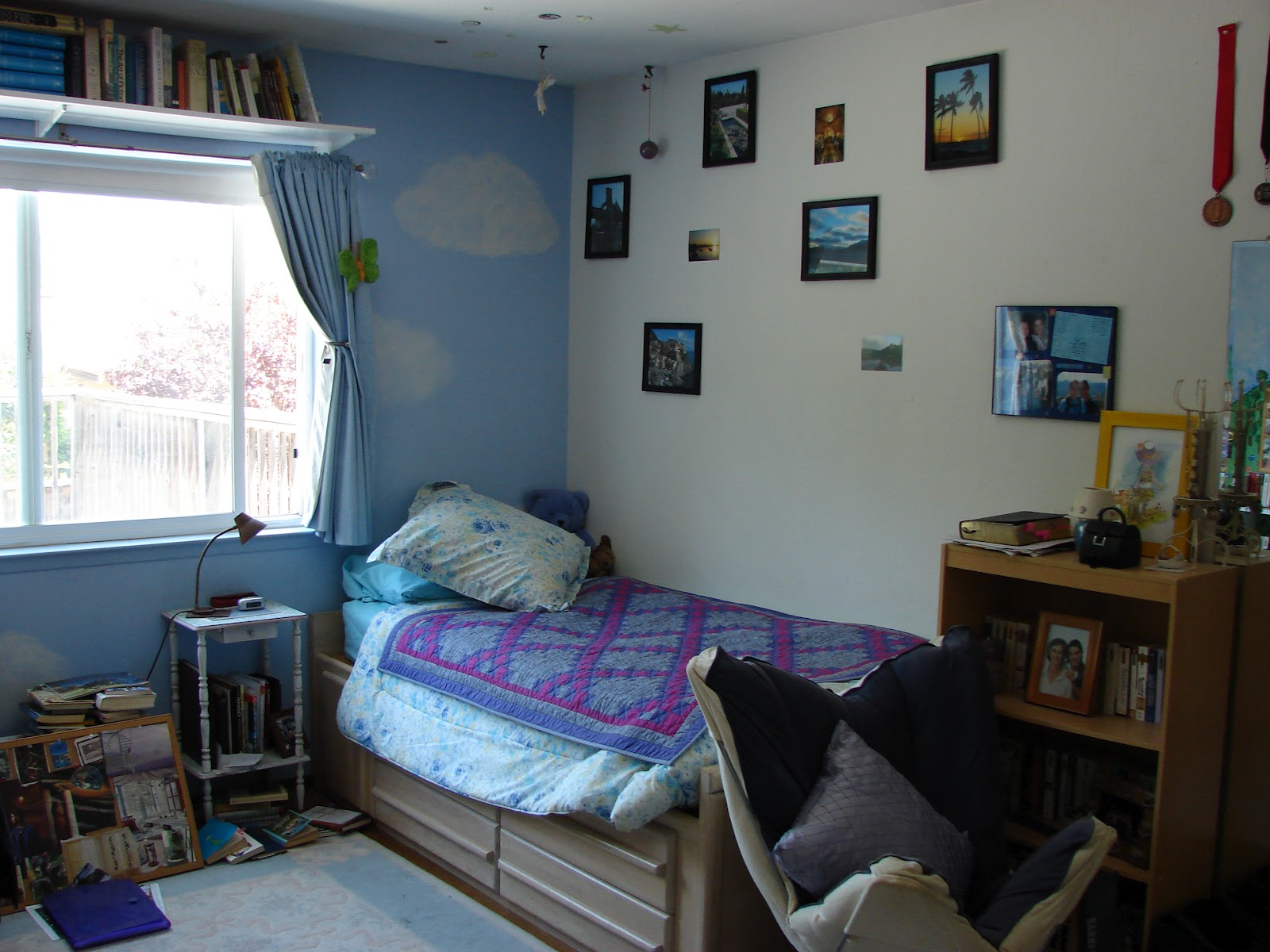
After college, I moved back into the room of my childhood. The challenge was converting it into an office as well. Organizing the same amount of space to serve two purposes was a challenge. At first I just kind of put my work in a blender and watched it explode all over the floor. 
I eventually got a bit more organized, at least space-wise. But organizing time can be harder. I am my own boss, which leaves me accountable only to myself for time management. Sometimes I’m distractable and not productive enough. More often, though, I’m doing five things so efficiently that I multitask myself clean out of productivity. Trying to do too many things can actually keep my thinking so shallow that I’m not productive at anything, especially writing. 
Working from home can be hard to explain to others. Sometimes people think that because I stay at home, I don’t actually work. I promise–I do. But getting respect for that isn’t always easy. It can also be tough to guard my work time. Because I’m within earshot of the phone, the dishwasher, the oven timer, the front door, it’s the easiest thing in the world to get interrupted and distracted. Or to use home chores as procrastination stations. 
My job can be lonely. Sometimes I get to the end of the day overflowing with words because I simply haven’t opened my mouth to talk to a human being all day. My brain gets tired from juggling e-mails, flashback scenes, and semicolon placement, but there are no co-workers to socialize with around the water cooler. I’m learning I have to be proactive and intentional about spending time with people.   

But there are also some undeniable perks to the job. I love that my mornings aren’t dictated by a rush to beat traffic or catch a train. I really enjoy the quiet and calm of my own home atmosphere. It’s pretty nice to be able to grade papers while watching blue jays perch in the backyard birches or redline a manuscript while wearing my fuzzy slippers. And it’s been a special blessing to be available to help care for my grandma these past five months. 

A few days ago I wrote an e-mail to a friend who asked me what it was like to be a freelancer. My response was long. It’s a lot of work, and trust is a constant challenge as I have to keep surrendering my question-mark future into God’s hands. But I also realized that I love my work. I sure don’t feel like that every single morning. But overall, I’m so grateful to have this chance to pursue my God-given passions from a base of nurture and support.  I look back over the last nine months and realize that this time has not been wasted. In spite of the logistical snags, the isolation, the multitasking, the procrastination–I’m moving in the direction of what I was made to do. And that is a great feeling.


One of my goals this summer is getting my children’s novel ready to start the publication process! In the interest of productivity on that, I’m going to be cutting back to blogging once a week for the summer. Don’t let me slack off! The race is on! 

Exhale

OK, it’s time for Theology 101–a la YouTube!
I saw this video (below) on Facebook a few months ago. It’s humorous, but it also expresses the deep and sometimes mind-boggling concept of grace.
I’m a perfectionist (surprised?) As a teenager, I struggled furiously with the idea of God’s grace. Me, a fundamentally flawed person? Good enough only because of Jesus? I wanted to work hard enough, perform well enough, prove to God that I deserved His approval–as if God carried around a cosmic clipboard where I could earn His love if I just got enough check marks. I’d rather not be indebted to that guy Jesus. I’ll do it myself, thank you very much. Sometimes I got the puffed-up feeling I was doing pretty well at God’s game. Other times I was crushed beneath the weight of total inadequacy, failure, and self-loathing.
Maybe it was life experience, maybe tiredness, maybe the spirit of God catching up with my stubborn soul. But there came a day, my shoulders scrunched tight from trying to stand tall enough, when I realized I could exhale. Because Jesus paid it all. I read in Romans 8 that God has no condemnation for those who are in Jesus–that He keeps no cosmic clipboard, no record of check marks or failures. His son’s love is the amazing eraser of “good enough.” And that discovery was the relief of my life.

How have you experienced grace? From God? From other people? 

Snapshots of Cambridge

Two years ago this week, I was in Cambridge, England. As an American college student, watching my British counterparts study, ride their bicycles to class, and play cricket at the park, I almost felt like I was looking in a distorted mirror. But after 9 days of living, walking, and studying in this medieval college town, it almost began to feel like native habitat. I can’t give you a Lonely Planet guidebook description. So I’ll just share a series of snapshots that characterize the journey there. 
Two structures characterize Cambridge: the tall, Gothic spires of the colleges and cathedrals…and the spokes of bicycle wheels. The medieval streets make driving a health hazard, not to mention an insurance nightmare. So everyone bikes. Little baskets and all. Even in skirts. Knowing my world-class klutz skills, I decided to forgo this traditional mode of transportation and let my good ol’ feet carry me….

…to every bookstore in sight. The bookstores in Cambridge are absolutely world-class. There are some fine new shops–Heffer’s and Waterstone’s, not to mention the home office of Cambridge University Press. But better still are the used and antiquarian bookstores. “Old books” in the U.S. reach maybe 50, 60, even 100 years old. But when the Brits say “antiquarian,” they mean it. I found a crumbling copy of The Pilgrim’s Progress from the early 1800s in a discount bin because the spine cover was falling off. The early 1800s! One of these days I’d like to about bookbinding and fix it up. If you’re ever in Cambridge, go check out G. David Booksellers (where I drooled at a two-volume leather-bound set of Samuel Johnson’s Dictionary that cost 2500 pounds) and The Haunted Bookshop (absolutely dripping charm, with a head-bumping spiral staircase!) 

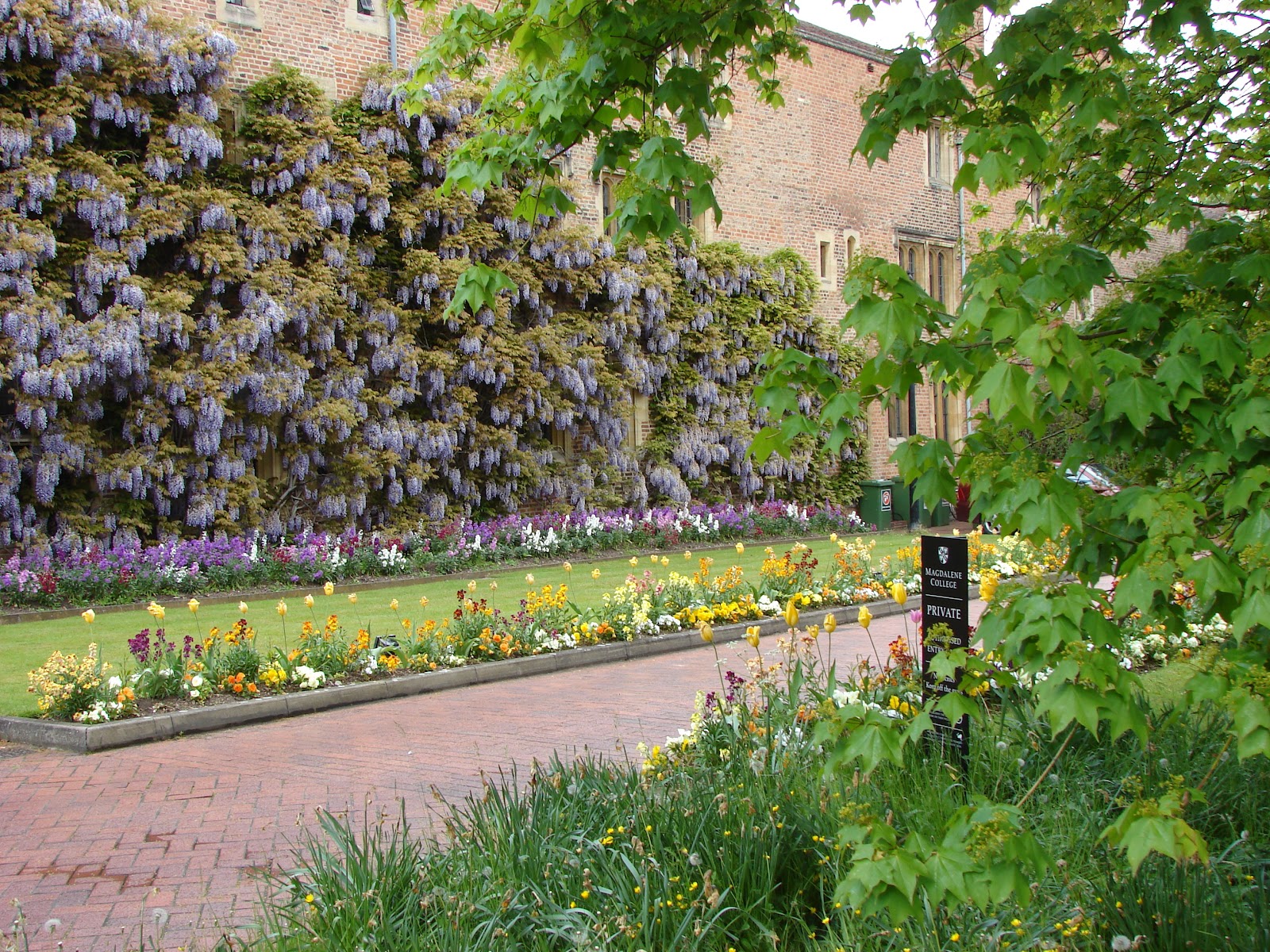
The May flowers in Cambridge are also jaw-dropping. Many of them I had no names for, but I did recognize fields of many-colored tulips and walls covered with wisteria, like this one. 

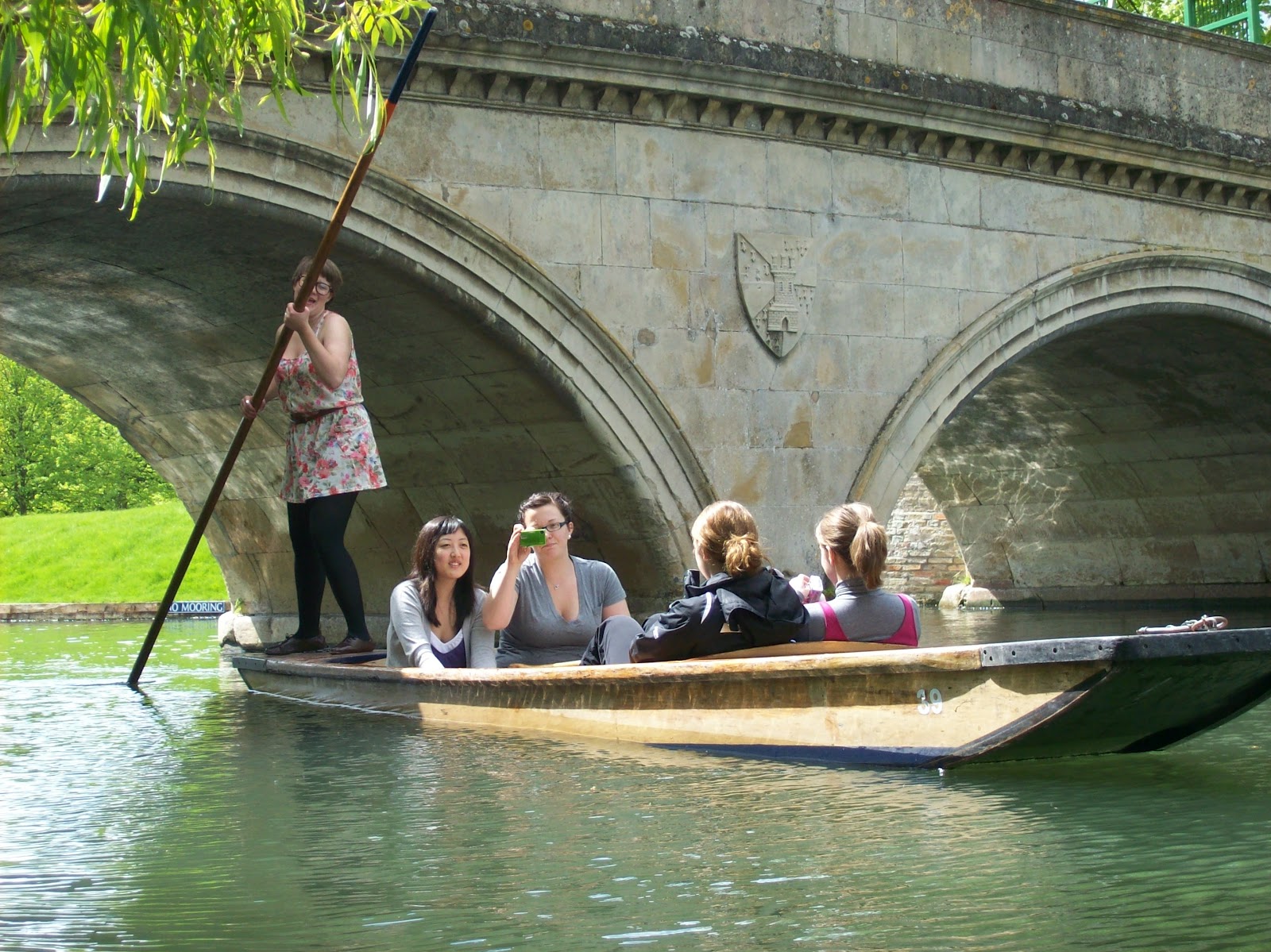
When the Cambridge boys aren’t riding their bicycles to class, they make a little extra pocket money by punting: pushing tourists down the shallow river using flat-bottomed boats and ten-foot poles. They expertly steer their passengers down the river, pointing out all the sights along the way. Our group decided to be economical and do the punting ourselves. Our group was also 90% female. I gave tried punting for about 10 minutes before almost falling in and calling it quits. Those poles are a lot heavier than they look!  
Possibly the funniest moment in Cambridge: a mother duck and her brood of ducklings decided to cross the street, plunging headlong into traffic. Shopkeepers and pedestrians from both sides of the road darted after them, stopping traffic to “make way for ducklings.” It was rather adorable: a whole street of cars and people frozen in motion as a little family of ducks waddled across the road.

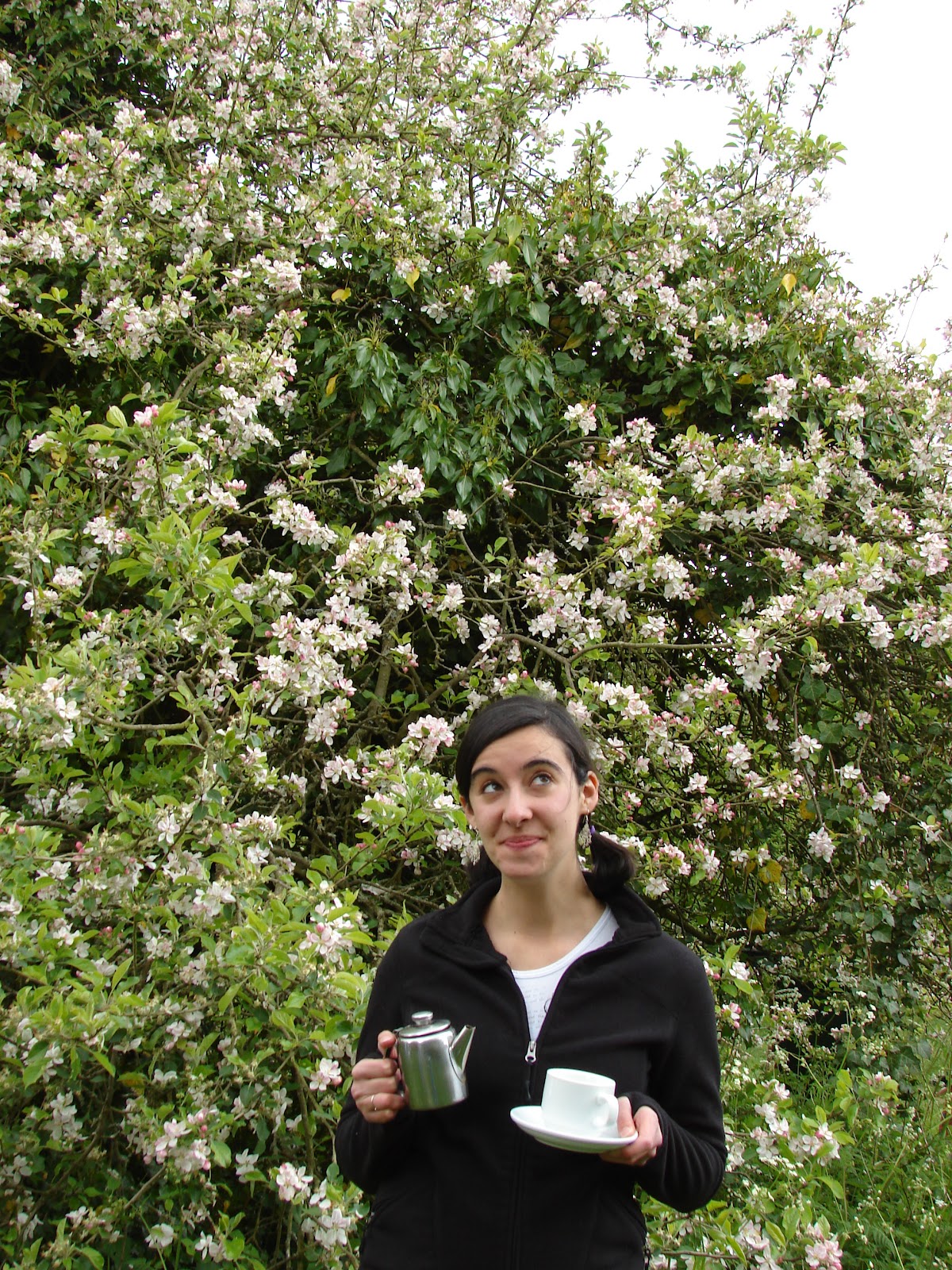
Most fabulous teatime: The Orchard. About three miles (on foot) outside of Cambridge, we sipped Lady Grey tea and nibbled scones and clotted cream at outdoor picnic tables under trees frosted with apple blossoms. The sun even decided to grace us with her presence for part of the afternoon. Sweaters came off; some of our group closed their eyes and tanned; some opened books of poetry; some blew streams of bubbles from plastic wands into the air.  

And last, but not least, the King’s College Chapel choir. We attended services at King’s one Sunday morning under the grand fan ceiling, sitting on carved wooden benches with a Rubens painting at the far end of the nave. And then the boys’ choir began to sing. If I hadn’t been looking right at them, I would have sworn it was an adult choir including both men and women. But listen to them! Surrounded by candles in that vast Gothic space, they sound like a choir of angels.

This concludes Episode Three of our Armchair Travel Guide to Britain. Have you been to Cambridge? England? Did you have experiences that you positively have to share? 

Dance Like No One’s Watching

OK, it’s time for a happier post on here.
Start by watching this video. Trust me, the rest of this post won’t make sense without it. It’s got over 40 million views.
Matt is a guy (from Seattle, actually) who only knows one dance. It’s a dorky dance. But, not caring what other people thought, he first did it in front of a camera in Asia. He put it up on YouTube, and before long his video was so popular that Stride Gum sponsored him to do it again–to travel the world and dance. 
What I like about this video is that it’s a guy doing his dance–his dorky dance, the only dance he knows–wherever he goes, no matter who’s watching, no matter if anybody’s doing it with him. He starts out doing it alone. He dances in marketplaces where everyone’s looking at him funny and on empty beaches full of crabs. He dances in the rain, on a sand dune, on cliff ledges. But he doesn’t stop dancing. 
People are attracted to that courageous spirit–the choice to “dance like no one’s watching.” In the video, people flock to him. And then they start to imitate him. The single dancer is joined by a handful, then by a crowd, then by an entire flash mob. Every person gives it their own spin–Polish teenagers doing disco, kids from the Solomon Islands jumping around–but the original dancer’s dauntless drive, his cheerfulness and confidence, is contagious all around the world. 

I don’t know what it is you do to bless the world around you. It might be the thing you do for a living; it might not. It might just be your unique personality, your attitude. Whether you fix computers, write books, balance accounts, listen to hurting friends, jump rope with kids, or just face your day with a smile, keep doing it. God made you as you are, so being yourself is your best gift to share with the world. Dare to do your own dance, no matter how dorky or insignificant it feels, no matter who’s watching, no matter if anyone at all is watching. That attitude is brave, and it’s contagious. You never know whose life you are touching. 

Fingerprints of God

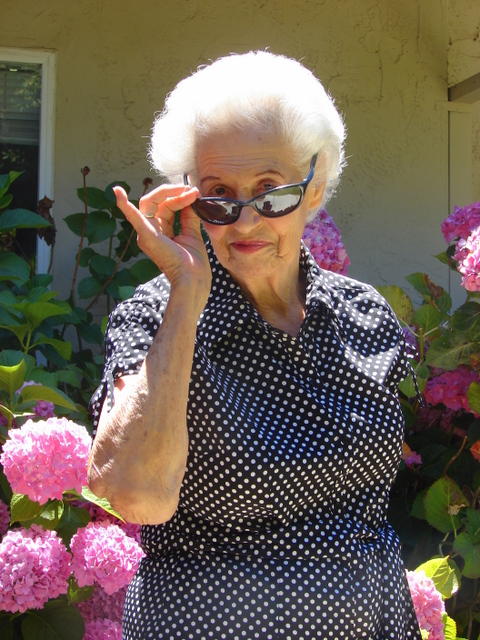
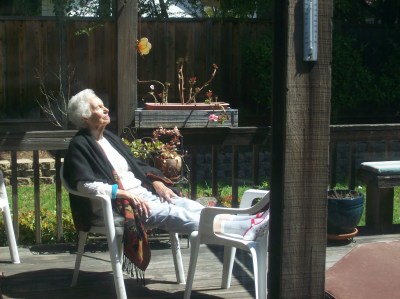
This is my Grammy. She will be 90 in three months. She has cancer. After she was released from the hospital with this diagnosis, she moved in with my family in early December.

It was 5 years ago when she sat for this photo, the summer of 2007. She was also living with us then, but things were different. Then, she was in transition to a nearby retirement community.  She laughed often, had a Rodgers and Hammerstein song for everything we said, and took fastidious care of her makeup. Always an artist, she clipped pictures of interesting faces from the newspaper and used glitter pens to make and sell handmade cards. For my birthdays, I could count on gold ink on the inside of the card as well as the outside, bold loops in her confident calligraphy: Much love and luck. Grammy M. After she moved into her own place, I couldn’t stop by without being metaphorically lassoed and force-fed: I remember a day when she asked me at least 15 times if I wanted a sandwich. Her easel always in the corner, her walls were practically papered with photographs of her family: four children, their spouses, nine grandchildren, two great-grandchildren. It was easier to talk then. We talked about reading: biographies, mysteries, classics, the latest article in Time or Newsweek, interviews with the actresses of The Help. We swapped cooking tips and recipes, and I accompanied her to dinner in her retirement community a few times, enjoying conversation with some lively ladies who had experienced much of life.

A lot has changed in the last 5 years—really, in the last 5 months we’ve been caring for her. Now she spends her days in her recliner or in the backyard, watching squirrels or observing that all the trees are on the other side of the fence. Her routine is limited, but strict: eat Cream of Wheat and drink coffee, bathe with the help of a Hospice health aide, sit in the sun, nap, read, watch Jeopardy and Dancing with the Stars. Actions like climbing four stairs or pushing a chair into place sap her energy. Her physical limitations are growing but understandable; it’s harder for me to cope with the sunset of her mind. She asks to eat whatever she sees me eating and becomes fixated on issues that appear in commercials. A fog seems to be moving over her, limiting the scope of her vision, shrinking our range of conversation topics until often it’s just silence or us reading side by side at lunchtime.
It’s hard to love the helpless. It’s hard when the relationship becomes one-way. Much of the time now, Grammy can only absorb, not give back. I get tired and frustrated, and sometimes I catch myself writing her off, treating her as a burden rather than a person with dignity and value.

But when I find myself there, I’m basically saying that personhood is dependent on utility. Isn’t that often how we view people? We prefer the young, the beautiful, the intelligent, the rich, the witty, to those who don’t “contribute” as much to society. We’d rather discard them than care for them. It makes me think me of the young adult book The Giver, in which the helpless are simply disposed of—the elderly, the weak, the sick, the deformed, the disabled. Their worth is measured based on their abilities.

But even as I scrape another morning’s gloppy Cream of Wheat leftovers into the garbage can or have another conversation about squirrels, I have to realize that personhood is not dependent on abilities. It’s a stamp on all human beings: intrinsic, irreducible, universal. It was there from the beginning, when God said, “Let us make man in our image, in our likeness” (Gen. 1:26). Every person bears the image of God. Whether they can get up from a recliner or dress themselves or hold a lucid conversation is irrelevant to that. And thank God! Because one day, if I’m given the chance to grow old, even if I can’t walk, can’t hear, and can’t remember their names, I want my grandchildren to treat me with the respect and love that belongs to a fellow image-bearer.

My Grammy was young once; she drove a car and did Tai Chi; she was an artist who moved to Mexico and learned Spanish from scratch; she went through 8 pregnancies, lived in 4 states and 2 countries, and loved to dance. But even if she hadn’t done all those things, she would still be a person of infinite worth because she is fashioned and designed uniquely by God. So is every person: the homeless, children, the uneducated, the unborn, the comatose, the disabled. All are valuable and worth loving, covered with the fingerprints of God. And how we treat them, regardless of their utility, is the litmus test of our faith.  

And so I pray for love and for patience with my Grammy. I don’t always show her the kindness I want to. But even when she can’t do the things she used to be able to do, even when we just read side by side or settle in for another night of Jeopardy, she is a one-of-a-kind, irreplaceable child of God, never before seen and never to be seen again. And that makes her more than worthy of my love and respect.

How do you love the helpless? What image-bearers in your life deserve your love and respect? 

Poetry with Feet

With the weather back to spring temperatures here in California and more rain predicted for this week, I found a poem I wrote about a month ago. This was about the time I started taking walks every morning. I’ve found that a walk in the morning, even if it’s only fifteen minutes, gives me a chance to take care of myself holistically, focus my thoughts for the day, and get ready to write.

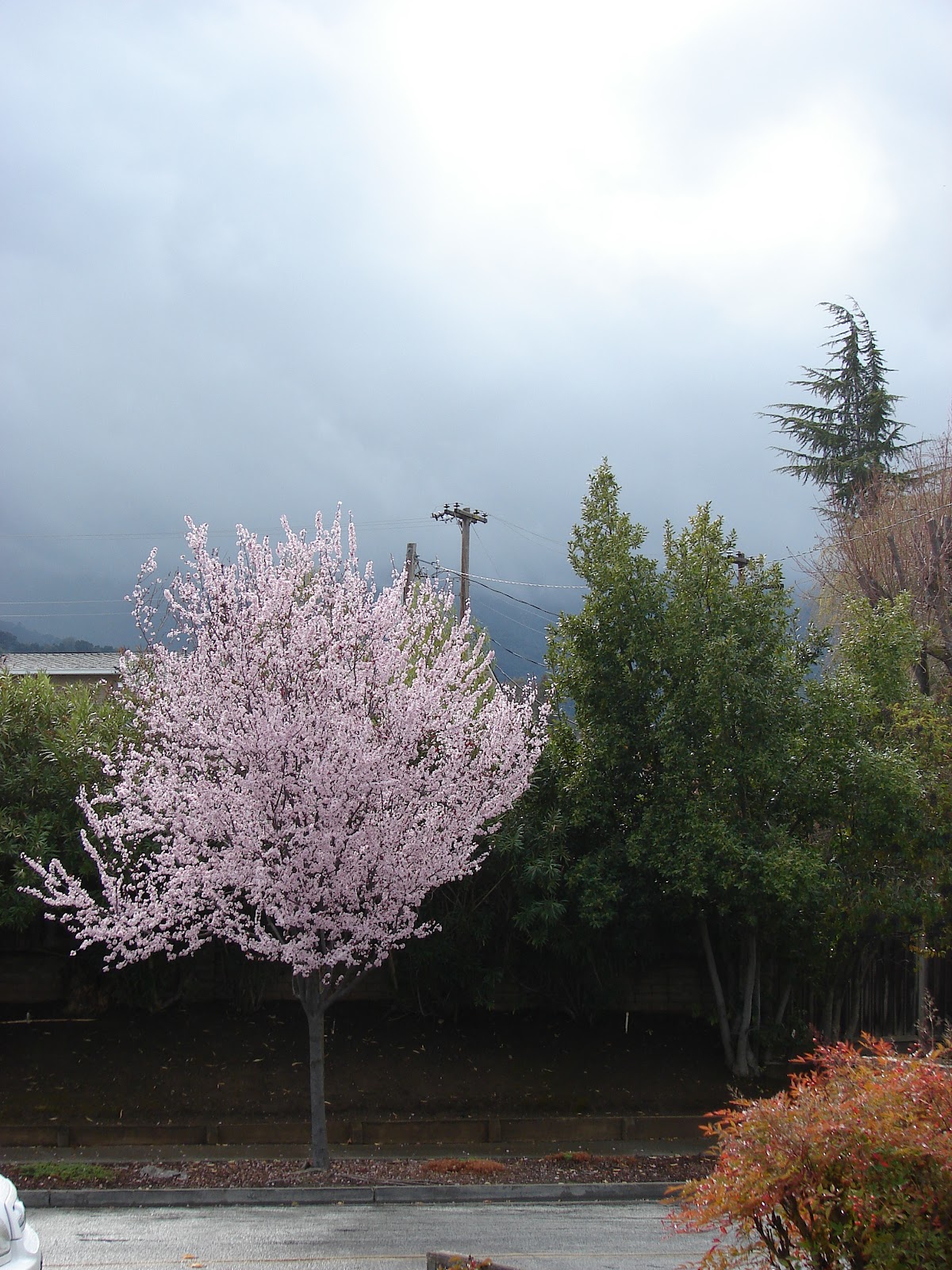
Morning walks are especially fun on those days when rain is blustering on the horizon, like a little boy full of energy, but it hasn’t quite come into itself yet. The air is full of wind and electricity, and in spring, all the flower scents blow everywhere and the green comes out to shine. On one of those days, I went for a long walk, wearing my rain jacket but only occasionally needing it. A poem started to form in my head (and of course I forgot my Moleskine at home) but I repeated it out loud to myself, tinkering with the sounds of the words until the neighbors probably thought I was crazy, to keep it fresh until I got home.

And now I’m going to get brave and share it with you: the first poem I’ve put up on this blog.

Nomad

I walk shadowless under a sunless sky.

Sun’s brightness swallowed in

filmy grey envelopes,

 distant hills erased,

painted out in white.

I am rainchased,

windswept,

a petal blown on a gust,

a wave whipped across a pond.

I drink in the smell of sweet freesias

and sharp spicy rosemary,

I caress fragile budding leaves,

I see silver shreds flapping in the wind.

I walk under rain, but I am not wet;

I wander abroad, but I am not lost.

What interesting thoughts have come to you while walking? 

The Great Potato Revolution

Well, you asked for it…another installment in my Britain story. This one’s going to have to be abbreviated, as time is short this weekend, but today we’re traveling to Dingle (An Daingean), in County Kerry, Ireland!

Two years ago yesterday, I was in a grocery store. My study abroad group of about twenty-five students was staying in a “self-catering” youth hostel–which means basically that beds, showers, and pots and pans are provided for you; the rest is do-it-yourself. Like a bed and breakfast, minus the breakfast. Hence, the grocery store.

By this time, we’d been in the British Isles for three weeks. One food group had grown very old: potatoes. Yes, the Brits think that potatoes are a food group (no offense to my British friends :)). I have nothing against potatoes, but seriously, everything included them. Everything. In a hostel in northern England, the menu one night consisted of shepherd’s pie (mushy peas and beef topped with mashed potatoes), with a side of–what else? Jacket (baked) potatoes!  

At any rate, three weeks in, with a grocery store at our fingertips, we college students wanted some potato-free fare. We were going to split into groups and take turns making dinner for everyone. As a Spanish-speaking Californian, I suggested Mexican food. Nice break, right?

Except that the SuperValu store had still other ideas about types of food groups. Items plentifully stocked: brown soda bread, canned baked beans, granola bars called “Elevenses.” Items not stocked: tortilla chips, black beans, sour cream, guacamole. Salsa existed, but was priced at an arm, a leg, and a sack of pirate gold. Hm.

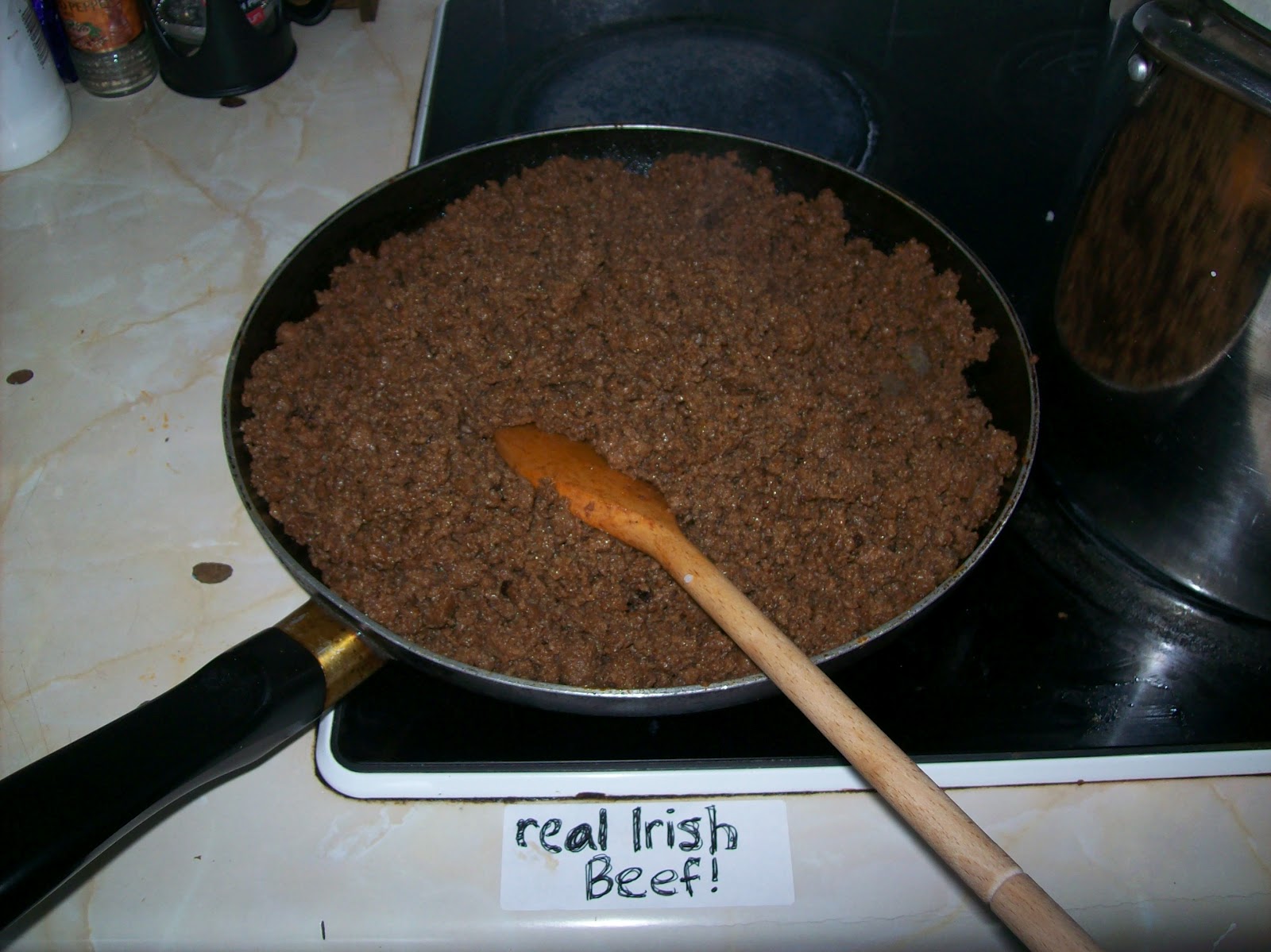
Potatoes were not an option. Potatoes were never an option. So we compromised. Bought Irish soda bread and saved it for sandwiches (best bread ever). Skipped the chips and salsa/guacamole. Discovered that Irish beef tastes pretty Mexican when mixed with taco seasoning and stacked on tortillas under lots of cheese. But the best part was cooking together with friends, the spicy, familiar smells rising around us, in a sunny kitchen on the other side of the world.

And no potatoes.