10 Reasons to be Thankful for Post-Grad Life

This week was the 4-month anniversary of my graduation from college. While this new season has brought a lot of transition and uncertainty, I have also had numerous inspirations to celebrate this phase of life (students everywhere, take heart!) 
When I’m loving life, being thankful is easy, but the practice also helps dissipate melancholy when I’m not. So, because I need to remember, and because students everywhere need a reason to believe there’s life beyond midterms, here’s a chronicle of some things that have made these last 4 months good. 

Family

Sunshine and sand beaches
Time to read books I choose

Time to cook 
Time to write
Time to play
Time to stop and smell the flowers (occasionally)
Friends who are also family in Christ
That being old and graduated doesn’t mean I stop having adventures
And that the end of school doesn’t have to be the end of being a nerd.

Whatever your stage of life, what are you thankful for today?

Living with Bifocals

Those of you who spend time with me in person have probably heard too much of this analogy, but I like this one. I keep thinking that living life is like wearing bifocals.
Bifocals give you the ability to see at two distances. When you’re driving, they allow you to both scan the road and check your speedometer. When you’re speaking, they help you see both the notes in front of you and the audience you’re there to address. Things that are right under your nose and things that are more distant.
What brought this up is my job search. I’ve known I wanted to be a writer since I was fourteen, when I started composing my first novel by hand in a purple journal. When you’re fourteen, it’s easy to follow the advice “dream big!” because you live in a state of sweet ignorance about things like bills and taxes and insurance. My plans were purely long-term and big-picture.
In college, though, the message changed. Be realistic. Get a job. Interviews. Resumes. Monster.com. There are things called rent and health insurance and groceries that actually cost money. Ack! My focus shifted to the immediate needs of a self-supporting adult.
After graduating, I was blessed enough to be able to move back in with my mom, relieving the immediate pressure of bills while I searched for work, although I still felt the tension of long-term versus short-term concerns. It was the headache in every decision I made. I was presented with a full-time teaching job, some technical writing opportunities, and the opportunity to be a private English tutor, among others. Status symbols and material luxury aren’t important to me, but becoming financially independent and “proving” that I’m not going to be the 30-year-old bum in my mom’s basement are.
For me, the temptation to grab at instant security was almost overwhelming—is almost overwhelming, daily. Teaching full-time would pay my bills and then some. I could move out, get my own apartment right now. Tempting. But spending all my time on that would leave none for writing. Moving out immediately isn’t worth that sacrifice.
How do I not lose sight of the dream, the long-term goals, while still providing for my immediate needs? Do I have to choose between them? Is there a way to do both?
Here’s where the bifocals analogy comes in. Focusing only on the now would preclude following God’s will for my life and take away my sense of long-term purpose. But focusing only on the dream in the distance might make me the bum in my mom’s basement.
So I said yes to tutoring. I started working with my students this week. They’re a lot of fun, each one different. Yes, it is a time investment, especially now as I scramble to understand lesson plans, curriculum, and educational philosophy, but I think that will level out with time. Other than that, it takes care of my immediate bills and also leaves some time for writing, which is where I want to be in 20 years (though hopefully less J). It’s a bifocal job.
In Matthew 6, Jesus weighs the near-far tension like this: “So do not worry, saying ‘What shall we eat?’ or ‘What shall we drink?’ or ‘What shall we wear?’ For the pagans run after all these things, and your heavenly Father knows that you need them. But seek first his kingdom and his righteousness, and all these things will be added to you as well.”
I read this to mean: don’t run after temporary things—don’t cop out on the dream of being a writer for the security of an immediate teaching job. This doesn’t mean ignoring the necessity of immediate things—even God knows we need them. Just put him first. First. Put the farsighted bifocal on top. He’ll take care of the rest. 

Why Busy People Need Poetry

This has been one of the busiest weeks I’ve had since finishing college. I’ve gone from Zero to Teacher in five days, taking on three private tutoring jobs in writing and literature. While these are things I absolutely love, the switch from studying English to teaching it is a big one. It’s been a week-long crash course in educational methods and curriculum planning. This is what my floor looks like at the moment.

In the midst of these hectic times, I would not survive without a few moments of peace and quiet–green pastures and quiet waters, so to speak. One of those is a little blue book given me by a dear friend for graduation. It is entitled “One Hundred and One Famous Poems” and was published in 1929. I read one or two every night before bed, relaxing in the measured and meaningful words of Longfellow and Emerson.

Surprisingly, though, what jumped out at me this week was the preface, by editor Roy J. Cook. It contains a succinct reminder of why people living in a fast-paced world need poetry. I here reproduce it.

This is the age of science, of steel–of speed and the cement road. The age of hard faces and hard highways. Science and steel demand the medium of prose. Speed requires only the look-the gesture. What need, then, for poetry?


Great need!


There are souls, in these noise-tired times, that turn aside into unfrequented lanes, where the deep woods have harbored the fragrances of many a blossoming season. Here the light, filtering through perfect forms, arranges itself in lovely patterns for those who perceive beauty.


It is the purpose of this little volume to enrich, ennoble, encourage.

 If Mr. Cook said this of the world of 1929, I can’t imagine what he’d think of 2011–or of the state of my floor. Yet I found his words true. This week, I understood what “noise-tired times” meant.

Poetry has been my pocket-sized chance to escape into the woods and remember beauty.

On Love Triangles, Marionettes, and Integers

For over a year, one of my dearest friends has been on my case to read the classic Cyrano de Bergerac. Last week, I finally did. Apologies to my family for the late-night laughter coming from my room. Rarely have I been so entertained or moved by 218 pages of humor, sorrow, swashbuckling, poetry, and romance.
The play was written by Edmond Rostand in 1897. The title character was based on the true Hercule-Savinien de Cyrano de Bergerac, a 17th-century Renaissance man who, according to the Encyclopedia Britannica, not only fought over 1000 duels, but also wrote comedies, satires, and even two science fiction novels.
Cyrano is a story of a (lopsided) love triangle: one woman, two men, and a nose. 
Cyrano de Bergerac is a brilliant French cadet with an enormous nose and an even bigger heart. He loves the beautiful Roxane, but she is in love with Christian, a cadet with a handsome face, but no gift for words. Cyrano lends Christian his eloquence to help him woo Roxane, displaying the strength of his character and the depth of his love. In some ways, it is a Beauty and the Beast story, reminding us that true beauty is found within.
Many of us live as slaves to appearance. I am often paralyzed by the fear of what other people think of me, allowing their opinions, tastes, and expectations (real or imagined) to steer me like an autopilot. If I don’t make conscious resistance, I dance like a marionette on their strings. But Cyrano doesn’t.
Accustomed to ridicule because of his nose, Cyrano ignores people’s censure or praise as the guide of his actions. He holds fast to his own compass, doing what he knows to be right regardless of what other people think. When his friend Le Bret urges him to compromise for the sake of a little fortune and glory, he retorts,  
“But what would I have to do? Cover myself with the protection of some powerful patron? Imitate the ivy that licks the bark of a tall tree while entwining itself around its trunk, and make my way upward by guile…No, thank you…I may not rise very high, but I’ll climb alone!” (II.VIII).
The best word I can find for this character trait is integrity. The word comes from the Latin integer, meaning whole. Cyrano is a solid and undivided person because he does not compromise. He does not sell pieces of himself in the marketplace of approval. No one else pulls his strings. When a nobleman criticizes his appearance, Cyrano responds:
“I don’t dress like a fop, it’s true, but my moral grooming is impeccable…I may not cut a stylish figure, but I hold my soul erect” (I.IV).
Others may shun Cyrano like a social leper, but he is able to recognize and respect himself. He knows who he is. He suggests that because of his integrity, God will know him too.

“When I go to meet God this evening, and doff my hat before the holy gates, my salute will sweep the blue threshold of heaven, because I’ll still have one thing intact, without a stain…” (V.VI).
I find that inner wholeness, regardless of outward appearance, very winsome. Beauty and the Beast stories like this one remind me that God finds such substance winsome as well: “Man looks at the outward appearance, but the Lord looks at the heart” (I Samuel 16:7).
May we follow after the man with the long nose, resisting the pull of the autopilot to pursue wholeness. 
Have thoughts on integrity? What’s your take on Cyrano de Bergerac? I’d love to hear from you!

What are you waiting for?

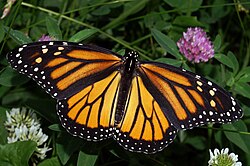
Last Sunday as I was running out the door to church, almost forgetting my shoes in the process, I paused to watch something happening through the kitchen window. A bright-orange, brand-new butterfly was perched on a branch in the sunshine. It sat perfectly still, only occasionally adjusting the position of its wings toward the sun.
I remembered raising a box kit of monarch butterflies when I was in third grade. My brother and I fed the caterpillars leaves, watched them spin chrysalides, and waited impatiently until they emerged as beautiful winged creatures. I remember observing then that butterflies can’t fly immediately after bursting out of the chrysalis. Their wings are still curled up tightly. If they try to fly right away, they fall. First they have to sit and stretch for a while, letting their wings unfurl and absorb sunlight before they can take off. Their first job is to be still.
I’m not very good at being still. I’m goal-oriented and task-oriented; I want to move, act, write, and then quantify my progress with a spreadsheet of results. But sometimes, even when I’ve worked hard, life stalls in the starting gate. For me, sometimes that’s a blog post that won’t come out right. Sometimes it’s the address that still matches my mom’s, the still-anemic bank account, another lonely Valentine’s Day, an economy that doesn’t look kindly on English majors, or a novel that still looks like raw meat. You know the feeling? God, am I going anywhere? When is my life going to start? It’s like drifting in a ship at sea with no wind to fill your sails. Sailors call it the doldrums.
That’s when I hear Him whisper: Be still and know that I am God.
When my life is zooming along busily, He often gets lost in a shuffle of papers. Sometimes He has to put my life on hold to make me stop. Breathe. Remember Him. Knowing Him is the best thing in life. A job, an apartment of my own—those are things I want, but they can wait. When my pursuit of them gets in the way of my pursuit of Him, sometimes He has to tell the wind and the waves, “Peace! Be still!”
Maybe waiting is actually a form of action when I’m waiting upon the Lord. It’s not the same as twiddling my thumbs for the wind to pick up. Times of stillness can be times of growth, opportunities to know Him better, necessary for my wings to unfurl in the light of His presence. Be still and know that I am God. There will come a time for flying, but right now my labor is to wait upon Him.
I choose today to be still, in echo of the words of the prophet Isaiah: I will wait for the Lord…I will put my trust in Him.

Image credit: HaarFager at en.wikipedia 

Illuminations

Why am I starting a blog?
Well, there are the pragmatic reasons of wanting to build a portfolio (almost required for someone seeking writing/editing work, especially freelance) and wanting to keep my writing muscles in shape in a forum that doesn’t print rejection letters.
Besides those, I guess the reason I write anything to publish, rather than just journaling privately, is because I’ve been given a candle to carry, a gift of words to share. I didn’t earn it or ask for it. I’ve worked to hone it, but the gift came from God, as did the responsibility to use it, rather than hide it under a bowl.
It’s scary for me to share my work, because it puts my deepest thoughts and feelings, my very self, up for criticism, which stings bitterly. But really, it’s not supposed to be about me.
Yesterday I was reading an illustration in Soren Kierkegaard’s Purity Of Heart Is To Will One Thing, about a woman who stitches a decorative altar cloth. She puts great care into her sewing, but is “deeply distressed if someone should make the mistake of looking at her art, instead of at the meaning of the cloth.”
Like that woman, I want my work to be a window, not a mirror. My writing shouldn’t draw attention to itself, reflecting your gaze back to me, like a mirror. I want it to be a window: sometimes it is smudged, cracked, fogged, or streaked with condensation, but if it is sometimes transparent enough that you can catch even glimpses of distant illuminations through it, I will have succeeded.
I hope that my words and thoughts—surprises gleaned from writing, reading, cooking, praying, hiking, doing laundry—will somehow be of help or hope to you in your daily walk.