Magical Literary Destinations

Why, hello!

It is Monday, and yes, I am posting.

One of my goals for the month of March is to blog not once, but twice a week! Monday posts will feature short, fun tidbits to be found around the internet (blog recommendations, photos, videos, etc.), for just a moment of inspiration, thought provocation, discussion, or a good laugh. Fridays will continue to be the article-style reflections to which you’ve become accustomed around here. I hope you’ll feel free to comment on those, too–even if it’s to play devil’s advocate or argue the other side!

Today I would like to send the bibliophile in you on a trip to the 20 most beautiful bookstores in the world (click on the link to see the article).

This article gave me a terrible, wonderful case of the sighs and almost made me start hunting for international plane tickets.

As long as there are magical places like these, I don’t think e-books will ever entirely dominate the world. 

Do you? 

Gladiators in the 21st Century

Last weekend I watched the movie Gladiator for the millionth time.

I love watching Russell Crowe’s portrayal of a soldier (Maximus) driven to heroism by love of–and grief for–his family, and intense motives of revenge, anger, friendship, and brotherhood fan the story to a white heat. The screenwriting is amazing: What we do in life echoes in eternity. Chills. The depth of the characters and the complexity of their relationships keeps me watching, even though I have a notoriously weak stomach for blood and guts.

As I watched the movie this time, though, what struck me most was not the violence of the gladiator fights (though they are intense) but the enthusiasm of the crowd who watches them. The unpopular Emperor Commodus tries to mollify the Roman mob with free food and gladiator fights. And it works! The people crowd into the Colosseum to cheer and boo the men in the sand who are fighting viciously to come out alive. Maximus must use the same ferocity he employed in the Roman army to overcome his opponents, but now it is not for the empire or for duty or glory: it is for entertainment. Ordinary citizens, all the way down to the children, sit in the stands and laugh as the gladiators struggle and bleed, kill and die.

What kind of bestiality does it take to be entertained by such horrific violence between real people? To laugh and applaud while our own kind torture and kill each other? It must be a sort of moral cannibalism. Or perhaps it is the sick pleasure of saying: “better him than me”?

My first reaction was to say, “Those horrible Romans. They must have been little better than animals to take pleasure in such brutality.”

But then I had this uncomfortable realization. Our sadistic delight in watching humans torture each other didn’t end with the closing of the Colosseum. We still support “gladiator sports” in our entertainment today.

Think about reality TV. It’s not just Survivor, where people are pushed to painful physical endurance challenges for our entertainment. It’s also The Bachelor, where an immature single male plays among a harem of 25-30 women, making light of their hearts, bodies, and lives for several months at a time, harming them and himself, with no guarantee of commitment anywhere. What for? Money–and an hour of mind-numbing entertainment a week.

Yes, the contestants now voluntarily participate in these brutal forms of entertainment, rather than being captured and sold into the trade as slaves. But the reason TV stations continue to produce reality shows is because we, the audience, continue to watch them. Obviously, we still like to watch our own kind suffer.

I guess human nature isn’t so different now than it was in the times of the Roman Empire, when gladiators looked up at the emperor and the crowd and said “We who are about to die salute you!”

And as long as human nature remains the same, sadistic forms of human-mutilating entertainment will continue to exist.

What do you think? Is reality TV today’s “gladiator sport”? What other cruel forms of entertainment does our human nature still enjoy today?

Rhinestones and Diamonds

I am blessed to have some of the world’s finest girls as my friends. They volunteer with the deaf, they start small businesses, they cook up exotic dishes with unpronounceable names. They’re going to graduate school, writing books, getting internships around the world. But not only are they energetic and talented; they are kind, loyal, dedicated, and faith-full people as well. They won’t tell you about the time they spend behind the scenes, supporting tired parents, making cupcakes for church events, encouraging their coworkers, starting conversations with the “fringe kids” on campus. They are the quiet gems in their communities, and I am honored to know them.

But here’s a mystery. Most of them spent a lonely Valentine’s Day this last week. I know that most of them came home that night to reheated leftovers, a movie by themselves, maybe some homework or e-mail. Why? While there’s certainly nothing wrong with singleness by choice, many of these girls haven’t even been offered the choice. In a world where their initiative and servanthood is exceptional, why on earth weren’t these young women of character, intelligence, and sincerity asked out to dinner by every available man on February 14?

A couple of weeks ago, I needed to clean a few pairs of earrings. I love shiny things, but I am a writer; thus, my jewelry is made mostly of tinfoil and rhinestones. To my chagrin, the Internet informed me that it is difficult or impossible to clean rhinestone jewelry. It comes down to the difference between rhinestones and diamonds.

Rhinestones, according to the all-knowing Wikipedia, are imitation diamonds made from crystal, glass, or acrylic. They get their glitter from a reflective backing that refracts the light, creating sparkles and rainbows. They can be cheaply mass-produced, which makes them attractive options for impoverished English majors (and people looking for ridiculous stilettos):


This budget glitz is all fine and dandy as long as its reflective backing doesn’t get wet. Water washes away the glitter, revealing rhinestones for the plastic they are underneath.

Diamonds’ scintillating coruscation (dictionary break!), by contrast, will never wear out or wash away, no matter what they go through. That’s because their legendary luminescence comes from within one of the world’s strongest crystal structures, used for grinding metal tools or containing high-pressure lab experiments when it’s not perched atop engagement rings. Peerlessly beautiful and virtually unbreakable. I guess you get what you pay for.  

So if diamonds are where the real value lies, why is it rhinestones are so much more plentiful? And in higher demand? And for that matter, why were many of the best girls I know single on Valentine’s Day?

Cost, I think, is the answer.

It’s definitely easier to be a rhinestone than a diamond. A nice haircut and new heels are far less expensive than a heart of integrity and sacrifice. Developing those is back-breaking work that will take every day of your life and constant prayer to build. And when just a little lipstick and a flirtatious smile seem to garner instant attention and admiration, why go the distance to become a diamond on the inside?

Key word here is seem. To seem is to have one thing going on the outside and another on the inside, a double life—the opposite of integrity, being one person within and without. As women, are we all about the fragile falsehood of appearance? Are we nothing more than painted paper masks? Or can we say, with Shakespeare’s Hamlet: “I know not seems…I have that within which passes show” (I.2)?

So if it’s more costly to be a diamond, why do the boys so often choose the rhinestones? This question is even asked in the 1936 novel Gone with the Wind (which I have at last begun reading; only 1,215 pages to go!): 

Scarlett: “Why is it a girl has to be so silly to catch a husband?”

Mammy: “Ah specs it’s kase gempmums doan know whut dey wants. Dey jus’ knows whut dey thinks dey wants.” 


Cost again. It’s far easier—and seems more attractive—to accept the first girl who waltzes into your arms than to labor to win a woman who has a strong character and developed beliefs.

But rhinestone beauty washes away under pressure. I know for a fact that life will throw you curveballs (if it hasn’t already). When you lose your job, when a family member is diagnosed with cancer, when you have to make a hard choice between the easy thing and the right thing, which do you want supporting you: glitter-backed acrylic, or the world’s hardest rock (which also happens to be one of its most beautiful)?

I have met these women: those who choose God’s will even when it means laying down their own, who believe in His big-picture plan and are willing to wait for it, who sacrifice for their families, who show kindness to strangers. They may not always have time for makeup, but they make time to listen to friends in need. They practice the discipline of putting others’ good before their own and seize singleness as an opportunity to serve God. They are beautiful even through suffering, through service, through sacrifice. This is the kind of beauty that withstands hell and high water. Charm is deceptive and beauty is fleeting, but a woman who fears the Lord is to be praised. 

Men, I’m not going to lie to you. You’re not going to win the heart of a woman like that easily. It takes a lot of work and prayer to become a person worth having—believe me, these women know. But set your sights high, because their value is beyond price. Diamonds, as the ad says, are forever. No water, no hardship, no struggle can wash away the radiance that comes from within such jewels. No amount of bad hair days or wrinkles can ever touch their beauty. Time cannot tarnish them; no storm can shake them. Many women do noble things, but such diamonds surpass them all. 

So here’s to the diamonds, the ladies who are of such great beauty in God’s sight. Here’s to the single women who choose to spend their time giving, laughing, discovering instead of wallowing in self-pity. Here’s to you who keep on serving even when nobody sees; who keep on praying even when God doesn’t instantly say yes. To you who reject a superficial life of mask-wearing and take the hard road of integrity: your worth is far above rubies. 

Happy Valentine’s Day.

Who are the diamonds you know? What makes them so special? 

Gratitude Monday

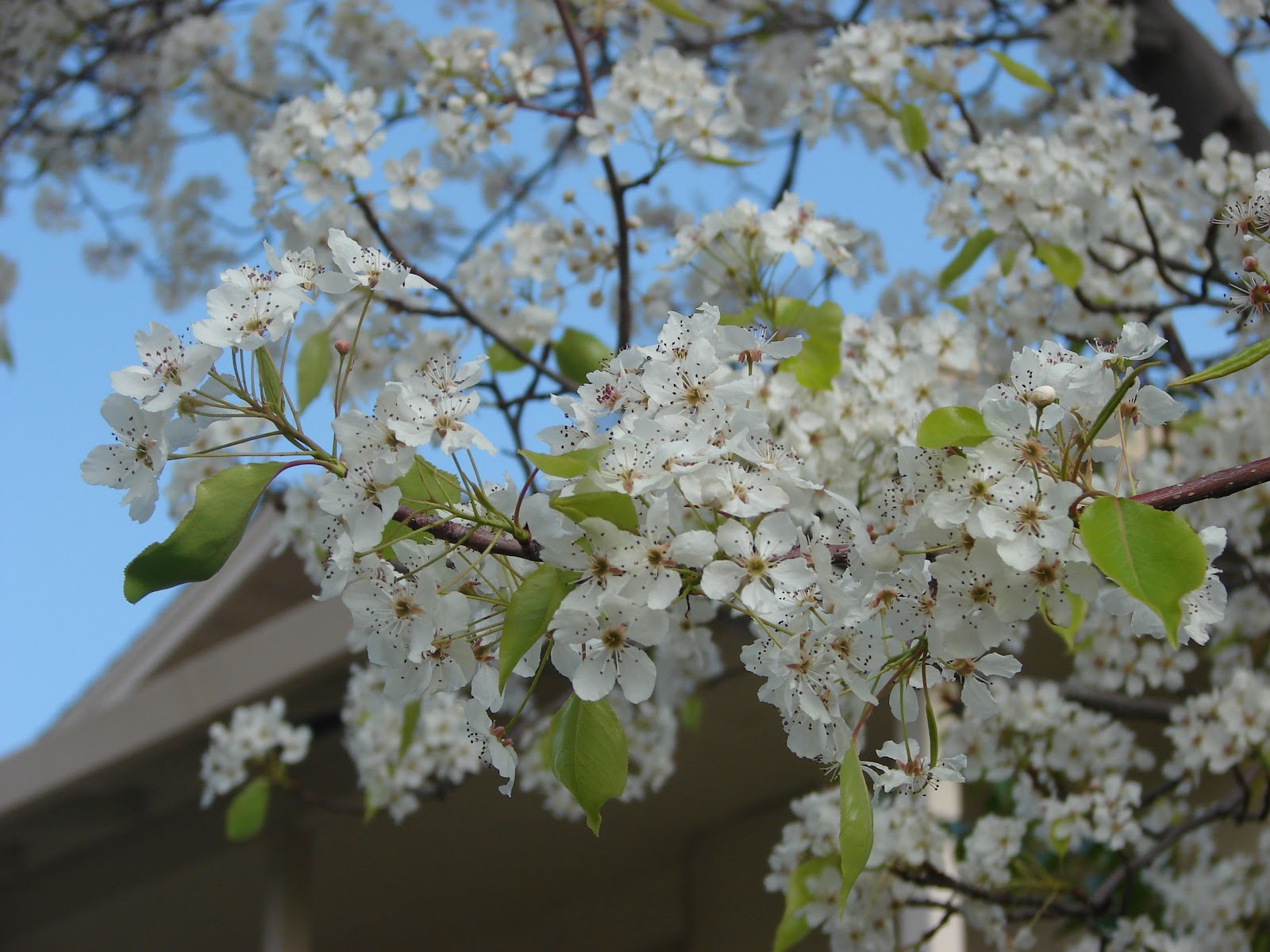
It’s Monday! I’m going to start off the week with what I’m thankful for today: the beautiful flowers that are popping up all around the Bay Area. This is the ornamental pear tree outside my house: 
Have you ever wondered how all the pear trees know to bloom at the same time? I was wondering that this week. On cue from Heaven, maybe.
I love that spring begins in mid-February here. The rush and hum of the world coming back to life is one of my favorite sensations in all the world. 
Boy, I’m thankful to be living back in the Bay Area!
What are you thankful for today? 


I’m sorry this comes later than usual…I had a big post in the works for last week that just wasn’t ready to go up yet. Hopefully it’ll be worth the wait when it gets posted this Friday 🙂

Versatile Blogging!

Ooh, how exciting! This blog has received its first award (from my good friend, Angela Wallace: check out her blog for some interesting thoughts on writing, cats, and fantasy…)

This award comes with a catch: I must confess 7 random things about myself, and then pass it on to some worthy-of-note bloggers. Oh dear. Let’s give this a try.

1. I don’t own a single pair of white socks. In high school, I did a sock exchange by mail with friends and ended up with everything from Tinker Bell socks to electric-blue fishnet socks. My current favorite is a pair of knee-high, blue-and-green argyles.

2. Scotland is my favorite country in the world. I’ve visited twice, but I’d go back in a heartbeat. If I could tweak the ancestral records and make myself Scottish, I would.

3. I took two quarters of Biblical Greek in college and absolutely fell in love with it–especially because so much of English is derived from Greek. My family will tell you that I still occasionally break into raptures when I recognize a word…

4. Almost all my favorite authors are old dead guys (or gals). I think good authors are like good cheese: the older, the better.

5. I like to play with big dogs, cook with big knives, and read with big books.

6. If I could be any Disney princess, I would want to be Belle for sure. Brave, kind, enormous personal library, and how about that ballroom scene??

7. My favorite Shakespeare play is Hamlet. I’m a sucker for tragedy. Don’t ask me why.

And now, to pass this honor on to some wonderful bloggers!

1. Audry : Amazing photos, knitting stories (many of them about her own designs), artistic endeavors, unexpected adventures, and puppy antics.

2. Adelle : Sometimes funny, sometimes poignant, these are the writings of a boymom who loves God, shoes, and words.

3. Matthew : A witty New Zealander writing about writing, reasoning, and history.

4. Marcy : Though she’s already received this award numerous times, her insights on grammar and life through the eyes of faith deserve another nomination!

Even if you don’t keep a blog, what are the 7 weirdest, quirkiest, or funniest things you’d list about you? 

Advice from a Book: 5 Gruesome Ways to Die

My dear Libris,

You are young and fresh off the press. I know your binding glue is new and your cover art done by a cutting-edge designer. I know you sit on the bookstore shelves and flirt with every customer who walks by, simply because you have no experience of the world and do not know what terrible and gruesome deaths books can meet. So pay attention! I would hate for any of these to happen to you.

1. Not all humans value commitment. Some humans may buy you off the shelf, read you once, and then throw you away, never to be opened again. They won’t even pass you on to a friend or send you to the library for another chance to be loved. No matter how beautiful you are or how hard you work to keep your pages stiff or your suspense scenes interesting, some people will never appreciate your labor and service. All books deserve a loving home, so please watch out for second-rate bookbuyers like this.

2. Less devastating but more painful: some humans will actually abuse you. They turn your pages, make you think they love you, and then plop! a wad of gum lands between your pages and sticks them together, making them impossible to open again without tearing. Or a waterfall of hot coffee comes pouring down on your head, obliterating your words and wrinkling the weave of your paper forever. There is help for such damage, but no real cure, so be careful.

3. Worse: death by fire. This fate was a much greater risk several years ago, but especially if you open your mouth and utter shocking and uncensored comments, you are at risk for being burned at the stake, perhaps even publicly. It is one of the great unrectified injustices against our kind, but for the time being, you must watch yourself.

4: Perhaps more gruesome still: death by water. Your innocent-seeming owner appears to love you so much that they read you at every possible opportunity, even snatching a few minutes with you while they brush their teeth. One minute you’re happily flapping around in their free hand, and the next thing you know, you’re facedown in the sink, covered with toothpaste. Or worse–I shudder to think of it–floating in the toilet bowl. Beware of small bathrooms; these increase the danger exponentially.

5. And now we come to the worst fate of all. I hate to even tell you about this and cast a shadow over your unscarred print-history line. But it must be told. There are some people–some bookstore-frequenting people–who will appear enamored with you, seem to appreciate you for your depth and worth, buy you off the shelf, take you home, shelve you above their television set–and then leave you there, untouched and unnoticed, to gather dust with a row of other deceived books for the rest of your lonely, unloved life. You’ll even be close enough to hear the cruel blaring of the television as they sit with it every night.

Please don’t despair, dear Libris. These fates are terrible and tragic, but there are also excellent humans who will take good care of you and make your shelf life long and sweet. There are those people who will tiptoe into the bookstore, or library, or even up to the giveaway table at a yard sale, and spot you, and cry: “Just the one I’ve been looking for!” And they’ll take you home and love you and read you again and again. They will laugh at your funny parts and turn your pages carefully. They’ll keep you far away from coffee mugs and television sets, and they may even recommend you to their friends. It is worth any risk to end up in the hands of such a person.
Dear Libris, I hope you may end up with such an owner. But even so–keep your eyes open. There are many gruesome ways for books to die. 

Thank you Hannah, Teri, Megan, Caleb, and Elaine for these wonderfully grisly ideas! What warnings would you give a naive, newly published volume about the world of readers? 

The 7 Deadly Sins of Reading

What’s the worst crime you can commit against a book? Have a pet book peeve that really makes you cringe? Think we should start a Prevention of Cruelty to Books organization?

When I asked this question of you on Facebook and Twitter, I got so many creative and twisted responses (some of them confessions) that I’ll be doing a second post in this series next week. Thanks for your delightful/horrifying ideas.

Time for some indictments–and maybe some more confession–as we uncover the 7 Deadly Sins of Reading.


#1: Dog-ear pages instead of using a bookmark
Ever watched someone start to turn a page–then go back, lick their finger, and crush down the corner of the paper? Ever give you the feeling that one of your bones is breaking? 
Be kind to books. Use a bookmark.

#2: Read a series out of order

Picked it up on #2, then skipped to #5, started #7? No wonder you can’t keep track of the main character’s love interests. 
#3: Write in it 

This is one that used to give me the gag reaction before I went to college. Deface a book?! It would be like unleashing a can of spray paint on the National Gallery of Art! Now, thanks to a couple of ink-stained professors, writing in my books is one of my favorite things to do (especially with Shakespeare). I underline my favorite passages and write comments in the margin–it’s like having a conversation with the author that I can add to every time I pick it up.
#4: Skip chapters

Skip the “boring” dialogue? Cut the blah-blah-blah and get on with the story? It would be like skipping the songs in a musical!

#5: Tear pages out (or let your rabid bunny do it)
Isn’t this picture just terrifying? 
#6: Read the ending first

Or, even worse, read it and spoil it for others. You have to go through the story to get to the end, just like the characters do. No peeking!

#7: The worst of them all: don’t read

Joseph Brodsky wrote, “There are worse crimes than burning books. One of them is not reading them.” Whatever you do to your books, there’s no worse crime than putting them behind glass and letting them collect dust.

Not to say that you shouldn’t admire them, however. Just treat them nicely.

Which “sins” would you add to this list? Which ones have you committed? Check back next week for “5 Gruesome Ways for Books to Die”…

Life According to Road Signs

While on vacation the week after Christmas, my family and I drove the infamous Road to Hana. It’s a highway that follows the beautiful, rainforested north shore of Maui. However, “winding” would be the understatement of the century about this road. It is famous for its more than 600 curves (most of which are blind hairpins) and its 59 bridges, 46 of which are one-laners according to Wikipedia. According to me, that’s a generous estimate.

While my mom was dodging tourist convertibles and avoiding sheer cliff edges, I was taking pictures of the road signs. Road signs are something I always find interesting, because they can be read to have double meanings about life, guidance, and following God. But on the tortuous, sometimes terrifying, incredibly beautiful Road to Hana, their messages seemed heightened, especially when I thought about lessons I’ve learned during my last 4 1/2 months of freelancing. 
The road to the future can be winding (and sometimes the curves are blind).  


Sometimes you defer to the ideas of others with more experience, especially when you’re young. 

You don’t always get there as fast as you want to. 
Sometimes you run into roadblocks.  
But eventually you get going again.


And the journey can be beautiful.


Sometimes it’s just plain funny, too. Part of the adventure is learning to laugh, to find the humor in the midst of 600 hairpin curves. Sunshine sometimes comes in weird and wacky forms. Like these bizarre signs!   
“Why did the baby pigs cross the road?”  
“The sky coconuts are falling!” 


“A place named Haiku–maybe only 17 people live there…”

What weird, wise, or wacky signs have you spotted by the roadside?

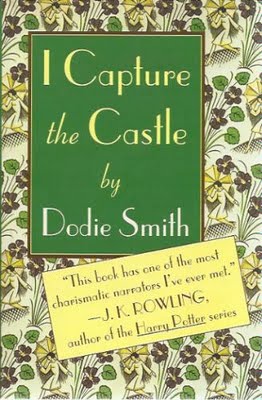
Wit, Wisdom, and Castles: “I Capture the Castle” by Dodie Smith

This is a review of a book that is not for the young, but certainly for the young at heart.
I Capture the Castle, published in 1943 by Dodie Smith (her first novel), begins with all the trappings of a fairy tale, but uses them to tell a story so real that there’s nothing fairy-tale or cliché about it.
Seventeen-year-old Cassandra Mortmain lives in a castle. Perfectly romantic, yes? Picturesque towers, the idyllic English countryside—until you realize that the castle is full of leaks and the family is practically starving to death since her writer-father hasn’t penned a word in over twelve years. In addition to her hermetical father, Cassandra lives with her older sister Rose, whose great wish is to marry for money, her studious younger brother Thomas, her sympathetic but eccentric stepmother Topaz (whose former occupation was nude modeling for a London painter), and a handsome servant named Stephen. Oh yes, and a cat and dog; Abelard and Heloïse (private joke about a pair of twelfth-century scholar-lovers).  Cassandra’s aspiration is to be a writer, and the novel is structured as three of her journals, her stated purpose being “to teach myself how to write a novel—I intend to capture all our characters and put in conversations.”
The first major action mirrors the beginning of Pride and Prejudice: the neighboring manor, empty since the owner’s death, is at last re-inhabited by his two handsome grandsons: dashing young Americans who are terribly interesting and perfectly single. However, the remaining 90% of the book has absolutely nothing to do with Pride and Prejudice, and both Cassandra and Rose find out what misery is caused by trying to force life to match fairy tales. On the way, Cassandra’s views on wealth, history, God, romance, travel, and people are stretched even as she writes down these experiences and her reflections in her journal. 
The primary delight of this book is in Cassandra’s witty and wise narrative voice. If I’d read it at age seventeen (or younger), I think I would have found the vague and meandering plotline of the book uninteresting and the ending incomplete. I related to many of Cassandra’s stories, but in the middle of my teen years I wouldn’t have had have the distance to sift out the wisdom in them. But that’s because at the time I was looking for fairy tales, and this is a story about real life. In the six months Cassandra’s journals cover, we watch her grow up—from a starry-eyed child to an adult who perceives the world with a more complex awareness of both its joys and sorrows (fancy word for this genre: bildungsroman). She becomes a young woman who stands tall with maturity and self-respect, valuing her family, her integrity, and her dreams of authorship more than grubbing desperately for “happily ever after.” Anne of Green Gables would call her a “kindred spirit,” though she comes from the other side of the Atlantic. As Cassandra “captures” the castle and the people around her in words, we watch her become a “wise young judge,” a strong, funny, honest, real heroine who is ultimately very worthy of respect.
This is a book for aspiring writers, for young women who have wrestled with singleness, for those who love England. It’s for adults who can identify Cassandra’s wisdom but still remember going through the difficulties of gaining it for themselves. It’s for people who enjoy a witty narrator describing her unconventional life in vignettes both down-to-earth and poetic. It’s not quite like any other book I’ve read, but I’ll be keeping this one.
Have you read this book? Seen the movie adaptation? Does it remind you of something else? Add your thoughts to the conversation!  

Setting a Course

Hello again! 


2 weeks away from my blog feels more like a month and a half. So strange! I feel like everything I re-start after the holiday break is individually packaged in a fresh layer of brain fog. It doesn’t help that I am returning to my computer from one of the most beautiful, relaxing places imaginable: 

Ah, well. 
It is good to be starting a new year, though. I like the chance to break schedule during the holidays. Sometimes I’m so busy putting out the day-to-day fires that come up that I lose sight of my big-picture vision. It feels like a chance to pause, pick up the scattered pieces, regroup, and re-strategize about where you’re going in life. Then New Year’s Day arrives, and with it, a chance to turn a new page and do some things differently in life. 

As a rule, I don’t really make New Year’s resolutions. The jokes are true. Talk is cheap, and they’re made of talk. They’re flimsy; made to be broken. Besides, until this year, I was living on the school calendar and made whatever resolutions I was going to make in September. School offers a certain structure to the resolutions you make, too–study more (or maybe less). Invest in friendships. Get an internship. Graduate.

With the rigid frame of academia removed, though, I find that I am the only one responsible for setting goals for myself–for not letting life make my decisions for me. As you can tell by the size of the word “trust” in the sidebar, my process of direction-setting is one that involves a great deal of prayer and wrestling.

So this year I’ve made some New Year’s goals. The word resolution, in my mind, says self-reliance. That’s why New Year’s resolutions don’t last. I myself am weak. When I run out of energy to stay resolved, I give up, out of exhaustion if not lack of will. I think goals, however, are visions we lay before God for partnership. If my life direction has been submitted to Him for approval and guidance, goal-setting is an act of faith: setting a course and trusting Him for strength and courage to hold to it.

I’ll tell you what my goals are in a minute, but first I want to clarify that this is not just my personal mind vomit. I read a great blog post by Kathy Lipp this week that talks about goal-setting for writers. In her words, “public humiliation goes a long way to getting your book written.” Accountability goes a long way toward other things too: when other people are aware of your goals, the pressure to meet them rises–and you accomplish more than if they sit secretly moldering in your journal.

I also like a tradition my knitter friend Audry has instituted on her long-running blog, Bear Ears. At the end of each year, she sets goals, ranging from “knit a sweater” to “build a terrarium.” But she also reviews the results of her previous year’s goals. It becomes a neat cycle of tracking growth and watching how God’s plans sometimes completely diverge from ours. I hope that next December/January, I will be able to track those long-term patterns, too.

OK, so here are my top 5 New Year’s goals. I hope you will hold me accountable and share yours as well!

1. Get to know God better. To do this, my goal is to read through the Bible in chronological order in one year.

2. Have the second draft of my children’s novel completed and be ready to start looking at literary agents by June.

3. Take a 2-month class to learn more about blogging and social media for authors. I hope you’ll be seeing regular improvements on this blog from now through the end of February!

4. Buy a car (wings optional).

5. Read Gone With The Wind, Othello, and The Kite Runner.

What are your goals for this new year?