
Cooking Up Some Creativity

Cooking, for me, is like writing. More than just a way of putting food on the table, it’s play: from visualizing a new dish off a recipe card to shopping for a tantalizing array of colors and flavors to actually transforming the textures and smells of the ingredients into a beautiful, edible finished product. I have a few staples that I make over and over for their yum value, but I really enjoy the discovery process of experimenting with new recipes.
It’s a good thing, too, because I’m on the last three weeks of a 2-month gluten-free, low-glycemic diet (“paleolithic” for those interested), which my doctor ordered for health reasons. That means no flour products of any kind, almost no sugar, and limited amounts of any starch (brown rice, sweet potatoes, etc.). Fun, right? It’s been tough to keep coming up with new recipes, but at the same time, it’s challenged me to try some dishes that push the boundaries of normal.
This week? Pumpkin soup. Normal was definitely pushed. 
I found the recipe in a stray copy of Sunset magazine. You can find it here (I skipped the pesto, though). 
The adventure started with the shopping. The Halloween pumpkins I was planning on using turned out to not only be the wrong variety, but were also all rotten and squishy on the bottom. Gross. Went to the store to buy a new pumpkin. While I was there, I also found a large nub of fresh ginger—something I’d never cooked with before! Threw it in the shopping basket.
Next up: no coriander in the house. Mom thinks it tastes nasty. So last Saturday, I made a visit to Penzey’s Spices in Palo Alto with my gourmet friends Whitney and Jordyn. What an amazing place! I’d never seen whole vanilla pods or knew that there were four colors of pepper before. When we were done making ourselves sneeze on the wonderful aromas of lavender, cinnamon, and ground ancho chilies, I came away with a mix called Balti, which included coriander and more ginger as well as some less familiar names, like dundicut chilies, fenugreek, and charnushka (hope you don’t get stuck with those on your next spelling test).

Assembling the ingredients felt like play, but the actual cooking felt like a long trek uphill: a bit like the writing process. It will be a long time before I attempt to peel and cube a pumpkin again. After an hour, I had a bowlful of misshapen orange blocks, but I also had a cramped right hand, two blunted knives and a peeler, and pumpkin shrapnel all over the kitchen. And I do mean all over.
Not to be beaten by a squash, however, I began to sauté the onion and ginger. Lots of ginger. Having never cooked with this science-fictiony brown root before, maybe I got a little over-eager. What was I going to do with a bunch of leftovers, anyway?
When the blended soup finally made it onto the table, the kitchen smelled great. That is, until the taste of gunpowder eliminated our ability to smell anything. All that ginger I’d gotten excited about? Plus the coriander-ginger spice mix? Whoops. Even yogurt couldn’t cool it down to safe levels.
I must say, my family is one of the most patient and longsuffering I know. They courageously finished their bowls, and didn’t even throw them at me. But the remainder of the pumpkin soup certainly traveled with me to Bible study on Wednesday night, where the adventurous Jordyn kindly took it off my hands.
I guess part of experimentation is making mistakes. When you try recipes that are off the beaten path, it’s a risk: not every one will be the next family winner, or even taste like human food. Some will be a constant circus of mishaps (e.g.: continuing to find flecks of pumpkin peel stuck to the window).
But it certainly keeps life from getting boring. Maybe I won’t be making this particular pumpkin soup again, but I’ll keep playing with flavors and textures. It keeps me from getting stuck in ruts (and certainly beats airline tickets for budget adventures).  
And maybe creativity feeds more creativity: the day after my pumpkin soup adventure, I wrote the first words of Draft 2 of my children’s novel!

What’s your latest creative endeavor? Successful or otherwise? I’d love to hear your story!

Measuring Progress

In the academic world, progress metrics are plentiful. I think that’s why many people never leave school. You go to class, you put in the work, you get the grades, the grades become GPA. Boom, you can translate your effort into a percent, a couple of honor cords, a piece of paper on the wall. And you get some self-esteem out of it, too.

In post-academic life, however, progress can be harder to get your hands around. You can count the hours you spend working, but how do you measure the fruit of those hours? For smaller endeavors, it’s not as difficult. Summer working retail = money for study abroad. But when you’re working towards a more distant goal, one that requires immediate investment for a very delayed payoff, how do you tell if you’re moving forward?

For example, let’s talk about writing a book (how funny! something I’ve spent quite a lot of time doing this week). What do you have to show for 8 hours of completely internal concept work that doesn’t translate into a paycheck or even a page count? Not instant gratification, that’s for sure. But if I’m ever going to finish the novel, I have to have faith that it will matter, and that it’s worth the present sacrifices.

In fact, I think some of the most important things can’t be quantified at all in the short term. Think about growing a prayer life or spending time with friends and family. You can’t measure your investment until you enjoy the final result: a sweet relationship with God or other people. Even though it can feel like wasted time in the right now, it’s much more valuable to do things that matter in the big picture than to be able to instantly prove yourself by the numbers.

Now, with all that said, this week God has given me some progress signposts that give me hope. My big-picture goals may still be far in the distance, but these are good reminders that I’m at least on the way.

1. Adding some great resources to my collection at the library sale

2. Applications from 2 new tutoring students (hopefully this isn’t what my hair looks like!)

Free Student Clipart
Source: Clipart Pal

3. Having lunch with my mom in mid-November rather than taking midterms

Source: Aqui

4. Writing “owner” after my name on an application for a tutoring business license


5. And last but not least, finding a perfectly-sized coffeepot to fuel my continued endeavors! 

The Call of the Wild…and Candy

This week I put on my literature teacher hat and attempted to lead a discussion that would leave my students rapt, enlightened, and in awe of the guiding power of literature on life.

The book was Jack London’s The Call of the Wild. It follows the story of Buck, a soft Californian dog who is kidnapped and transported to the Gold Rush Yukon. In that hostile environment, he learns to survive and ultimately becomes like the wolf his ancestors were. Relatively short and jam-packed with dogs, wilderness survival, and fights to the death, this novel was sure to be a success with 7th-grade boys, right?

File:JackLondoncallwild.jpg

Unfortunately, when I first attempted a literary discussion last week, I forgot one salient fact: these students are 7th-grade boys. They could barely remember the main character’s name, let alone discuss the author’s commentary on human nature. I came home discouraged, wondering how on earth my college professors had executed their scintillating discussions.

My mom, as usual, had some pertinent words of wisdom for me. Human nature isn’t naturally nice, right? We’re naturally selfish, right? So these students aren’t going to scramble for literary comprehension unless there’s something in it for them, right?

Ah.

Fortunately, Monday was Halloween, and there happened to be quite a bit of leftover candy lying around the house. Concealing the silver-wrapped morsels in my tutoring bag like a stash of doubloons, I sat down across the table from my charges. I placed my copy of The Call of the Wild on the table. And I announced that this week’s discussion would include a new element.

Candy.

With a sugary reward going to anyone who answered a question, the discussion bubbled like a hot spring. The boys racked their brains for scenes from the book. I saw the 7th-grade cogs and wheels turning as I probed for the meaning beneath the text. They even invented facts when they couldn’t remember. We steered through the survival setting of the book and talked about the way it reveals the fundamentally selfish nature of dogs…and humans.

They may have missed the irony, but as their candy wrappers crackled, I savored it.

Do you have a story, funny or otherwise, about encounters with human nature? I’d love to hear it! 

When Faith Meets Fear

Where do you get your security?

Less than a week ago, I babysat for 7 hours and started getting this uncomfortable feeling that I was wasting my time.

I’ve been babysitting/nannying pretty regularly since moving home in June, and it’s been steady work: great kids, predictable income, and a big improvement over minimum wage. I felt like it was a step in the right direction of becoming self-supporting.

Then, early this week, the Holy Spirit’s sharp elbows started to get in the way.

I made a chart, documenting where my time went each week. When I first started working, babysitting seemed like a small time investment with a big payoff. But when I finished the chart, I realized how little time I’ve actually spent writing this month. Those babysitting hours were coming directly out of my writing time.

That led to a series of small spiritual crises. In my neat, tidy little life plan, working as a babysitter/nanny would smoothly give way to a paying job as an editor, freelance writer, or ideally, Great American Novelist. However, I’m realizing that you don’t become Paid Writer until you actually write. You can’t write without time. And if your time is going to changing diapers and channel surfing through episodes of Dora the Explorer, you’re not even moving in the direction of Paid Writer.

However, beginning writers are not on anyone’s payroll. This week I was confronted with a crossroads between keeping my steady, predictable paycheck and moving in God’s direction for my life. In essence, it came down to the question, “Where do you get your security?”

File:Crossroad in winter 2.jpg

Funny enough, I found that God has a word or two to say about security this week. Isaiah 31:1:

“Woe to those who go down to Egypt for help, 
who rely on horses, 
who trust in the multitudes of their chariots 
and in the great strength of their horsemen, 
but do not look to the Holy One of Israel 
or seek help from the Lord.” 

Ouch.

Choosing to ignore the uncomfortable feeling and continue babysitting would be relying on chariots and horses. “If I have an income,” goes the thinking, “I have independence, I have control over my future, and I’m secure.” Funny thinking, because anyone who’s lived through this recession would laugh at that line. Like a pipe dreamer, however, I was living by it.

Choosing to quit babysitting would mean going out on a limb for God, to follow the purpose for which He’s uniquely designed me. I don’t know how long it will take me to earn money by writing; I don’t even know if I’ll make it (financially) as a writer. I do know that I certainly won’t if I don’t take time to write. I also know that a part of me suffocates if I ignore the thing I was made to do.

I was scared. Scared to give up the known, however mediocre, for the unknown, however glorious. Even the illusion of control dies hard.

A Longfellow line I read this week helped give me clarity:

“Our faith triumphant o’er our fears.”

The breakthrough was realizing that you’re not a failure at faith if fear still gives you stomachaches. It’s good news, because the two were wrestling fiercely in me, like the famous Gollum and Smeagol in The Lord of the Rings. Paralyzed at this crossroads, I begged God to give me courage to overcome my slimy, wheedling, comfort-loving but surprisingly strong inner coward and do the right thing.

He did.

Today I gave my employer one month’s notice. As of the end of November, I will be working only at pursuits that relate to writing: revising my novel, submitting articles to magazines, freelance editing, and tutoring English. I came home grinning and feeling like the Incredible Hulk.

Faith is the hard choice. But it brings a rushing sense of purpose. Today, my security comes from the One who called me to write, and He is faithful.

So how about you? Where do you get your security? I’d love to hear your story!


Surprises

This post comes on a Saturday because today is my baby brother’s 21st birthday.

And last night was his first-ever surprise party.

For nearly two weeks, my mom and I have been scheming, planning, conspiring with his friends, (mostly) without Daniel’s knowledge. Behind his back, we got all the details in place: the pizza, the balloons, the RSVPs, the secret instructions. Then, yesterday afternoon, while he was out, friends trickled in one by one, parking around the corner, dashing through the door with nervous glances over their shoulders.

All for the pleasure of this face when he walked in the door.

He was certainly taken off-guard. His plans for Friday night probably didn’t include playing Telephone Pictionary with a crazy mob of wonderful friends. But he was smiling all night and on into this morning.

When it comes to life, I’ve come to grips with the fact that I am a natural-born control freak. I like to know what’s coming around the corner. Ducks in a row. Two by two, actually. Surprises throw off my groove. I don’t like having to recalculate my life direction like a human GPS.

But sometimes, I think, surprises are good for us. Whether they come in the form of a new job that requires a speedy and complete overhaul of my skills, or involve rearranging your entire schedule to have impromptu tea with an old friend, they keep us flexible. I think they also tell us that there’s Someone Else scheming for our good, even when that wasn’t part of our plans. He is capable of “immeasurably more than all we ask or imagine” (Eph. 3:20).

And yes, they can be so full of joy we never even anticipated–both for the surpriser and the surprisee.

What surprises has God sprung on your life lately? I’d love to hear your “recalculating” stories! 

Also, several of you have mentioned that you’d like to post comments, but don’t know how. I’ve tweaked the blog machinery, so hopefully now it’s a bit less confusing. At the bottom of each post, there’s a link saying “X number of comments.” Click on it, and you should be able to read others’ comments as well as post your own. Type your message, then select an option from the drop-down list. You can use a Blogger, WordPress, or Google ID, or just leave your name, or even choose to remain Anonymous (hat-tip to the new Shakespeare movie coming out).


One last thing: at the bottom of each post, there’s a new icon that looks like an envelope with an arrow on it. That means you can now send a post you like directly to your friends by e-mail! This technology and I are slowly becoming friends.

10 Reasons to be Thankful for Post-Grad Life

This week was the 4-month anniversary of my graduation from college. While this new season has brought a lot of transition and uncertainty, I have also had numerous inspirations to celebrate this phase of life (students everywhere, take heart!) 
When I’m loving life, being thankful is easy, but the practice also helps dissipate melancholy when I’m not. So, because I need to remember, and because students everywhere need a reason to believe there’s life beyond midterms, here’s a chronicle of some things that have made these last 4 months good. 

Family

Sunshine and sand beaches
Time to read books I choose

Time to cook 
Time to write
Time to play
Time to stop and smell the flowers (occasionally)
Friends who are also family in Christ
That being old and graduated doesn’t mean I stop having adventures
And that the end of school doesn’t have to be the end of being a nerd.

Whatever your stage of life, what are you thankful for today?

Living with Bifocals

Those of you who spend time with me in person have probably heard too much of this analogy, but I like this one. I keep thinking that living life is like wearing bifocals.
Bifocals give you the ability to see at two distances. When you’re driving, they allow you to both scan the road and check your speedometer. When you’re speaking, they help you see both the notes in front of you and the audience you’re there to address. Things that are right under your nose and things that are more distant.
What brought this up is my job search. I’ve known I wanted to be a writer since I was fourteen, when I started composing my first novel by hand in a purple journal. When you’re fourteen, it’s easy to follow the advice “dream big!” because you live in a state of sweet ignorance about things like bills and taxes and insurance. My plans were purely long-term and big-picture.
In college, though, the message changed. Be realistic. Get a job. Interviews. Resumes. Monster.com. There are things called rent and health insurance and groceries that actually cost money. Ack! My focus shifted to the immediate needs of a self-supporting adult.
After graduating, I was blessed enough to be able to move back in with my mom, relieving the immediate pressure of bills while I searched for work, although I still felt the tension of long-term versus short-term concerns. It was the headache in every decision I made. I was presented with a full-time teaching job, some technical writing opportunities, and the opportunity to be a private English tutor, among others. Status symbols and material luxury aren’t important to me, but becoming financially independent and “proving” that I’m not going to be the 30-year-old bum in my mom’s basement are.
For me, the temptation to grab at instant security was almost overwhelming—is almost overwhelming, daily. Teaching full-time would pay my bills and then some. I could move out, get my own apartment right now. Tempting. But spending all my time on that would leave none for writing. Moving out immediately isn’t worth that sacrifice.
How do I not lose sight of the dream, the long-term goals, while still providing for my immediate needs? Do I have to choose between them? Is there a way to do both?
Here’s where the bifocals analogy comes in. Focusing only on the now would preclude following God’s will for my life and take away my sense of long-term purpose. But focusing only on the dream in the distance might make me the bum in my mom’s basement.
So I said yes to tutoring. I started working with my students this week. They’re a lot of fun, each one different. Yes, it is a time investment, especially now as I scramble to understand lesson plans, curriculum, and educational philosophy, but I think that will level out with time. Other than that, it takes care of my immediate bills and also leaves some time for writing, which is where I want to be in 20 years (though hopefully less J). It’s a bifocal job.
In Matthew 6, Jesus weighs the near-far tension like this: “So do not worry, saying ‘What shall we eat?’ or ‘What shall we drink?’ or ‘What shall we wear?’ For the pagans run after all these things, and your heavenly Father knows that you need them. But seek first his kingdom and his righteousness, and all these things will be added to you as well.”
I read this to mean: don’t run after temporary things—don’t cop out on the dream of being a writer for the security of an immediate teaching job. This doesn’t mean ignoring the necessity of immediate things—even God knows we need them. Just put him first. First. Put the farsighted bifocal on top. He’ll take care of the rest. 

Why Busy People Need Poetry

This has been one of the busiest weeks I’ve had since finishing college. I’ve gone from Zero to Teacher in five days, taking on three private tutoring jobs in writing and literature. While these are things I absolutely love, the switch from studying English to teaching it is a big one. It’s been a week-long crash course in educational methods and curriculum planning. This is what my floor looks like at the moment.

In the midst of these hectic times, I would not survive without a few moments of peace and quiet–green pastures and quiet waters, so to speak. One of those is a little blue book given me by a dear friend for graduation. It is entitled “One Hundred and One Famous Poems” and was published in 1929. I read one or two every night before bed, relaxing in the measured and meaningful words of Longfellow and Emerson.

Surprisingly, though, what jumped out at me this week was the preface, by editor Roy J. Cook. It contains a succinct reminder of why people living in a fast-paced world need poetry. I here reproduce it.

This is the age of science, of steel–of speed and the cement road. The age of hard faces and hard highways. Science and steel demand the medium of prose. Speed requires only the look-the gesture. What need, then, for poetry?


Great need!


There are souls, in these noise-tired times, that turn aside into unfrequented lanes, where the deep woods have harbored the fragrances of many a blossoming season. Here the light, filtering through perfect forms, arranges itself in lovely patterns for those who perceive beauty.


It is the purpose of this little volume to enrich, ennoble, encourage.

 If Mr. Cook said this of the world of 1929, I can’t imagine what he’d think of 2011–or of the state of my floor. Yet I found his words true. This week, I understood what “noise-tired times” meant.

Poetry has been my pocket-sized chance to escape into the woods and remember beauty.

On Love Triangles, Marionettes, and Integers

For over a year, one of my dearest friends has been on my case to read the classic Cyrano de Bergerac. Last week, I finally did. Apologies to my family for the late-night laughter coming from my room. Rarely have I been so entertained or moved by 218 pages of humor, sorrow, swashbuckling, poetry, and romance.
The play was written by Edmond Rostand in 1897. The title character was based on the true Hercule-Savinien de Cyrano de Bergerac, a 17th-century Renaissance man who, according to the Encyclopedia Britannica, not only fought over 1000 duels, but also wrote comedies, satires, and even two science fiction novels.
Cyrano is a story of a (lopsided) love triangle: one woman, two men, and a nose. 
Cyrano de Bergerac is a brilliant French cadet with an enormous nose and an even bigger heart. He loves the beautiful Roxane, but she is in love with Christian, a cadet with a handsome face, but no gift for words. Cyrano lends Christian his eloquence to help him woo Roxane, displaying the strength of his character and the depth of his love. In some ways, it is a Beauty and the Beast story, reminding us that true beauty is found within.
Many of us live as slaves to appearance. I am often paralyzed by the fear of what other people think of me, allowing their opinions, tastes, and expectations (real or imagined) to steer me like an autopilot. If I don’t make conscious resistance, I dance like a marionette on their strings. But Cyrano doesn’t.
Accustomed to ridicule because of his nose, Cyrano ignores people’s censure or praise as the guide of his actions. He holds fast to his own compass, doing what he knows to be right regardless of what other people think. When his friend Le Bret urges him to compromise for the sake of a little fortune and glory, he retorts,  
“But what would I have to do? Cover myself with the protection of some powerful patron? Imitate the ivy that licks the bark of a tall tree while entwining itself around its trunk, and make my way upward by guile…No, thank you…I may not rise very high, but I’ll climb alone!” (II.VIII).
The best word I can find for this character trait is integrity. The word comes from the Latin integer, meaning whole. Cyrano is a solid and undivided person because he does not compromise. He does not sell pieces of himself in the marketplace of approval. No one else pulls his strings. When a nobleman criticizes his appearance, Cyrano responds:
“I don’t dress like a fop, it’s true, but my moral grooming is impeccable…I may not cut a stylish figure, but I hold my soul erect” (I.IV).
Others may shun Cyrano like a social leper, but he is able to recognize and respect himself. He knows who he is. He suggests that because of his integrity, God will know him too.

“When I go to meet God this evening, and doff my hat before the holy gates, my salute will sweep the blue threshold of heaven, because I’ll still have one thing intact, without a stain…” (V.VI).
I find that inner wholeness, regardless of outward appearance, very winsome. Beauty and the Beast stories like this one remind me that God finds such substance winsome as well: “Man looks at the outward appearance, but the Lord looks at the heart” (I Samuel 16:7).
May we follow after the man with the long nose, resisting the pull of the autopilot to pursue wholeness. 
Have thoughts on integrity? What’s your take on Cyrano de Bergerac? I’d love to hear from you!

What are you waiting for?

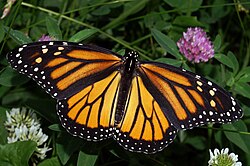
Last Sunday as I was running out the door to church, almost forgetting my shoes in the process, I paused to watch something happening through the kitchen window. A bright-orange, brand-new butterfly was perched on a branch in the sunshine. It sat perfectly still, only occasionally adjusting the position of its wings toward the sun.
I remembered raising a box kit of monarch butterflies when I was in third grade. My brother and I fed the caterpillars leaves, watched them spin chrysalides, and waited impatiently until they emerged as beautiful winged creatures. I remember observing then that butterflies can’t fly immediately after bursting out of the chrysalis. Their wings are still curled up tightly. If they try to fly right away, they fall. First they have to sit and stretch for a while, letting their wings unfurl and absorb sunlight before they can take off. Their first job is to be still.
I’m not very good at being still. I’m goal-oriented and task-oriented; I want to move, act, write, and then quantify my progress with a spreadsheet of results. But sometimes, even when I’ve worked hard, life stalls in the starting gate. For me, sometimes that’s a blog post that won’t come out right. Sometimes it’s the address that still matches my mom’s, the still-anemic bank account, another lonely Valentine’s Day, an economy that doesn’t look kindly on English majors, or a novel that still looks like raw meat. You know the feeling? God, am I going anywhere? When is my life going to start? It’s like drifting in a ship at sea with no wind to fill your sails. Sailors call it the doldrums.
That’s when I hear Him whisper: Be still and know that I am God.
When my life is zooming along busily, He often gets lost in a shuffle of papers. Sometimes He has to put my life on hold to make me stop. Breathe. Remember Him. Knowing Him is the best thing in life. A job, an apartment of my own—those are things I want, but they can wait. When my pursuit of them gets in the way of my pursuit of Him, sometimes He has to tell the wind and the waves, “Peace! Be still!”
Maybe waiting is actually a form of action when I’m waiting upon the Lord. It’s not the same as twiddling my thumbs for the wind to pick up. Times of stillness can be times of growth, opportunities to know Him better, necessary for my wings to unfurl in the light of His presence. Be still and know that I am God. There will come a time for flying, but right now my labor is to wait upon Him.
I choose today to be still, in echo of the words of the prophet Isaiah: I will wait for the Lord…I will put my trust in Him.

Image credit: HaarFager at en.wikipedia