
Compass Living

Are you a whole person?

I’ve been feeling tired a lot lately. Not just I-didn’t-get-enough-sleep kind of tired. The kind of tired that sets in the moment you wake up and see another sunrise–knowing it’s another day of the hamster wheel, running as fast as you can before you drop.

It’s called burnout. This kind of tiredness dulls my mind, numbs my creativity, and makes me feel excited about nothing. It feels like growing old before my time.

Why? I’m young and healthy; I’ve got a family who loves me and some great friends. I’m doing work I’m passionate about. Furthermore, I know God loves me–I have purpose and significance in that. But I’m still tired.

A tough conversation with my ever-wise friend Audry shed some light on the matter. (She also just posted a great blog about fighting off creative distractions here.) Whether your work is knitting, writing, painting, composing, or delivering sermons, you know that being creative takes a great deal of mental energy. It’s a God-like endeavor: creating ex nihilo, allowing us to be little singers of the Song of God.

But it’s draining.

And more than that–it’s crookedly draining. Creating involves a lot of sitting around and thinking, squeezing those little gray cells to imagine things that no one has ever seen before. Sometimes to put in those long stretches of intellectual labor on our Works In Progress, we shut everything else out.

But we humans are like four-pointed compasses. Rene Descartes only had part of the picture when he said, “I think, therefore I am.” Thinking is part of our being, but we’re also more. Being human means we’re not only brains, but also feelings, bodies, and souls. And if we only exercise our brains, we start to wear down all on one side like lopsided erasers, while simultaneously feeling unfulfilled in those other parts of being.

Maybe this was why I was tired. So this week I set out to experiment with my routine. I decided to give myself permission to stretch and exert the other three points of my compass, in hopes of restoring my mental freshness and creative vitality–and enjoying my life.

There are some things you know by studying about them. And there are other things you know only by doing them. One of these things is physical exertion. No amount of doctor-talk about the health benefits of exercise can describe how flushed and vital you feel after coming home from a 30-minute traipse in sprinkling rain, your head full of ideas and your blood pumping to write. Better still–a hike in the hills, overwhelmed with the beauty of emerald grass and shifting sunlight, brilliant poppies and clouds traveling overhead.

Another such thing of such indescribable value is time with people, and with God. E-mails and Facebook simply are not a substitute for time with friends, family, and the Holy One. You’ve got to have face-to-face time, quantity time, especially if you spend much of your work time in relatively isolated conditions. I’m a schedule-bent efficiency junkie, but I’m realizing that not taking time to be with people will kill my energy and desire to meet the day–so I’m actually more productive when I spend time with people, away from work. More time than just exchanging “good mornings” in the kitchen. Likewise, hasty prayers are like IOUs with God that stack up–they don’t bring the soul-healing peace of extended times of contemplation and praise.
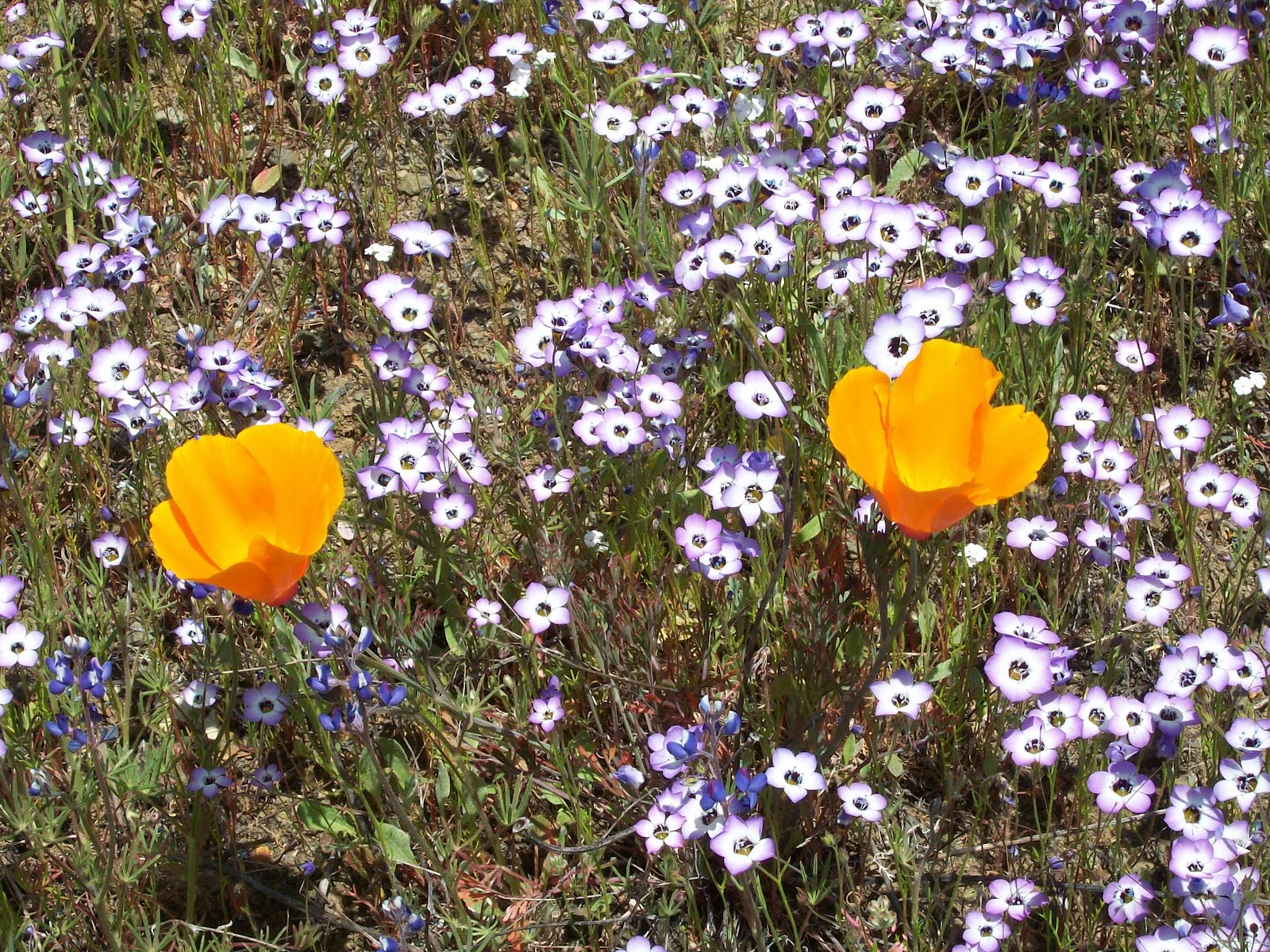
Trying these things this week has brought the life rushing back into me–joy, energy, creativity, and a desire to live the life I have. It’s easier to be thankful when you take time to notice what’s around you: the beauty of the world in spring, the humor and kindness of the people around you, the way your lungs fill with air and your eyelashes sparkle in the sunlight. It brings back the wholeness of being human–the way life was intended to be.

What do you do in your schedule to nurture wholeness in your life? What are your habits for fostering mental, physical, emotional, and spiritual well-being? 
“Smile, Beautiful”

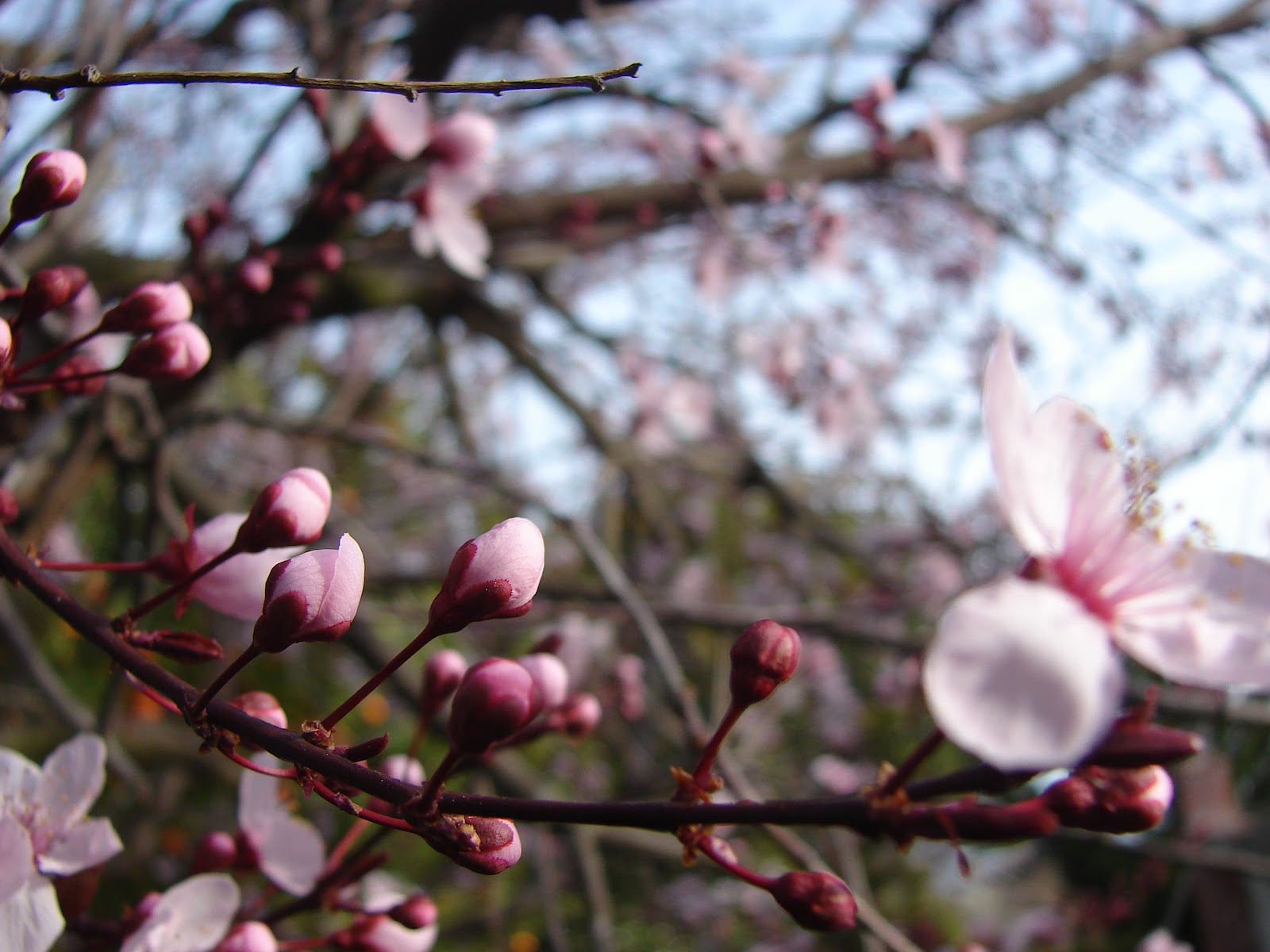
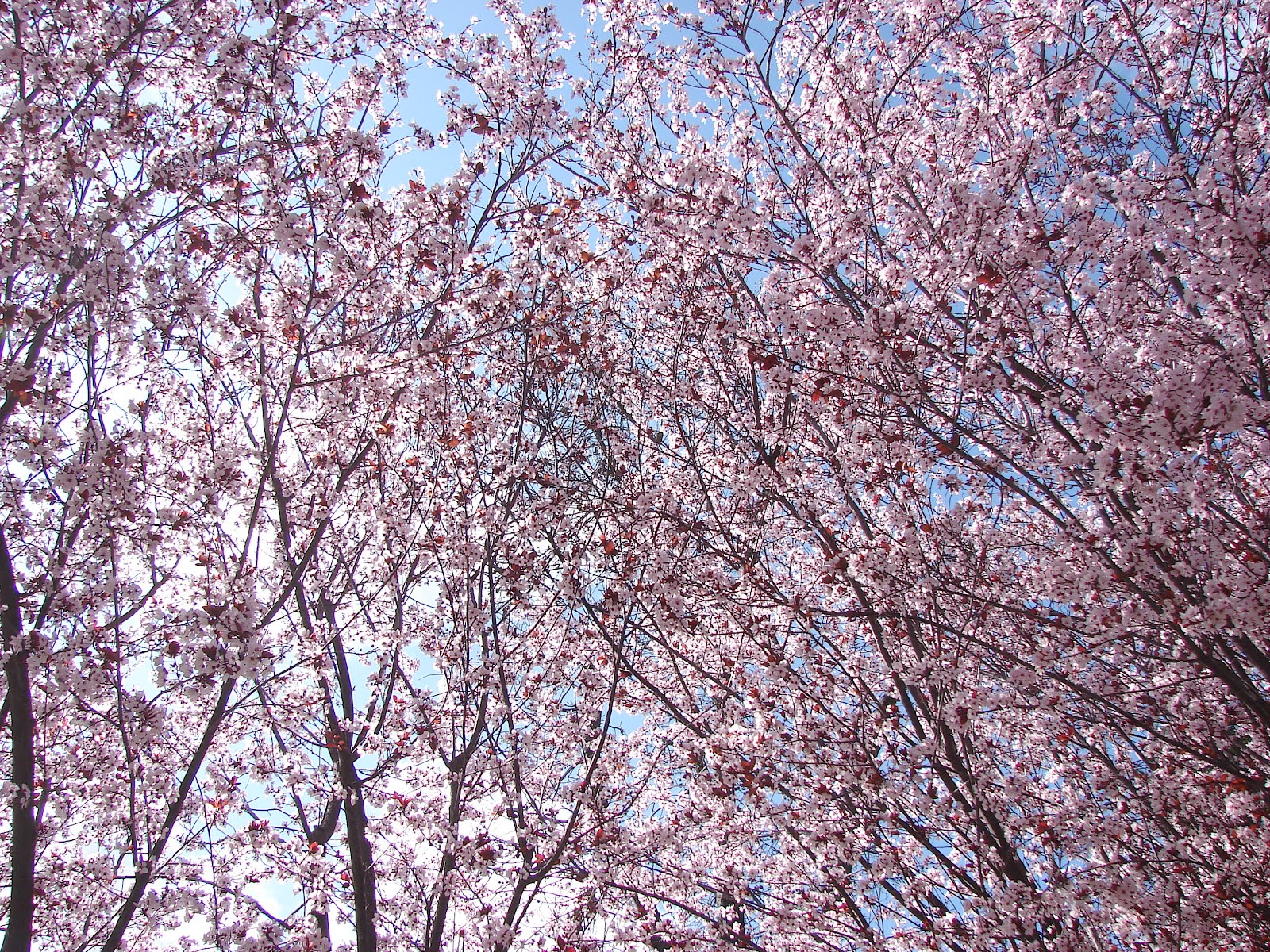
Well, spring doesn’t officially start until tomorrow. But the plum tree in my backyard doesn’t know the difference. Every year, it bursts into a puffy cloud of fragile pink blossoms. 
And every spring, it draws me irresistibly outside, camera in hand. 
Macro (close-up) photography has been one of my interests for a long time. In this world, it’s often the biggest, flashiest, noisiest things that attract the most notice. But macro photography focuses in on the tiny, the delicate, the overlooked, perfectly-formed, miniature miracles hiding in plain view. 
Like plum blossoms.
And to make things even more fun, this year my good friend Audry showed me some techniques with camera apertures. Oh boy. 

Turns out smaller F-stops (lens apertures) focus on smaller depths of field. They draw your eye to just one tiny part of the image.

Instead of getting overwhelmed by the whole, you can focus the intricate beauty of one part–and maybe see something there you never noticed before. Look at the different textures of the pink petals and the red encasement–smooth and bumpy, frilled and veined. So much detail in such a small space!

Isn’t God amazing? All this beauty, like getting a card in the mail for no reason. It’s just God saying, “Smile, beautiful. I made this for you.” 

 Happy spring! What tiny miracles can you find in your world today?

Why Work?

I spent yesterday morning in a tax accountant’s office, summing up the last year of my life in terms of dollars and cents. A rather dismal prospect, I must say.

Not only did I realize that I am living on a starving-artist budget, but I also realized that I can only keep about 70% of it, because the U.S. government is automatically entitled to the rest. Depressing.

On the bright side, it’s a blessing to have taxes to pay this year. It means I actually have work! After earning a degree in English and entering an extremely tight job market, work is a huge gift. And it means that dividing my time between writing, editing, tutoring, and blogging is more than a pipe dream. This is my job!

Which leads me to the lesson I learned from taxes yesterday.

Work is not, cannot be, just about making money. Many times I’ve thought of abandoning the writing and going to work in something more lucrative, just to have a good, steady salary. But what then? The more you make, the more the government takes (the joy of income tax). If you work hard and work is only for the purpose of making money, then poof! You lose 30% of your year’s labor every April. It just vaporizes, gone.

All that was left when I departed the tax accountant’s office were the other reasons I work–so I was glad I had some. Why work, other than for money? I think things like job satisfaction, knowledge that you’re helping people, pride in the quality of your work, good relationships with colleagues, and belief that what you’re doing matters to God and the world are what really matter in a job. No government can tax this income.

And when I started evaluating my jobs this way, I was encouraged. So I’m making peanuts? So what? I’m working with what I love (words), spending time in an environment I like, and believing that what I do with my time each day is making a difference. I’m following the vocation to which God has called me and sharing the words He’s given me with other people. I was made to do this work, and I’m doing it! Praise God!

And to top it off, I read this verse, Deuteronomy 12:7 last night, reminding me of the joy of good, God-blessed work: “You and your families shall eat and shall rejoice in everything you have put your hand to, because the LORD your God has blessed you.”

So is there really more to work than making money? What do you think makes a good job? 

If No One Were Looking…

One of my New Year’s goals is almost complete. I’m on page 1191 of Gone with the Wind (only 257 pages to go–the full length of many a smaller book).

Anyway, it’s wonderful. For all that it’s satirized or pegged as a “Civil War novel,” it’s about much more than hoop skirts and Confederate uniforms. It’s about a land, a people, and a way of life that passed away forever with the first shots of the Civil War. It’s about people sinking and swimming, learning to survive when their world turns upside-down. Also, it’s about Rhett Butler.

Not just the highly attractive love interest of the story, Rhett Butler also tells the truth to the spoiled, self-deceived Scarlett O’Hara. Both of them have the hearts of rascals–looking for personal profit and success, even if it means stepping on other people to get it. The only difference between them is that Scarlett tries to hide her inner pragmatist behind the wide skirts and courtly manners of a genteel Georgian lady, while Rhett lives his life openly, no matter who is watching.

At one point, Rhett and Scarlett end up dancing together in a candlelit ballroom. Rhett is doing just what he feels like doing, while Scarlett is acutely aware of the many watching eyes, all judging her by their complex labyrinth of Southern manners. She calculates her actions based on their approval or censure, while Rhett lives the same way before every audience–a form of integrity, wholeness, in spite of his other moral failings.

They have this brief conversation in Chapter 9:

Scarlett: “Captain Butler, you must not hold me so tightly. Everybody is looking.”

Rhett: “If no one were looking, would you care?” 

Which, I think, is an interesting jumping-off point for a conversation:

What do you and I do in our lives to please the audience? Where does that exhausting performance for approval stop? What would you do differently if nobody were looking? Can we start living now as if no one were looking? 

I’d love to hear your opinion! Happy Monday!

Looking v. Seeing

A few weeks ago, I went hiking at Monte Bello Open Space Preserve with several members of my church’s college/young adult group. We made a 6-mile loop that took us along several prominent ridgelines and, most spectacularly, gave us a sweeping hilltop vista of the San Francisco Bay.
As one of my fellow hikers pointed out the numerous cities grouped around the Bay, I was awestruck. I recognized so few of them, knew so little about the geography of the area where I was born and raised. I keep good track of the places I go on a regular basis: friends’ houses, my church building, doctors’ offices, grocery stores. But the San Francisco Bay Area has so many mini-locales and sub-cultures, all packed into a relatively small space of land, and many of them I’ve never experienced. There’s so much to learn and do right here where I live.

 I was also taken aback by the beauty of this place I live in. I stood on the hilltop noticing, as if for the first time, the blue mist over the bay, the red-roofed towns clustered around the water, the chaparral sprawling over hills and valleys. After returning from 4 years of college in Seattle, I thought I’d never take the beauty of “my own, my native land” for granted. But even with the best of intentions, when you look at a place every day, sometimes you stop seeing it. The beauty of the places and people around you becomes pure routine, a sleepwalk through life.

When I stop seeing what’s around me, taking it for granted, I start focusing instead on what I don’t have: a car, a home of my own, a perfect plan for my future. I’ve heard that contentment, though, is not necessarily having everything you want, but rather wanting what you do have. And to want what you have, you first have to recognize and appreciate it.

On the hilltop I was freshly struck by the diversity and beauty of the landscape I live in. I saw my home as if for the first time. And I think that’s what gratitude really means: living life with eyes wide open for beauty, even the beauty of the everyday.

What do you see around you that you’re grateful for today? 

    Magical Literary Destinations

    Why, hello!

    It is Monday, and yes, I am posting.

    One of my goals for the month of March is to blog not once, but twice a week! Monday posts will feature short, fun tidbits to be found around the internet (blog recommendations, photos, videos, etc.), for just a moment of inspiration, thought provocation, discussion, or a good laugh. Fridays will continue to be the article-style reflections to which you’ve become accustomed around here. I hope you’ll feel free to comment on those, too–even if it’s to play devil’s advocate or argue the other side!

    Today I would like to send the bibliophile in you on a trip to the 20 most beautiful bookstores in the world (click on the link to see the article).

    This article gave me a terrible, wonderful case of the sighs and almost made me start hunting for international plane tickets.

    As long as there are magical places like these, I don’t think e-books will ever entirely dominate the world. 

    Do you? 

    Gladiators in the 21st Century

    Last weekend I watched the movie Gladiator for the millionth time.

    I love watching Russell Crowe’s portrayal of a soldier (Maximus) driven to heroism by love of–and grief for–his family, and intense motives of revenge, anger, friendship, and brotherhood fan the story to a white heat. The screenwriting is amazing: What we do in life echoes in eternity. Chills. The depth of the characters and the complexity of their relationships keeps me watching, even though I have a notoriously weak stomach for blood and guts.

    As I watched the movie this time, though, what struck me most was not the violence of the gladiator fights (though they are intense) but the enthusiasm of the crowd who watches them. The unpopular Emperor Commodus tries to mollify the Roman mob with free food and gladiator fights. And it works! The people crowd into the Colosseum to cheer and boo the men in the sand who are fighting viciously to come out alive. Maximus must use the same ferocity he employed in the Roman army to overcome his opponents, but now it is not for the empire or for duty or glory: it is for entertainment. Ordinary citizens, all the way down to the children, sit in the stands and laugh as the gladiators struggle and bleed, kill and die.

    What kind of bestiality does it take to be entertained by such horrific violence between real people? To laugh and applaud while our own kind torture and kill each other? It must be a sort of moral cannibalism. Or perhaps it is the sick pleasure of saying: “better him than me”?

    My first reaction was to say, “Those horrible Romans. They must have been little better than animals to take pleasure in such brutality.”

    But then I had this uncomfortable realization. Our sadistic delight in watching humans torture each other didn’t end with the closing of the Colosseum. We still support “gladiator sports” in our entertainment today.

    Think about reality TV. It’s not just Survivor, where people are pushed to painful physical endurance challenges for our entertainment. It’s also The Bachelor, where an immature single male plays among a harem of 25-30 women, making light of their hearts, bodies, and lives for several months at a time, harming them and himself, with no guarantee of commitment anywhere. What for? Money–and an hour of mind-numbing entertainment a week.

    Yes, the contestants now voluntarily participate in these brutal forms of entertainment, rather than being captured and sold into the trade as slaves. But the reason TV stations continue to produce reality shows is because we, the audience, continue to watch them. Obviously, we still like to watch our own kind suffer.

    I guess human nature isn’t so different now than it was in the times of the Roman Empire, when gladiators looked up at the emperor and the crowd and said “We who are about to die salute you!”

    And as long as human nature remains the same, sadistic forms of human-mutilating entertainment will continue to exist.

    What do you think? Is reality TV today’s “gladiator sport”? What other cruel forms of entertainment does our human nature still enjoy today?

    Rhinestones and Diamonds

    I am blessed to have some of the world’s finest girls as my friends. They volunteer with the deaf, they start small businesses, they cook up exotic dishes with unpronounceable names. They’re going to graduate school, writing books, getting internships around the world. But not only are they energetic and talented; they are kind, loyal, dedicated, and faith-full people as well. They won’t tell you about the time they spend behind the scenes, supporting tired parents, making cupcakes for church events, encouraging their coworkers, starting conversations with the “fringe kids” on campus. They are the quiet gems in their communities, and I am honored to know them.

    But here’s a mystery. Most of them spent a lonely Valentine’s Day this last week. I know that most of them came home that night to reheated leftovers, a movie by themselves, maybe some homework or e-mail. Why? While there’s certainly nothing wrong with singleness by choice, many of these girls haven’t even been offered the choice. In a world where their initiative and servanthood is exceptional, why on earth weren’t these young women of character, intelligence, and sincerity asked out to dinner by every available man on February 14?

    A couple of weeks ago, I needed to clean a few pairs of earrings. I love shiny things, but I am a writer; thus, my jewelry is made mostly of tinfoil and rhinestones. To my chagrin, the Internet informed me that it is difficult or impossible to clean rhinestone jewelry. It comes down to the difference between rhinestones and diamonds.

    Rhinestones, according to the all-knowing Wikipedia, are imitation diamonds made from crystal, glass, or acrylic. They get their glitter from a reflective backing that refracts the light, creating sparkles and rainbows. They can be cheaply mass-produced, which makes them attractive options for impoverished English majors (and people looking for ridiculous stilettos):


    This budget glitz is all fine and dandy as long as its reflective backing doesn’t get wet. Water washes away the glitter, revealing rhinestones for the plastic they are underneath.

    Diamonds’ scintillating coruscation (dictionary break!), by contrast, will never wear out or wash away, no matter what they go through. That’s because their legendary luminescence comes from within one of the world’s strongest crystal structures, used for grinding metal tools or containing high-pressure lab experiments when it’s not perched atop engagement rings. Peerlessly beautiful and virtually unbreakable. I guess you get what you pay for.  

    So if diamonds are where the real value lies, why is it rhinestones are so much more plentiful? And in higher demand? And for that matter, why were many of the best girls I know single on Valentine’s Day?

    Cost, I think, is the answer.

    It’s definitely easier to be a rhinestone than a diamond. A nice haircut and new heels are far less expensive than a heart of integrity and sacrifice. Developing those is back-breaking work that will take every day of your life and constant prayer to build. And when just a little lipstick and a flirtatious smile seem to garner instant attention and admiration, why go the distance to become a diamond on the inside?

    Key word here is seem. To seem is to have one thing going on the outside and another on the inside, a double life—the opposite of integrity, being one person within and without. As women, are we all about the fragile falsehood of appearance? Are we nothing more than painted paper masks? Or can we say, with Shakespeare’s Hamlet: “I know not seems…I have that within which passes show” (I.2)?

    So if it’s more costly to be a diamond, why do the boys so often choose the rhinestones? This question is even asked in the 1936 novel Gone with the Wind (which I have at last begun reading; only 1,215 pages to go!): 

    Scarlett: “Why is it a girl has to be so silly to catch a husband?”

    Mammy: “Ah specs it’s kase gempmums doan know whut dey wants. Dey jus’ knows whut dey thinks dey wants.” 


    Cost again. It’s far easier—and seems more attractive—to accept the first girl who waltzes into your arms than to labor to win a woman who has a strong character and developed beliefs.

    But rhinestone beauty washes away under pressure. I know for a fact that life will throw you curveballs (if it hasn’t already). When you lose your job, when a family member is diagnosed with cancer, when you have to make a hard choice between the easy thing and the right thing, which do you want supporting you: glitter-backed acrylic, or the world’s hardest rock (which also happens to be one of its most beautiful)?

    I have met these women: those who choose God’s will even when it means laying down their own, who believe in His big-picture plan and are willing to wait for it, who sacrifice for their families, who show kindness to strangers. They may not always have time for makeup, but they make time to listen to friends in need. They practice the discipline of putting others’ good before their own and seize singleness as an opportunity to serve God. They are beautiful even through suffering, through service, through sacrifice. This is the kind of beauty that withstands hell and high water. Charm is deceptive and beauty is fleeting, but a woman who fears the Lord is to be praised. 

    Men, I’m not going to lie to you. You’re not going to win the heart of a woman like that easily. It takes a lot of work and prayer to become a person worth having—believe me, these women know. But set your sights high, because their value is beyond price. Diamonds, as the ad says, are forever. No water, no hardship, no struggle can wash away the radiance that comes from within such jewels. No amount of bad hair days or wrinkles can ever touch their beauty. Time cannot tarnish them; no storm can shake them. Many women do noble things, but such diamonds surpass them all. 

    So here’s to the diamonds, the ladies who are of such great beauty in God’s sight. Here’s to the single women who choose to spend their time giving, laughing, discovering instead of wallowing in self-pity. Here’s to you who keep on serving even when nobody sees; who keep on praying even when God doesn’t instantly say yes. To you who reject a superficial life of mask-wearing and take the hard road of integrity: your worth is far above rubies. 

    Happy Valentine’s Day.

    Who are the diamonds you know? What makes them so special? 

    Gratitude Monday

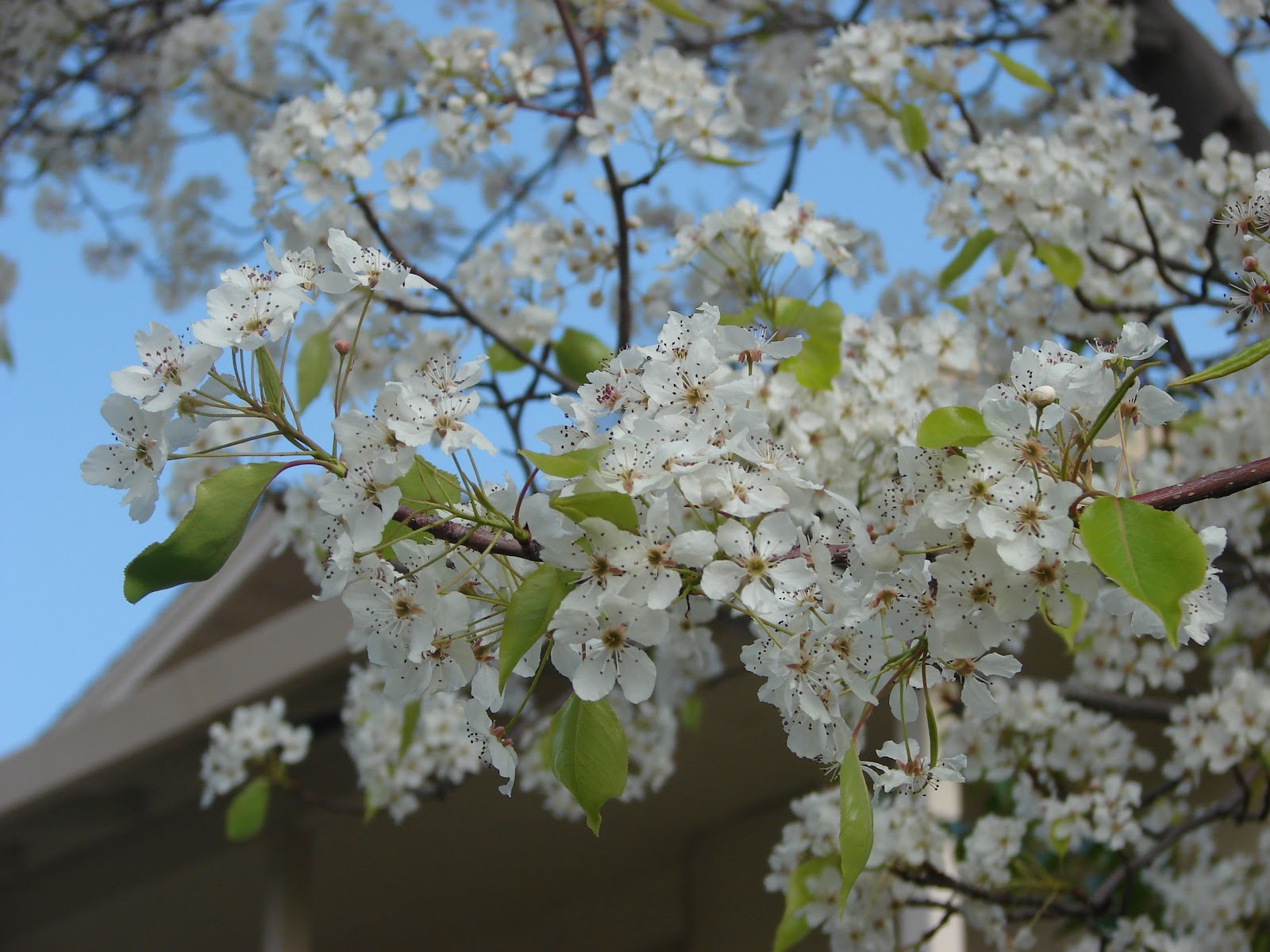
    It’s Monday! I’m going to start off the week with what I’m thankful for today: the beautiful flowers that are popping up all around the Bay Area. This is the ornamental pear tree outside my house: 
    Have you ever wondered how all the pear trees know to bloom at the same time? I was wondering that this week. On cue from Heaven, maybe.
    I love that spring begins in mid-February here. The rush and hum of the world coming back to life is one of my favorite sensations in all the world. 
    Boy, I’m thankful to be living back in the Bay Area!
    What are you thankful for today? 


    I’m sorry this comes later than usual…I had a big post in the works for last week that just wasn’t ready to go up yet. Hopefully it’ll be worth the wait when it gets posted this Friday 🙂

    Versatile Blogging!

    Ooh, how exciting! This blog has received its first award (from my good friend, Angela Wallace: check out her blog for some interesting thoughts on writing, cats, and fantasy…)

    This award comes with a catch: I must confess 7 random things about myself, and then pass it on to some worthy-of-note bloggers. Oh dear. Let’s give this a try.

    1. I don’t own a single pair of white socks. In high school, I did a sock exchange by mail with friends and ended up with everything from Tinker Bell socks to electric-blue fishnet socks. My current favorite is a pair of knee-high, blue-and-green argyles.

    2. Scotland is my favorite country in the world. I’ve visited twice, but I’d go back in a heartbeat. If I could tweak the ancestral records and make myself Scottish, I would.

    3. I took two quarters of Biblical Greek in college and absolutely fell in love with it–especially because so much of English is derived from Greek. My family will tell you that I still occasionally break into raptures when I recognize a word…

    4. Almost all my favorite authors are old dead guys (or gals). I think good authors are like good cheese: the older, the better.

    5. I like to play with big dogs, cook with big knives, and read with big books.

    6. If I could be any Disney princess, I would want to be Belle for sure. Brave, kind, enormous personal library, and how about that ballroom scene??

    7. My favorite Shakespeare play is Hamlet. I’m a sucker for tragedy. Don’t ask me why.

    And now, to pass this honor on to some wonderful bloggers!

    1. Audry : Amazing photos, knitting stories (many of them about her own designs), artistic endeavors, unexpected adventures, and puppy antics.

    2. Adelle : Sometimes funny, sometimes poignant, these are the writings of a boymom who loves God, shoes, and words.

    3. Matthew : A witty New Zealander writing about writing, reasoning, and history.

    4. Marcy : Though she’s already received this award numerous times, her insights on grammar and life through the eyes of faith deserve another nomination!

    Even if you don’t keep a blog, what are the 7 weirdest, quirkiest, or funniest things you’d list about you?