Flying Books

Well, I’ve got my nose to the grindstone in the midst of book-writing, proofreading, and tutoring, so today this video is going to do the talking for me 🙂 
This animated movie, produced by Moonbot Studios, won the Academy Award for Best Short Film. It’s entitled The Fantastic Flying Books of Mr. Morris Lessmore. Moonbot’s website describes it as “a love letter to books…about the curative power of story.” 
Interesting, because it’s wordless. 
Enjoy!

What do you think? How did you react to this film?

A Piece of Cake

This Monday takes the cake.

Literally.

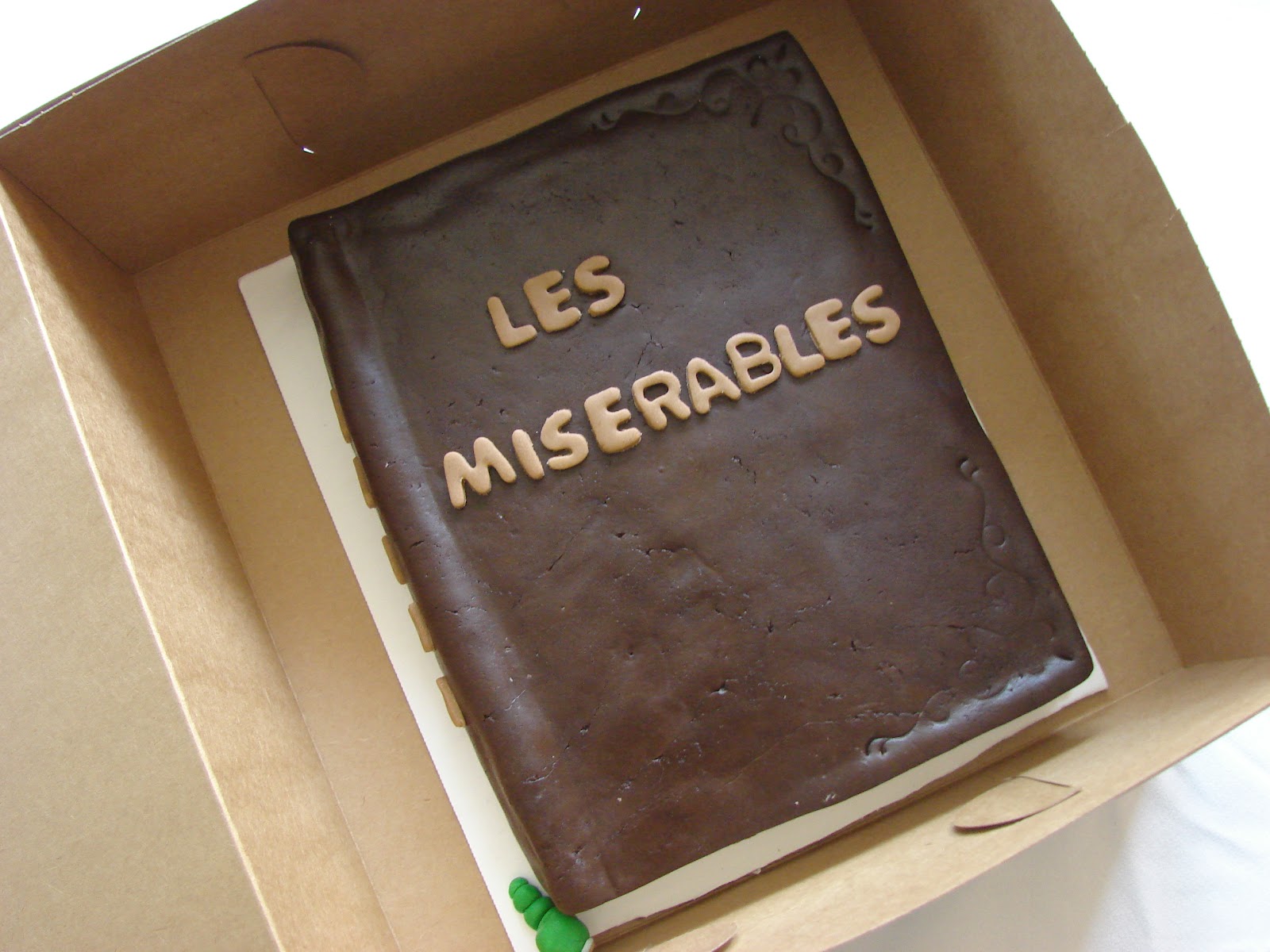
I planned to start this week out by meeting my friend Ashley at Starbucks. Little did I expect her and her parents to step out of the car and hand me a big white box with a beautiful leather-bound book inside.

An edible book.

Yes, folks, that is a Les Miserables CAKE. I devoured Victor Hugo’s famous work my senior year of high school, and it’s been one of my favorite books ever since, but I never expected to literally be able to EAT it. 
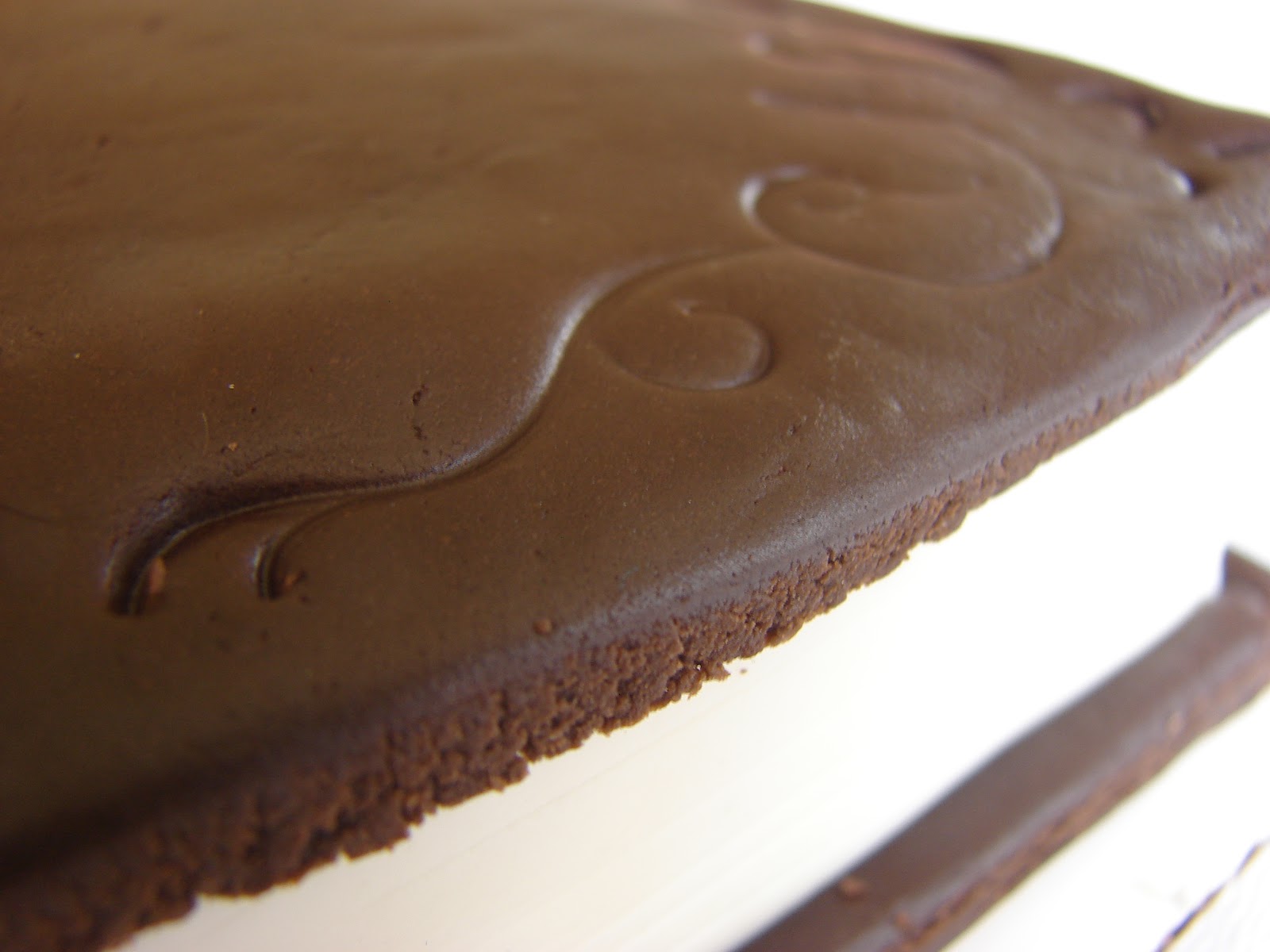
Ashley and her mom Angie are amazing cake artisans (you can check out some of their other jaw-dropping creations here). Look at the incredible details!
Doesn’t the icing really look like leather? How cool is that? 

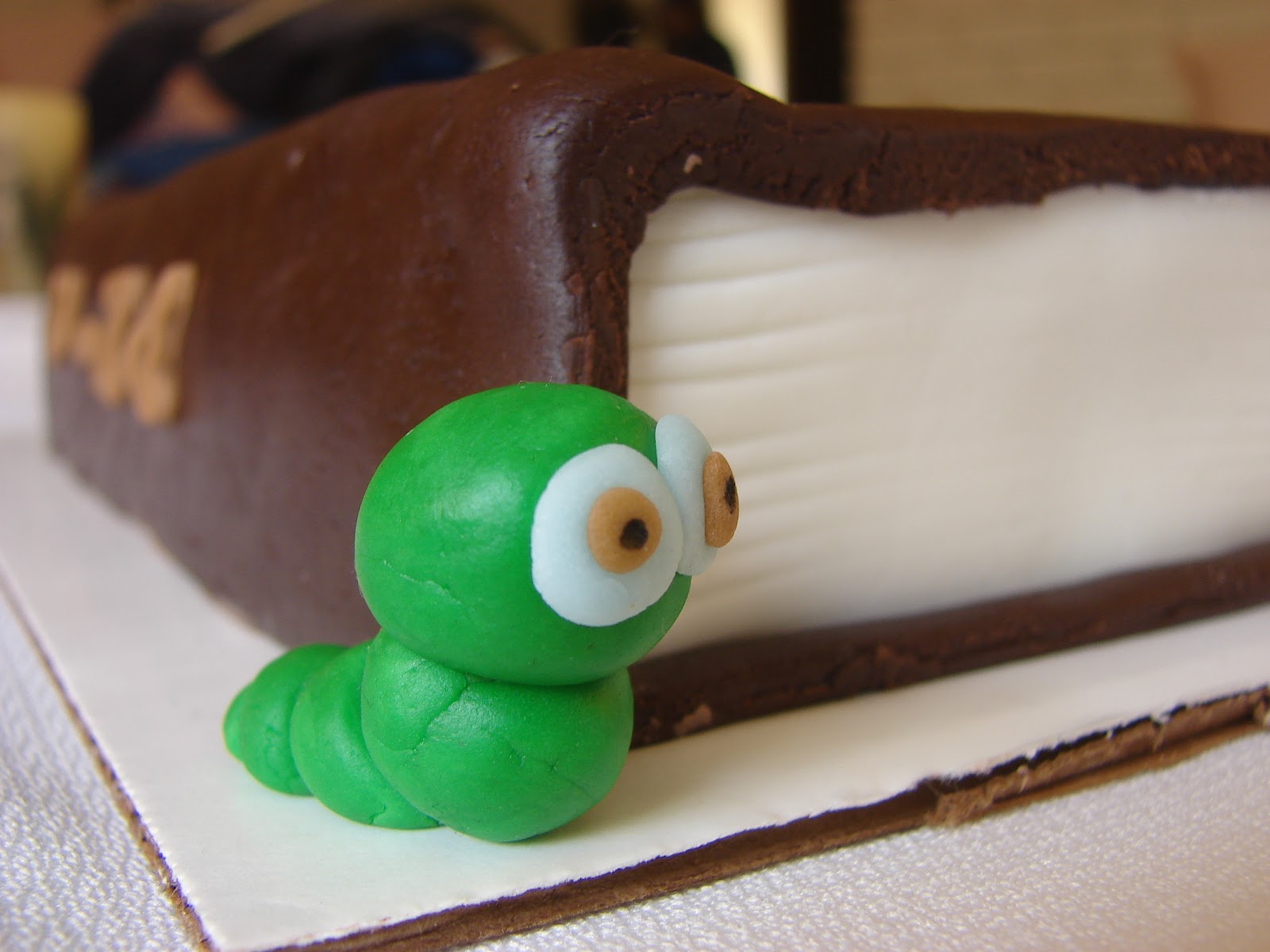
 And possibly my favorite detail: a big-eyed bookworm creeping around the corner 🙂

It even has my name on the spine! Thank you, Ashley and Angie, for kicking my week off to a great start. 
So, did anybody else find a surprise planted in their Monday? Or want to come over for some cake? 

Middle Earth, Dr. Seuss, and Shakespeare?

Hello, Monday! It’s time for a book-themed interview game, courtesy of Angela Wallace and her tag party
Rules:
1. Post the rules.
2. Answer the questions.
3. Pass the questions on to eleven people by tagging and linking to them.
4. Let them know you’ve tagged them.
If you could live in a fictional world, where would that be?
Somebody else’s fictional world? Middle Earth. But of course I’d love to visit my own if that were allowed 🙂 


Fiction or Nonfiction?
Definitely fiction (although nonfiction has its uses).


Do you read in noisy or quiet places?
Quiet places, with peppermint tea and scented candle preferred. But reading in noisy places is also something I’ve learned to do, thanks largely to my brother’s early influence 🙂

Do reviews influence your choice of reads?
Probably only if they’re by someone I know. Or if a large number of reviews are unanimous. The trouble with reviews is that people have all sorts of motives to say things, true or not. 

Audio books or Paperbacks?
Paperbacks. I have a horrible audio retention rate. Plus I like to write in my books 🙂 

What was the first book you ever read?
By myself? The first one I can remember is One Fish, Two Fish by Dr. Seuss. My preschool teacher informed my parents, “Um…did you know your daughter is reading?” 


Favorite author?
J.R.R. Tolkien…we fell in love when I was 8. Check out my Good Reads page for a list of my top 10. 

Classic or Modern Novels?Oh, definitely classics. Though there are a few moderns I like rather a lot. 

Have you ever met your favorite author?
I wish. The trouble with loving classics is that almost all of my favorite authors are dead (some for 200+ years)…

Book Groups or Solitary Reading?
Hm, both? I relax by reading alone, but after 4 years of college English classes, I find a good book discussion very stimulating. 
If you could only read one book for the rest of your life, what would it be?
Ack! What a horrible question! Definitely the Bible. But if we’re talking other literature…probably the Collected Works of Shakespeare (that’s not cheating, right?) 


Tag, You’re It! Have fun!
11. Carrie Daws 


Feel free to jump in: how would you answer these questions? What’s your weirdest book factoid?

Magical Literary Destinations

Why, hello!

It is Monday, and yes, I am posting.

One of my goals for the month of March is to blog not once, but twice a week! Monday posts will feature short, fun tidbits to be found around the internet (blog recommendations, photos, videos, etc.), for just a moment of inspiration, thought provocation, discussion, or a good laugh. Fridays will continue to be the article-style reflections to which you’ve become accustomed around here. I hope you’ll feel free to comment on those, too–even if it’s to play devil’s advocate or argue the other side!

Today I would like to send the bibliophile in you on a trip to the 20 most beautiful bookstores in the world (click on the link to see the article).

This article gave me a terrible, wonderful case of the sighs and almost made me start hunting for international plane tickets.

As long as there are magical places like these, I don’t think e-books will ever entirely dominate the world. 

Do you? 

Advice from a Book: 5 Gruesome Ways to Die

My dear Libris,

You are young and fresh off the press. I know your binding glue is new and your cover art done by a cutting-edge designer. I know you sit on the bookstore shelves and flirt with every customer who walks by, simply because you have no experience of the world and do not know what terrible and gruesome deaths books can meet. So pay attention! I would hate for any of these to happen to you.

1. Not all humans value commitment. Some humans may buy you off the shelf, read you once, and then throw you away, never to be opened again. They won’t even pass you on to a friend or send you to the library for another chance to be loved. No matter how beautiful you are or how hard you work to keep your pages stiff or your suspense scenes interesting, some people will never appreciate your labor and service. All books deserve a loving home, so please watch out for second-rate bookbuyers like this.

2. Less devastating but more painful: some humans will actually abuse you. They turn your pages, make you think they love you, and then plop! a wad of gum lands between your pages and sticks them together, making them impossible to open again without tearing. Or a waterfall of hot coffee comes pouring down on your head, obliterating your words and wrinkling the weave of your paper forever. There is help for such damage, but no real cure, so be careful.

3. Worse: death by fire. This fate was a much greater risk several years ago, but especially if you open your mouth and utter shocking and uncensored comments, you are at risk for being burned at the stake, perhaps even publicly. It is one of the great unrectified injustices against our kind, but for the time being, you must watch yourself.

4: Perhaps more gruesome still: death by water. Your innocent-seeming owner appears to love you so much that they read you at every possible opportunity, even snatching a few minutes with you while they brush their teeth. One minute you’re happily flapping around in their free hand, and the next thing you know, you’re facedown in the sink, covered with toothpaste. Or worse–I shudder to think of it–floating in the toilet bowl. Beware of small bathrooms; these increase the danger exponentially.

5. And now we come to the worst fate of all. I hate to even tell you about this and cast a shadow over your unscarred print-history line. But it must be told. There are some people–some bookstore-frequenting people–who will appear enamored with you, seem to appreciate you for your depth and worth, buy you off the shelf, take you home, shelve you above their television set–and then leave you there, untouched and unnoticed, to gather dust with a row of other deceived books for the rest of your lonely, unloved life. You’ll even be close enough to hear the cruel blaring of the television as they sit with it every night.

Please don’t despair, dear Libris. These fates are terrible and tragic, but there are also excellent humans who will take good care of you and make your shelf life long and sweet. There are those people who will tiptoe into the bookstore, or library, or even up to the giveaway table at a yard sale, and spot you, and cry: “Just the one I’ve been looking for!” And they’ll take you home and love you and read you again and again. They will laugh at your funny parts and turn your pages carefully. They’ll keep you far away from coffee mugs and television sets, and they may even recommend you to their friends. It is worth any risk to end up in the hands of such a person.
Dear Libris, I hope you may end up with such an owner. But even so–keep your eyes open. There are many gruesome ways for books to die. 

Thank you Hannah, Teri, Megan, Caleb, and Elaine for these wonderfully grisly ideas! What warnings would you give a naive, newly published volume about the world of readers? 

The 7 Deadly Sins of Reading

What’s the worst crime you can commit against a book? Have a pet book peeve that really makes you cringe? Think we should start a Prevention of Cruelty to Books organization?

When I asked this question of you on Facebook and Twitter, I got so many creative and twisted responses (some of them confessions) that I’ll be doing a second post in this series next week. Thanks for your delightful/horrifying ideas.

Time for some indictments–and maybe some more confession–as we uncover the 7 Deadly Sins of Reading.


#1: Dog-ear pages instead of using a bookmark
Ever watched someone start to turn a page–then go back, lick their finger, and crush down the corner of the paper? Ever give you the feeling that one of your bones is breaking? 
Be kind to books. Use a bookmark.

#2: Read a series out of order

Picked it up on #2, then skipped to #5, started #7? No wonder you can’t keep track of the main character’s love interests. 
#3: Write in it 

This is one that used to give me the gag reaction before I went to college. Deface a book?! It would be like unleashing a can of spray paint on the National Gallery of Art! Now, thanks to a couple of ink-stained professors, writing in my books is one of my favorite things to do (especially with Shakespeare). I underline my favorite passages and write comments in the margin–it’s like having a conversation with the author that I can add to every time I pick it up.
#4: Skip chapters

Skip the “boring” dialogue? Cut the blah-blah-blah and get on with the story? It would be like skipping the songs in a musical!

#5: Tear pages out (or let your rabid bunny do it)
Isn’t this picture just terrifying? 
#6: Read the ending first

Or, even worse, read it and spoil it for others. You have to go through the story to get to the end, just like the characters do. No peeking!

#7: The worst of them all: don’t read

Joseph Brodsky wrote, “There are worse crimes than burning books. One of them is not reading them.” Whatever you do to your books, there’s no worse crime than putting them behind glass and letting them collect dust.

Not to say that you shouldn’t admire them, however. Just treat them nicely.

Which “sins” would you add to this list? Which ones have you committed? Check back next week for “5 Gruesome Ways for Books to Die”…

Wit, Wisdom, and Castles: “I Capture the Castle” by Dodie Smith

This is a review of a book that is not for the young, but certainly for the young at heart.
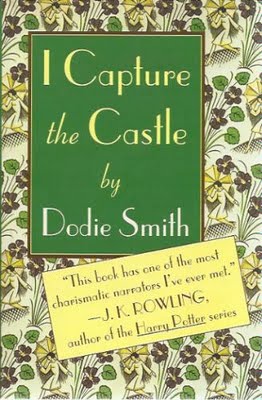
I Capture the Castle, published in 1943 by Dodie Smith (her first novel), begins with all the trappings of a fairy tale, but uses them to tell a story so real that there’s nothing fairy-tale or cliché about it.
Seventeen-year-old Cassandra Mortmain lives in a castle. Perfectly romantic, yes? Picturesque towers, the idyllic English countryside—until you realize that the castle is full of leaks and the family is practically starving to death since her writer-father hasn’t penned a word in over twelve years. In addition to her hermetical father, Cassandra lives with her older sister Rose, whose great wish is to marry for money, her studious younger brother Thomas, her sympathetic but eccentric stepmother Topaz (whose former occupation was nude modeling for a London painter), and a handsome servant named Stephen. Oh yes, and a cat and dog; Abelard and Heloïse (private joke about a pair of twelfth-century scholar-lovers).  Cassandra’s aspiration is to be a writer, and the novel is structured as three of her journals, her stated purpose being “to teach myself how to write a novel—I intend to capture all our characters and put in conversations.”
The first major action mirrors the beginning of Pride and Prejudice: the neighboring manor, empty since the owner’s death, is at last re-inhabited by his two handsome grandsons: dashing young Americans who are terribly interesting and perfectly single. However, the remaining 90% of the book has absolutely nothing to do with Pride and Prejudice, and both Cassandra and Rose find out what misery is caused by trying to force life to match fairy tales. On the way, Cassandra’s views on wealth, history, God, romance, travel, and people are stretched even as she writes down these experiences and her reflections in her journal. 
The primary delight of this book is in Cassandra’s witty and wise narrative voice. If I’d read it at age seventeen (or younger), I think I would have found the vague and meandering plotline of the book uninteresting and the ending incomplete. I related to many of Cassandra’s stories, but in the middle of my teen years I wouldn’t have had have the distance to sift out the wisdom in them. But that’s because at the time I was looking for fairy tales, and this is a story about real life. In the six months Cassandra’s journals cover, we watch her grow up—from a starry-eyed child to an adult who perceives the world with a more complex awareness of both its joys and sorrows (fancy word for this genre: bildungsroman). She becomes a young woman who stands tall with maturity and self-respect, valuing her family, her integrity, and her dreams of authorship more than grubbing desperately for “happily ever after.” Anne of Green Gables would call her a “kindred spirit,” though she comes from the other side of the Atlantic. As Cassandra “captures” the castle and the people around her in words, we watch her become a “wise young judge,” a strong, funny, honest, real heroine who is ultimately very worthy of respect.
This is a book for aspiring writers, for young women who have wrestled with singleness, for those who love England. It’s for adults who can identify Cassandra’s wisdom but still remember going through the difficulties of gaining it for themselves. It’s for people who enjoy a witty narrator describing her unconventional life in vignettes both down-to-earth and poetic. It’s not quite like any other book I’ve read, but I’ll be keeping this one.
Have you read this book? Seen the movie adaptation? Does it remind you of something else? Add your thoughts to the conversation!  

Setting a Course

Hello again! 


2 weeks away from my blog feels more like a month and a half. So strange! I feel like everything I re-start after the holiday break is individually packaged in a fresh layer of brain fog. It doesn’t help that I am returning to my computer from one of the most beautiful, relaxing places imaginable: 

Ah, well. 
It is good to be starting a new year, though. I like the chance to break schedule during the holidays. Sometimes I’m so busy putting out the day-to-day fires that come up that I lose sight of my big-picture vision. It feels like a chance to pause, pick up the scattered pieces, regroup, and re-strategize about where you’re going in life. Then New Year’s Day arrives, and with it, a chance to turn a new page and do some things differently in life. 

As a rule, I don’t really make New Year’s resolutions. The jokes are true. Talk is cheap, and they’re made of talk. They’re flimsy; made to be broken. Besides, until this year, I was living on the school calendar and made whatever resolutions I was going to make in September. School offers a certain structure to the resolutions you make, too–study more (or maybe less). Invest in friendships. Get an internship. Graduate.

With the rigid frame of academia removed, though, I find that I am the only one responsible for setting goals for myself–for not letting life make my decisions for me. As you can tell by the size of the word “trust” in the sidebar, my process of direction-setting is one that involves a great deal of prayer and wrestling.

So this year I’ve made some New Year’s goals. The word resolution, in my mind, says self-reliance. That’s why New Year’s resolutions don’t last. I myself am weak. When I run out of energy to stay resolved, I give up, out of exhaustion if not lack of will. I think goals, however, are visions we lay before God for partnership. If my life direction has been submitted to Him for approval and guidance, goal-setting is an act of faith: setting a course and trusting Him for strength and courage to hold to it.

I’ll tell you what my goals are in a minute, but first I want to clarify that this is not just my personal mind vomit. I read a great blog post by Kathy Lipp this week that talks about goal-setting for writers. In her words, “public humiliation goes a long way to getting your book written.” Accountability goes a long way toward other things too: when other people are aware of your goals, the pressure to meet them rises–and you accomplish more than if they sit secretly moldering in your journal.

I also like a tradition my knitter friend Audry has instituted on her long-running blog, Bear Ears. At the end of each year, she sets goals, ranging from “knit a sweater” to “build a terrarium.” But she also reviews the results of her previous year’s goals. It becomes a neat cycle of tracking growth and watching how God’s plans sometimes completely diverge from ours. I hope that next December/January, I will be able to track those long-term patterns, too.

OK, so here are my top 5 New Year’s goals. I hope you will hold me accountable and share yours as well!

1. Get to know God better. To do this, my goal is to read through the Bible in chronological order in one year.

2. Have the second draft of my children’s novel completed and be ready to start looking at literary agents by June.

3. Take a 2-month class to learn more about blogging and social media for authors. I hope you’ll be seeing regular improvements on this blog from now through the end of February!

4. Buy a car (wings optional).

5. Read Gone With The Wind, Othello, and The Kite Runner.

What are your goals for this new year? 


Holistic Reading…and Living

Can you read just one book at a time?

I can’t, unless it’s impossibly engrossing (the last one was Here Burns My Candle, a Scottish historical novel by Liz Curtis Higgs).

I don’t always mean to get started on so many books. But I love them because they speak to my heart and mind. They wriggle past the outward fronts I put on and give me sharp lectures or hope-giving inspiration. They’re companionable when I don’t feel like talking. They’re adventures that come cheaper than a plane ticket. So I put a good read on my nightstand…and then add another…and another…and so it goes.

Really, though, I think I read multiple books at a time because real life has many parts. I am more than just a learning brain: I am also an imagination, a soul, and a body. I am a worker, a server, a dreamer, a pilgrim, and I stand in need of beauty as well as instruction. I read multiple books simultaneously for the same reason I schedule more than one type of activity into my week. I lesson plan, but I also watch movies. I have coffee with friends, but sometimes I’m alone in the quiet house. I spend time both praying and walking. We are whole people with multiple areas of life, and each of those areas has different needs.

I suppose you could call it holistic reading. The good part about it is when I have a moment to read, I almost always have something I  feel inclined to read right then, no matter what time of the day or week.

The downside?

Overextension.

Just as I sometimes schedule too many activities into a week, however holistic they may be, sometimes I take on more reading than I can actually handle. Ever have that feeling? The spines look so pretty, all fitting snugly together on the shelf, until you realize you haven’t opened any of them in a week. Or more. And that even when you do snag a stray hour for reading, you spend a quarter of it in paralysis before the bookshelf, worrying and wondering over which volume you should spend the time on.

Right now, for example. It started out as a very holistic plan, with some books for each different area of life. It went like this:

Tutoring:


Island of the Blue Dolphins by Scott O’Dell
Hatchet by Gary Paulsen
Devotional books:


A study on the book of Isaiah by Navpress
Grace for the Good Girl by Emily P. Freeman (who, by the way, has a great blog: http://www.chattingatthesky.com/)


Fun Stuff:


Cover for 'Phoenix Feather' 
Phoenix Feather by my dear friend Angela Wallace (angelawallace.wordpress.com)


Classics:


The Pilgrim’s Progress by John Bunyan

Nighttime reading:


101 Famous Poems (see “Why Busy People Need Poetry”
Whoops…suddenly I’m reading 7 books. And my “To Read” stack is still growing. 
Perhaps there’s balance to be found in this reading mania. There are so many great books to read, each equipped to meet different needs. Maybe the key is to limit the number of categories…and the number of books per category…and the number of times I say “yes” to a new book…
The challenge is to remain holistic without becoming overextended. Sounds a lot like my life. 
Imagine that.
What are you reading right now? Do you have a one-book-at-a-time policy?

The Call of the Wild…and Candy

This week I put on my literature teacher hat and attempted to lead a discussion that would leave my students rapt, enlightened, and in awe of the guiding power of literature on life.

The book was Jack London’s The Call of the Wild. It follows the story of Buck, a soft Californian dog who is kidnapped and transported to the Gold Rush Yukon. In that hostile environment, he learns to survive and ultimately becomes like the wolf his ancestors were. Relatively short and jam-packed with dogs, wilderness survival, and fights to the death, this novel was sure to be a success with 7th-grade boys, right?

File:JackLondoncallwild.jpg

Unfortunately, when I first attempted a literary discussion last week, I forgot one salient fact: these students are 7th-grade boys. They could barely remember the main character’s name, let alone discuss the author’s commentary on human nature. I came home discouraged, wondering how on earth my college professors had executed their scintillating discussions.

My mom, as usual, had some pertinent words of wisdom for me. Human nature isn’t naturally nice, right? We’re naturally selfish, right? So these students aren’t going to scramble for literary comprehension unless there’s something in it for them, right?

Ah.

Fortunately, Monday was Halloween, and there happened to be quite a bit of leftover candy lying around the house. Concealing the silver-wrapped morsels in my tutoring bag like a stash of doubloons, I sat down across the table from my charges. I placed my copy of The Call of the Wild on the table. And I announced that this week’s discussion would include a new element.

Candy.

With a sugary reward going to anyone who answered a question, the discussion bubbled like a hot spring. The boys racked their brains for scenes from the book. I saw the 7th-grade cogs and wheels turning as I probed for the meaning beneath the text. They even invented facts when they couldn’t remember. We steered through the survival setting of the book and talked about the way it reveals the fundamentally selfish nature of dogs…and humans.

They may have missed the irony, but as their candy wrappers crackled, I savored it.

Do you have a story, funny or otherwise, about encounters with human nature? I’d love to hear it!