TIG’s first bookstore!

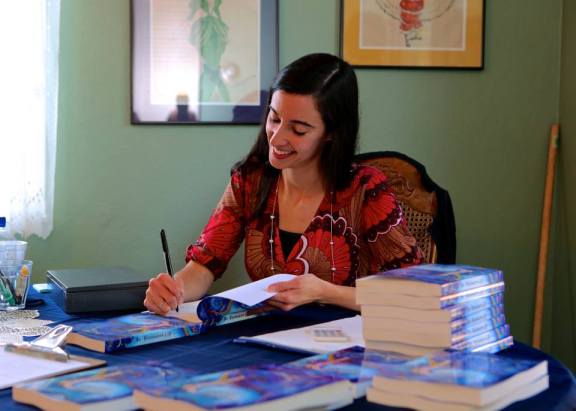
I have joined forces with my first bookstore!

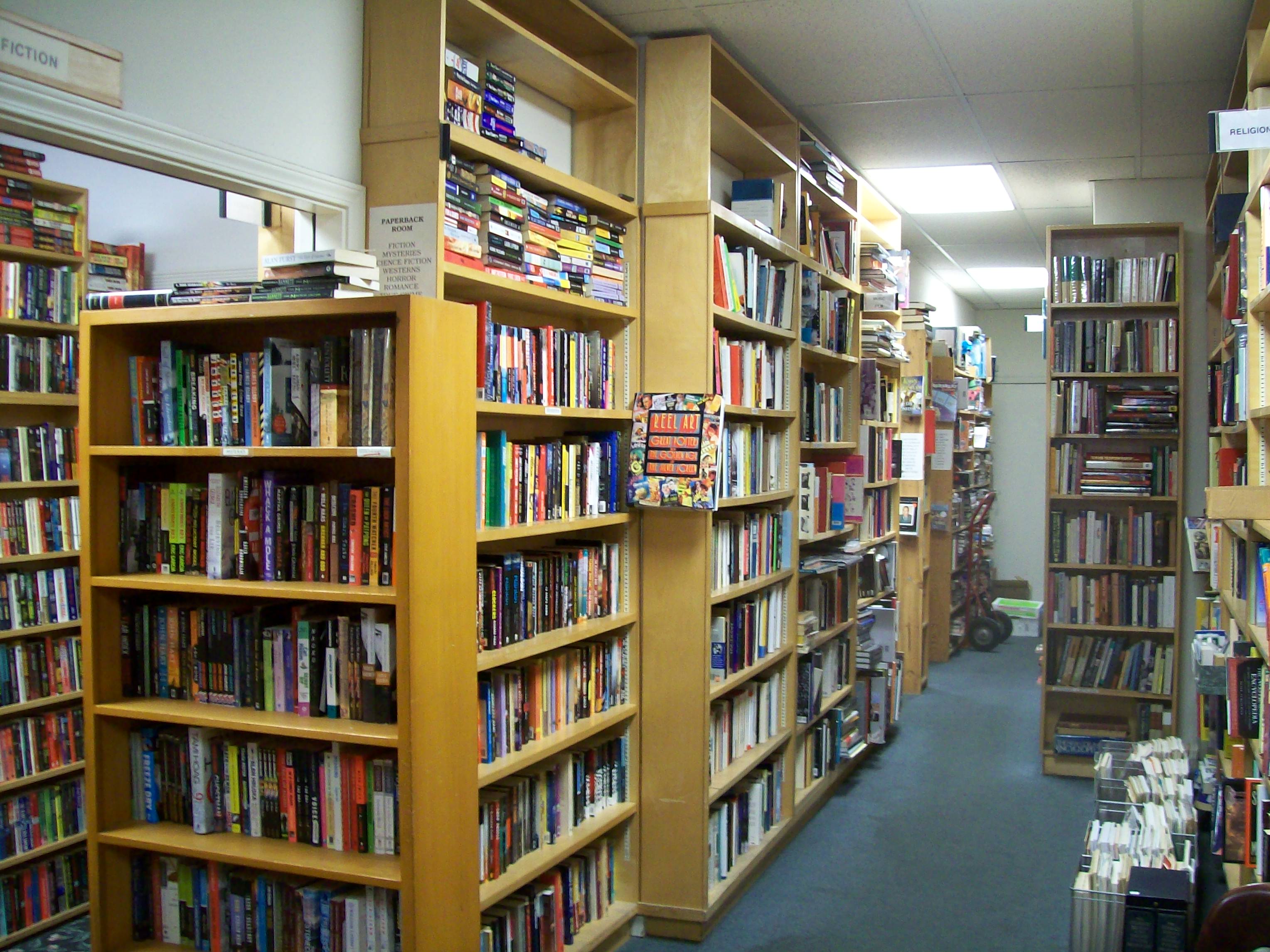
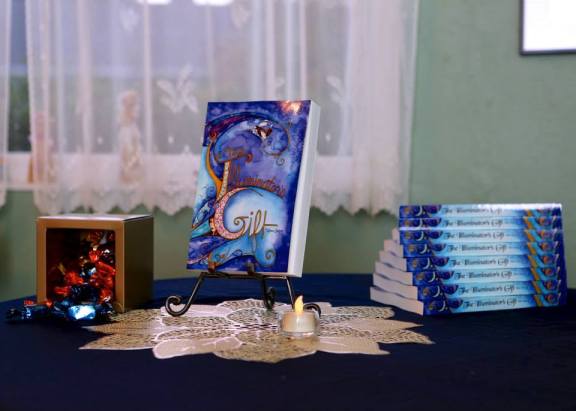
Paperback copies of The Illuminator’s Gift are now available at Spectator Books in Piedmont, CA! (I blogged about them when I first visited last month.)

027

On a bohemian street offering boutiques, antiques, and handcrafted coffee, check out this independent bookstore that’s bigger on the inside. Spectator Books sells both used and new books. Their fiction selection (for both adults and children) is particularly impressive.

And now I can personally attest to one of the titles in that section 🙂

028

So if you find yourself in the area, get a little lost in this lovely labyrinth of books. And maybe pick up a certain title while you’re there (wink, wink).

Book Family

One of the things I didn’t realize I’d get when I wrote a book was a book family.

I thought writing a book was about sitting alone for hours and hours, documenting your thoughts and ideas, and sending them out to other people. Like a one-way letter to the world.

What I didn’t realize was that others would write back.

The Illuminator’s Gift is connecting me with all sorts of people: friends and strangers, children and adults, people who are like me and people who are different. As they read, the story becomes theirs. The ideas no longer belong to just me.

It’s the best thing ever.

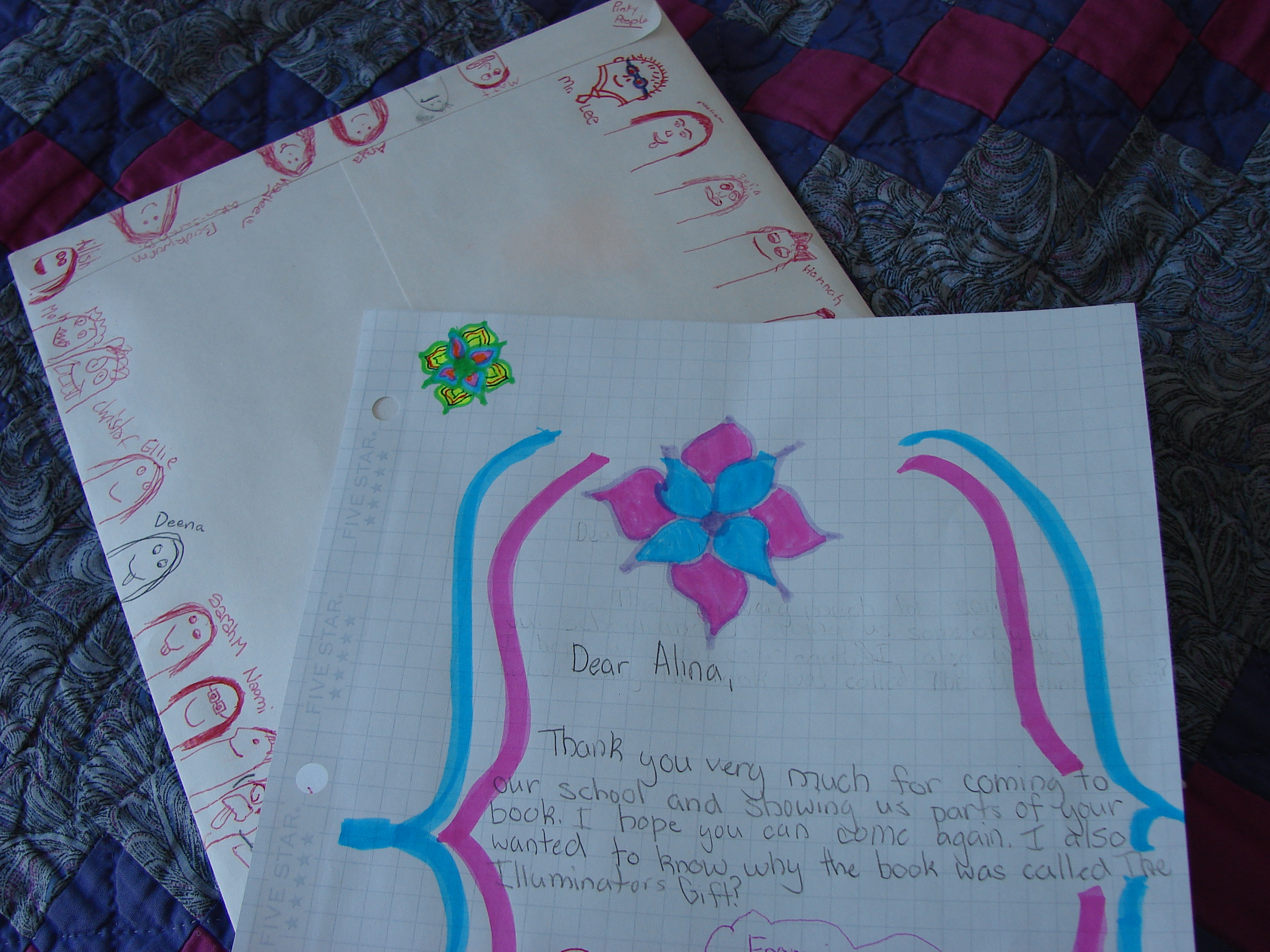
DSC07038I’ve gotten to meet dozens of kids in schools. Some of them have written me letters with questions about the book that I’d never thought of before.


DSC07051

One girl even wrote a book report. I think her summary of the story was better than mine.


DSC07040

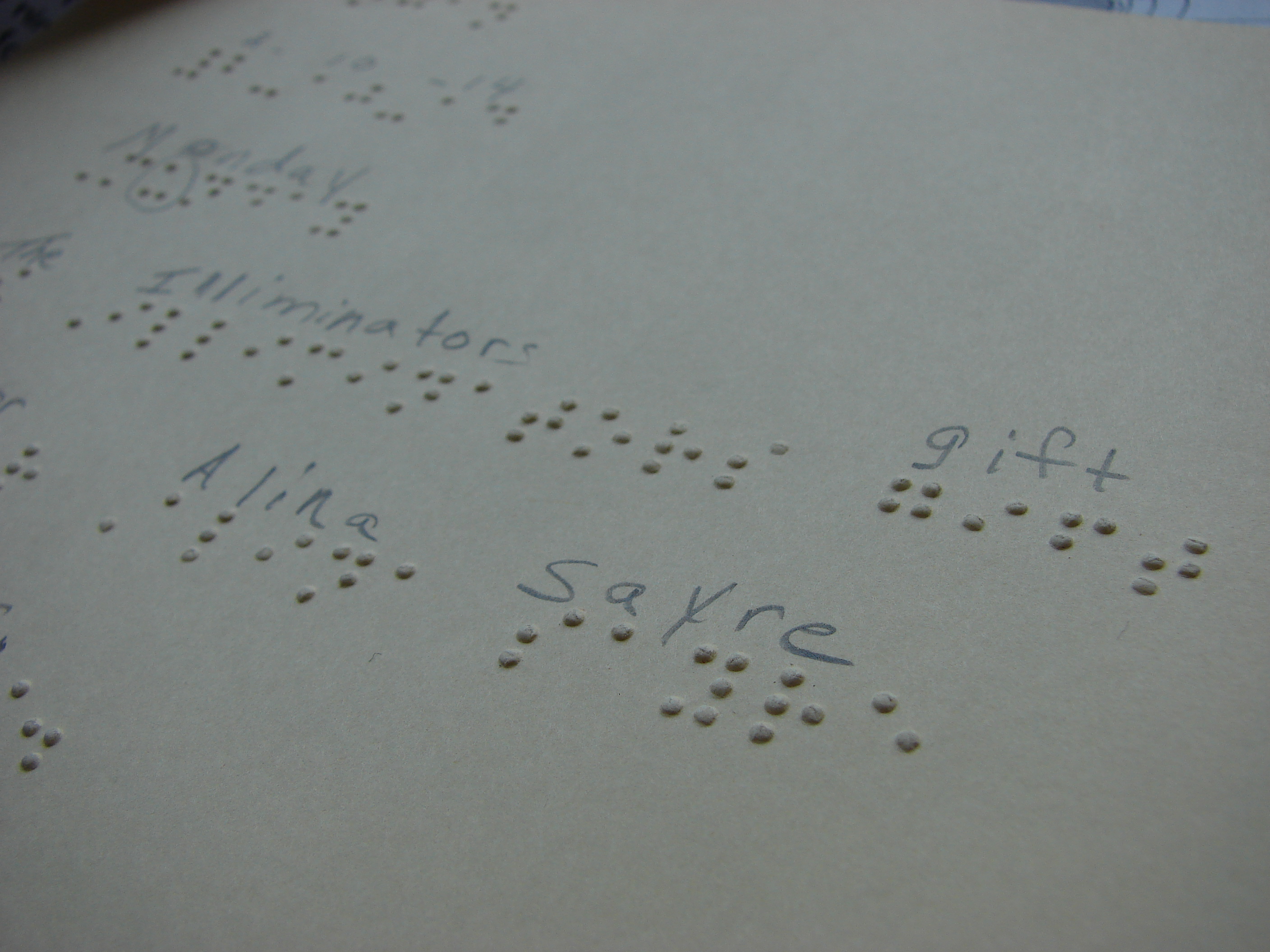
One precious boy had The Illuminator’s Gift read aloud to him because he can’t see the black-and-white letters on the page. He catalogued his reading time in Braille, a language of dots that I don’t yet know how to read.


DSC07044

And I’m not the only storyteller out there. Two anonymous writers sent me prequel and sequel chapters to The Illuminator’s Gift. Maybe I should take a leaf from their book. So to speak.


DSC07047

Maybe the most fun, though, is the e-mail correspondence I get to do with people I’ve never even met. As a kid, I was too shy to write to my favorite authors (even the ones who were still alive). I didn’t want to bother them or take up their time. Now I see that not only was I missing out on the fun of a correspondence–I might have made their day. I wish I’d been as brave as the kids who write to me now.

I thought writing a book was something I would start, then finish. That once it was published, the journey would be complete.

I couldn’t have been further from the truth. The journey is just beginning. What was once a one-way letter is now a two-way conversation.

I am blessed by a book family, bound together by words and pages.

Why We Need Dystopian Literature

It’s funny that I, who can’t handle graphic descriptions in books and rarely watch movies rated higher than PG-13, consider dystopian literature one of my favorite genres.

What is dystopian literature? If you’re a fan of The Hunger Games or Divergent (which will soon be making its movie debut), you’re already familiar with it. Word history makes a little more sense of the genre’s odd name, though.

A utopia is a perfect world (deriving partly from the Greek word ευτοπiα, meaning “good land”). Flip that on its head and you get a dystopia (δυστοπια), a “bad land.” The setting is often a futuristic or fantastical version of our own world–but something is very, very wrong with it. 

The exact type of wrongness varies. It can be a nationally televised event in which teenagers fight to the death. It can be an association of “firefighters” who work to burn books rather than save them. It can be a community that has rejected the burden of memory.

All disturbing scenarios, without question. But it is that very ability to unsettle that makes dystopian literature so powerful. It makes us understand consequencesFahrenheit 451 portrays the book-burning “firefighters” as a consequence of culture-wide entertainment addiction. The cold extermination of humans in The Giver is a consequence of a society that chose painlessness and order over compassion and mercy.

The consequences are extreme, even grotesque, in these fantastical novels. But they raise questions for real life in the subtle and palatable way that only fiction can:

What are the problems with our own society? What will the consequences be? And what can we do to change things? 

And that’s why I love dystopian novels–not because I’m a freak who loves to read about twisted worlds. I love these stories because I’m a person who wants to see the sickness of the world I live in and help prevent it from worsening past cure. I like these novels because they make me think, but more because they make me care. Maybe that’s why the genre has picked up so much popularity, especially in the turmoil of recent years.

So: pick up a dystopian novel and let it raise questions for you. If you need a place to get started, here’s a list of my top 5 dystopian novels:

1. The Hunger Games by Suzanne Collins

“In the ruins of a place once known as North America lies the nation of Panem, a shining Capitol surrounded by twelve outlying districts. The Capitol is harsh and cruel and keeps the districts in line by forcing them all to send one boy and one girl between the ages of twelve and eighteen to participate in the annual Hunger Games, a fight to the death on live TV.” -Amazon.com

2. Fahrenheit 451 by Ray Bradbury

File:Fahrenheit 451 1st ed cover.jpg

“Guy Montag is a fireman. In his world, where television rules and literature is on the brink of extinction, firemen start fires rather than put them out. His job is to destroy the most illegal of commodities, the printed book, along with the houses in which they are hidden.” -Amazon.com

3. The Giver by Lois Lowry

File:The Giver Cover.gif

“The story centers on twelve-year-old Jonas, who lives in a seemingly ideal world. Not until he is given his life assignment as the Receiver does he begin to understand the dark secrets behind his fragile community.” -Amazon.com

4. 1984 by George Orwell

File:1984first.jpg

“Written in 1948, 1984 was George Orwell’s chilling prophecy about the future. And while 1984 has come and gone, Orwell’s narrative is timelier than ever. 1984 presents a startling and haunting vision of the world, so powerful that it is completely convincing from start to finish. No one can deny the power of this novel, its hold on the imaginations of multiple generations of readers, or the resiliency of its admonitions—a legacy that seems only to grow with the passage of time.” -Amazon.com

5. The Island of Dr. Moreau by H.G. Wells

File:IslandOfDrMoreau.JPG

Although this is sometimes classified as a science fiction novel (and it does contain science fiction elements), its placement on an isolated island in our world, paired with its disturbing social commentary, make it a good example of dystopian literature as well. A power-crazed scientist makes humans out of animals, positioning himself as their god–but when the animals begin to regress, we must ask where the boundary between man and beast lies.

Have you read any of these books? Or do you have another favorite you’d add to the list?

We Have A Winner!

And…we have a winner!

Congratulations to Hillary, whose submission to the TIG on the Shelf contest won her a free e-book of The Illuminator’s Gift! 

Hillary
Hillary

Enjoy your book love, Hillary!

DSC06912
The winning drawing slip!

And though, no, I did not enter the contest myself, I had a little fun taking #TIGontheshelf pictures…

DSC06914

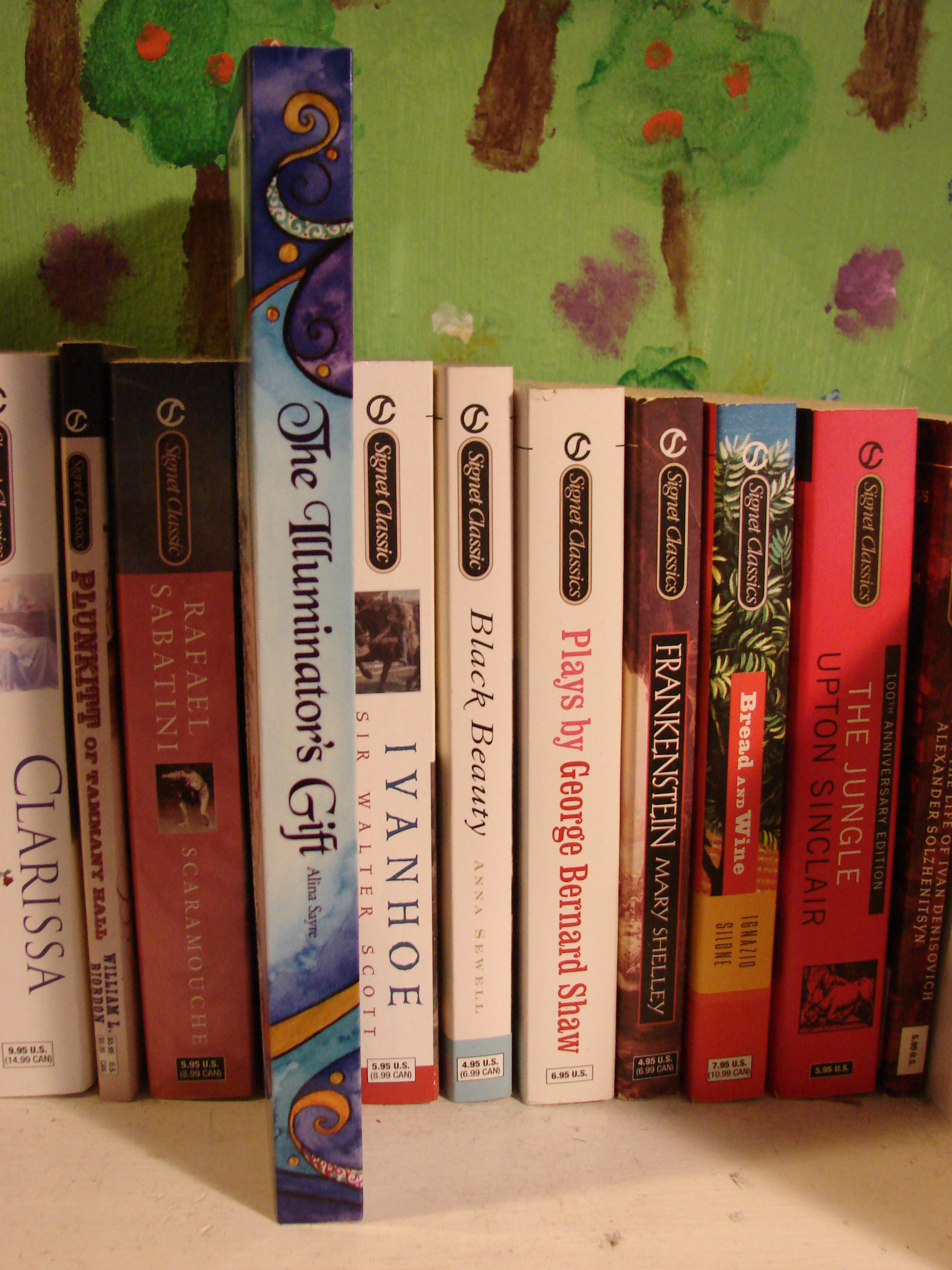
I’ve always wanted to snuggle up on the white bookshelf in the corner, cozy between Sabatini and Scott. I would, however, feel a little awkward–not only because I’d be horrifically misshelved among the classics, but also because my book looks like a giraffe next to those mass markets!

DSC06918

So ah, this is home sweet home: my children’s lit shelf. And a pretty nice neighborhood it is, I must say. Levine, Jacques, Sage (with a bookmark still in it)…these are classics I treasured as a child and have never stopped loving.

Have a lovely, bookish long weekend!

If you didn’t get around to entering this contest, stay tuned–we’ll be having more fun with different kinds of contests in the coming months 🙂 You can find out more by following me on Facebook and/or Twitter (check out the sidebar)! 

Book Love Contest: TIG On The Shelf

It’s February!

This month, love gets a lot of attention. Some people show love with chocolate, flowers, or sappy movies. Others love…books. 

Book love
Image courtesy of Kate Hiscock

So to share some book love, I’m running my first-ever contest!

TIG On The Shelf

Step 1. Take a picture of your paperback copy of The Illuminator’s Gift among its companions on your bookshelf. (Alphabetical order admired, but not required. Creative arrangements welcome.)

Step 2. E-mail the picture to me at alinasayreauthor@gmail.com. If you’d like, you can also post your submissions to Twitter using the hashtag #TIGontheshelf.

Step 3. Your name will go in a drawing for a free e-book copy of The Illuminator’s Gift! You can either keep it for yourself or have it e-mailed to a recipient of your choice. Because what better way is there to show love than books?

Alyssa
Alyssa

Submit pictures by midnight on Thursday, February 13th. The winner will be announced on this blog on Friday, February 14th. All submissions will be featured on this website, with special attention given to the winner. By submitting pictures, you grant me permission to post them on this website, Facebook, Twitter, and Pinterest, along with your first name.

So start snapping pictures! I can’t wait to see your shelves!

Caitlin
Caitlin

A Book Lover Goes To The Movies

(Warning: this post contains spoilers.)

I saw more movies in theaters over the Christmas holidays than I normally do in six months. What can I say? It never rains, but it pours.

The three movies I saw were radically different from one another, but they were all based on books (at least at some level): The Hobbit: The Desolation of Smaug, Saving Mr. Banks, and Frozen. Some of what I saw disgusted me; other parts delighted me, but above all I couldn’t separate these movies from their books. I must be a book lover, even at the cinema.  

Some of my moviegoing companions were entertained by my bookish reactions to these three films. We’ll see if you agree. 

Film #1: The Hobbit: The Desolation of Smaug

Rating: 3/10

Book fidelity rating: 2/10

The Hobbit: The Desolation of Smaug (2013)

J.R.R. Tolkien has been my first and most enduring literary love since I had The Hobbit and The Lord of the Rings read to me at age 8. I knew I couldn’t miss this film, but I had to brace myself to see it, knowing I would probably come out incensed. Well…I was right. 

Strong suits:

The Desolation of Smaug definitely pulled out all the budget stops. The CG, action sequences, and overall glamor of the movie were luxurious, particularly the scenes involving the dragon. There’s nothing they didn’t do with screen wizardry. I was also pleased with the casting of Benedict Cumberbatch as the voice of Smaug. He brought that evil dark-chocolate silkiness to the dragon’s words. In addition, there were a few book scenes that made it almost directly into the movie, and these had a poignant sweetness about them. One of my favorite scenes was the moment when Bilbo pops his head above the trees of Mirkwood and sees the treetops and butterflies. The other I really liked was the all-too-brief riddling between Bilbo and Smaug, when he identifies himself as “barrel-rider.”

Flops:

…mostly everything else. I’m not a fan of moviemakers rewriting books, especially great classic ones like The Hobbit. I’m also not a fan of splitting ONE book into THREE movies. Because then things like elf-dwarf-elf love triangles happen. And then I start laughing out loud in a quiet movie theater. And it’s embarrassing.

Film #2: Saving Mr. Banks

Rating: 10/10

Book fidelity rating: 10/10

Saving Mr. Banks (2013)

Everything that was wrong with The Hobbit was right about Saving Mr. Banks. This movie is all about literary integrity…and the power of storytelling to redeem a shadowed past. Though I only read Mary Poppins once as a child and I remember being more frightened than enchanted by the austere British nanny, I came home from Saving Mr. Banks and re-watched the Disney movie, suddenly enthralled.

Strong suits:

Everything. The acting was top-notch; the storytelling, graceful. It had the poignancy of one of my other favorite movies, Finding Neverland. Of course I laughed at the prim, snarky quips of P.L. Travers and the Disney underlings who had to work with her. But the film also brought me to tears on no fewer than four occasions with its artful yet honest depiction of the childhood scars that carry over into adulthood. I’ve never sobbed through the song “Let’s Go Fly A Kite” before. But if you see this movie, you might too.

I especially appreciated this movie’s redemptive theme. One of my pet soapboxes (as you probably know if you’ve read The Illuminator’s Gift) is the power of art as both calling and catharsis. By revisiting our own dark places through writing (or painting or moviemaking or composing), we not only find healing for ourselves, but share it with others as well. That was what this film communicated through the relationship of a hardened English writer and a Hollywood film mogul. And those were the scenes where I bawled like a baby.

Flops: 

There were a few ends left a little too dangly for my taste at the end. What role did Aunt Ellie play in Ginty’s later life? How did Disney’s not inviting Travers to the film premiere affect their ongoing relationship? What happened to Travers in later life?

Film #3: Frozen

Rating: 8/10

Book fidelity rating: 1/10 (though for once, this might be a good thing…you should really go read “The Snow Queen,” just to see what I mean)

Frozen (2013)

I love fairy tales, and I’m almost always a sucker for a good animated movie. Frozen didn’t disappoint.

Strong suits:

This is the most beautiful animated film I’ve ever seen. Not just for its incredibly realistic visuals of shiny, transparent ice or powdery snow, either. Even the imaginary things in the movie were stunningly beautiful, from Elsa’s creation of her ice castle to her diaphanous blue cape. Some of the swirls and the color palette even reminded me of the cover art from The Illuminator’s Gift! Even more than the animation, though, I loved the messages of this movie and the way it debunks some longstanding Disney myths. If I ever have daughters, I’d want them to see that not even princesses wake up with perfect hair in the morning, that love at first sight doesn’t exist, and that not all true love has to come from a romantic hero. The heroines in this movie are strong while still remaining feminine, but more importantly, they stand by each other as sisters, demonstrating true courage and sacrifice.

Flops:

Okay, so the storytelling got a bit lost in the woods. Some of the character depth and complexity came at the cost of a linear storyline like that of Tangled. On the other hand, it’s based (very loosely) on Hans Christian Andersen’s “The Snow Queen,” which is about the most madcap fairy tale in existence, so with a story basis like that, it did pretty well. I could have done quite well without the character of Olaf. His toilet humor didn’t add anything, and his character and even animation didn’t fit with the rest of the movie.


Have you seen these films? Did you think they were true to their books? Which one was your favorite?

 

Revving My Engine

January 3rd, 2014. The year’s first blog post. (Check out the sidebar for posts from the blog tour I did last month.)

And now I have no idea how to write for my own author website, after the regular ol’ blog I kept for the past 2 1/2 years. I’m still figuring out where all the buttons are here, let alone how to write!

Well, here goes. Please bear with me as I figure out my voice like a 14-year-old boy.

In 2013, I set these goals:

1. Grow closer to God

Status: yes. By the bumpy, circuitous road by which one always approaches the Most High. Including some harrowing rappelling and scraped knees. Including some good books, like C.S. Lewis’s The Problem of Pain and A.W. Tozer’s The Pursuit of GodIncluding astonishment at the imagination, grace, and wisdom of a Love greater than myself.

2. See my novel accepted for publication or self-published

Status: Why, done, as a matter of fact 🙂 The labor and thrill of the year was seeing The Illuminator’s Gift published on December 2nd, 2013!  (Permanent links to its Amazon home are on the “Books” page.) After five years of writing and months of research into publishing options, I finally decided to self-publish…then did it in seven weeks, thanks to the grace, energy, and forbearance of everyone I know. I was also extremely honored to host my first book signing last month, supported by so many loving family members and friends.

9
Photo credit: Jim Hillmann

3. Work up to a monthly income I can live on

Status: This one’s a bit more vague than I realized. Rather than achieving the American Dream, I’ve come to peace with holding my hands open to God’s plan. For someone who likes to plan, that’s a teeth-grinding journey of trust. But I’m learning. And with His imagination, it’s a wild ride.

4. Learn the craft of bookbinding

Status: Not done yet. But it’s still a goal 🙂

And now, for some new goals in 2014. My practical, small-picture goals are too numerous to list, but here are a few big-picture habits I’d like to develop:

1. Pursue God first and wholeheartedly. (That goes for writing as well as everything else.)

2. Get up earlier….

3. …in order to write at least 5 times a week. 

4. Blog weekly. You all might have to help me with this one. Clamor at me if I lag! If I do, it’s probably because I’m working on the sequel to The Illuminator’s Gift.

10
Photo credit: Jim Hillmann


I’m revving my engine for a busy, exciting year full of completely unpredictable adventures. What are your goals for the new year? 


Remember to visit the sidebar to subscribe to my e-mail newsletter or find me on Facebook and Twitter!

Five Reasons I Love Self-Publishing

With my book, The Illuminator’s Gift, releasing on Amazon in just 9 days, I’m almost done with this whirlwind publishing process. Not much time to sit back and relax yet, but it does give me pause to ask myself: is the self-publishing journey worth it?

Cover preview 1
A sneak peek at the book cover! Credit: Amalia Hillmann

Though the process isn’t yet finished, I’d say quite confidently, yesHere are five reasons I’m happy (so far) with the decision to self-publish:

1. I like a job where I get to wear a lot of hats. As you may know, when I was in kindergarten, I wanted to grow up to be EVERYTHING. Little did I know that I’d get my wish. Since jumping into self-publishing, I’ve gotten to dabble in tax and copyright law and dabble in typography, write contracts and write PR materials, learn the difference between a domain name and a web host and learn the difference between watercolor and acrylic paint. I’ve found myself good at some of these things and bad at others, but it’s all an adventure.

2. It’s been a real blessing and privilege to work with friends instead of New York businesspeople (nothing against them). And this is not only because it’s nice to have a say in the final look and feel of my book. It’s also nice to take breaks from spacing ellipses and evaluating thumbnails to chat about church, relationships, travels. To compare coffee flavors and car gas mileage. To make excited noises about the beauty we’re co-creating. To work alongside other young creatives looking for a place to penetrate the forest canopy.

Cover preview 2
Credit: Amalia Hillmann

3. Going to “the publishing house” in my pajamas is a pretty cushy perk! Especially when I contract a very obnoxious illness just weeks before the release date.

4. I’m watching myself develop new traits, from learning the art of the diplomatic e-mail, to accurately budgeting time and money, to negotiating mutually beneficial agreements, to multitasking effectively, to making important decisions without dwelling or worrying. Some of these new skills go against my natural grain. But self-publishing a book that’s very close to my heart has given me the necessary push to face some fears and grow up a little more.

5. On December 2nd, I plan to be viewing my published book on Amazon.com. With a traditional publisher, my five-years-in-the-making manuscript could have waited an additional year or more to see the light of day. Publishing a book in seven weeks is definitely not something I recommend trying at home or plan on repeating, but with self-publishing, it can be done. All the concentrated labor and anguish will be over very soon, and it will be worth it to hold that sweet, 6×9 rectangle of paper and fresh ink in my hands. 

Cover preview 3
Credit: Amalia Hillmann

The Illuminator’s Gift will be available on Amazon.com December 2nd! In the meanwhile, I’d be delighted to have you sign up for my e-mail newsletter, like my Facebook page, or follow on Twitter using the buttons in the right sidebar 🙂

Beautiful British Library Mania!

It’s Friday! I’d say it’s time for some beautiful libraries, wouldn’t you?

Let’s take an armchair trip to Britain to visit 5 beautiful libraries. (While the Republic of Ireland is not politically part of Britain, it is geographically part of the British Isles…it’s a long story, better expressed by a YouTube video than by me.)

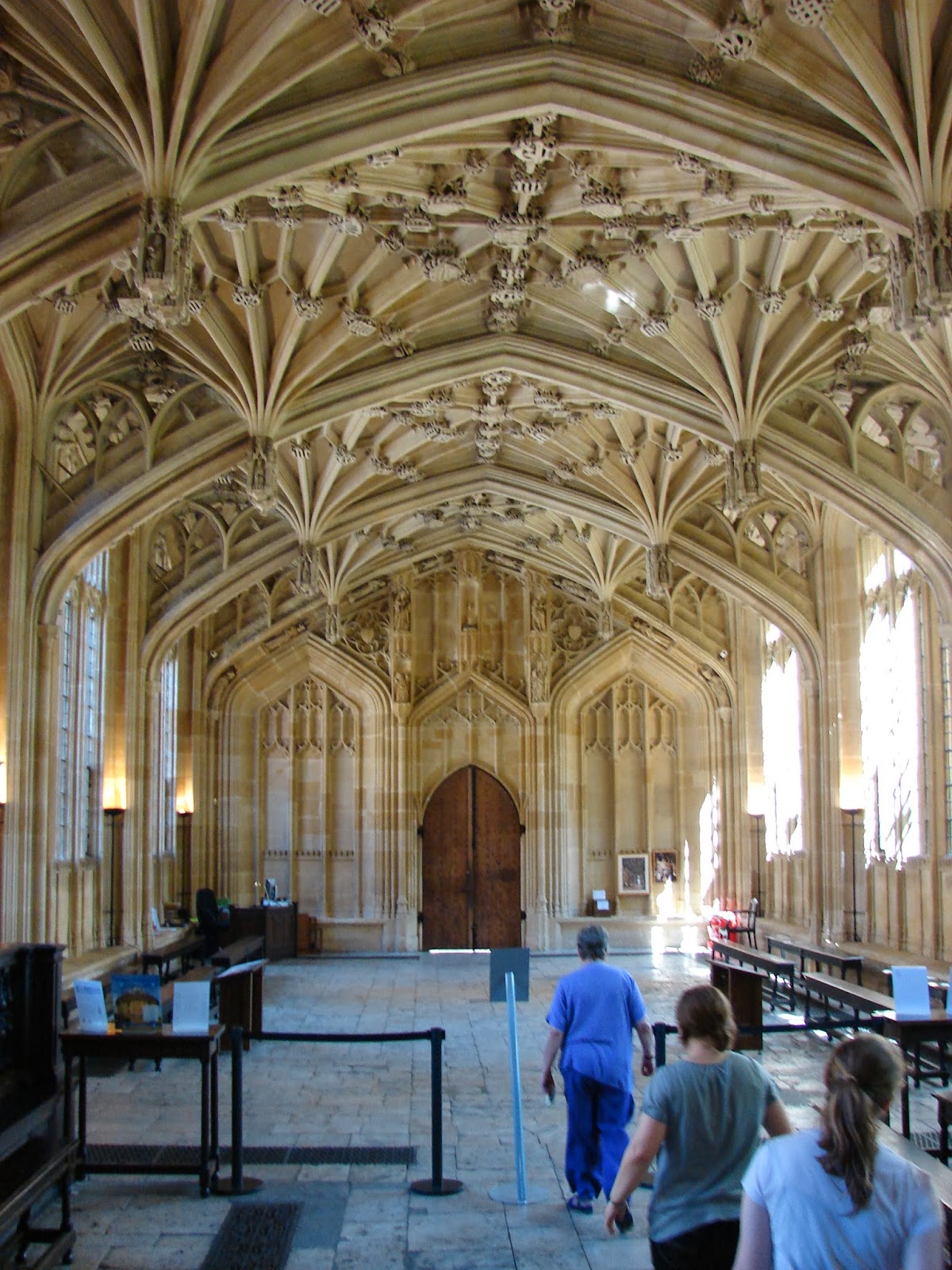
1. The Bodleian Library, Oxford, England. No library tour would be complete without the Bodleian, which houses 11 million printed items in addition to thousands of other materials. It actually consists of many different library buildings as well as a subterranean storage labyrinth. (Mystery novel, anyone?) The fan ceiling is renowned as one of the most beautiful in England.

Photo credit: redjar

2. The Wren Library, Cambridge, England. A small gem, tucked away in Trinity College, this library was designed by Christopher Wren, one of England’s most famous architects. Containing first editions of works by Tennyson and Byron and the handwritten manuscript of Winnie-the-Pooh by A.A. Milne, the library also has a walking stick and lock of the hair of alumnus Sir Isaac Newton. Love the checkerboard floor, too–makes me think of Alice in Wonderland.

Photo credit: Photodesk.at

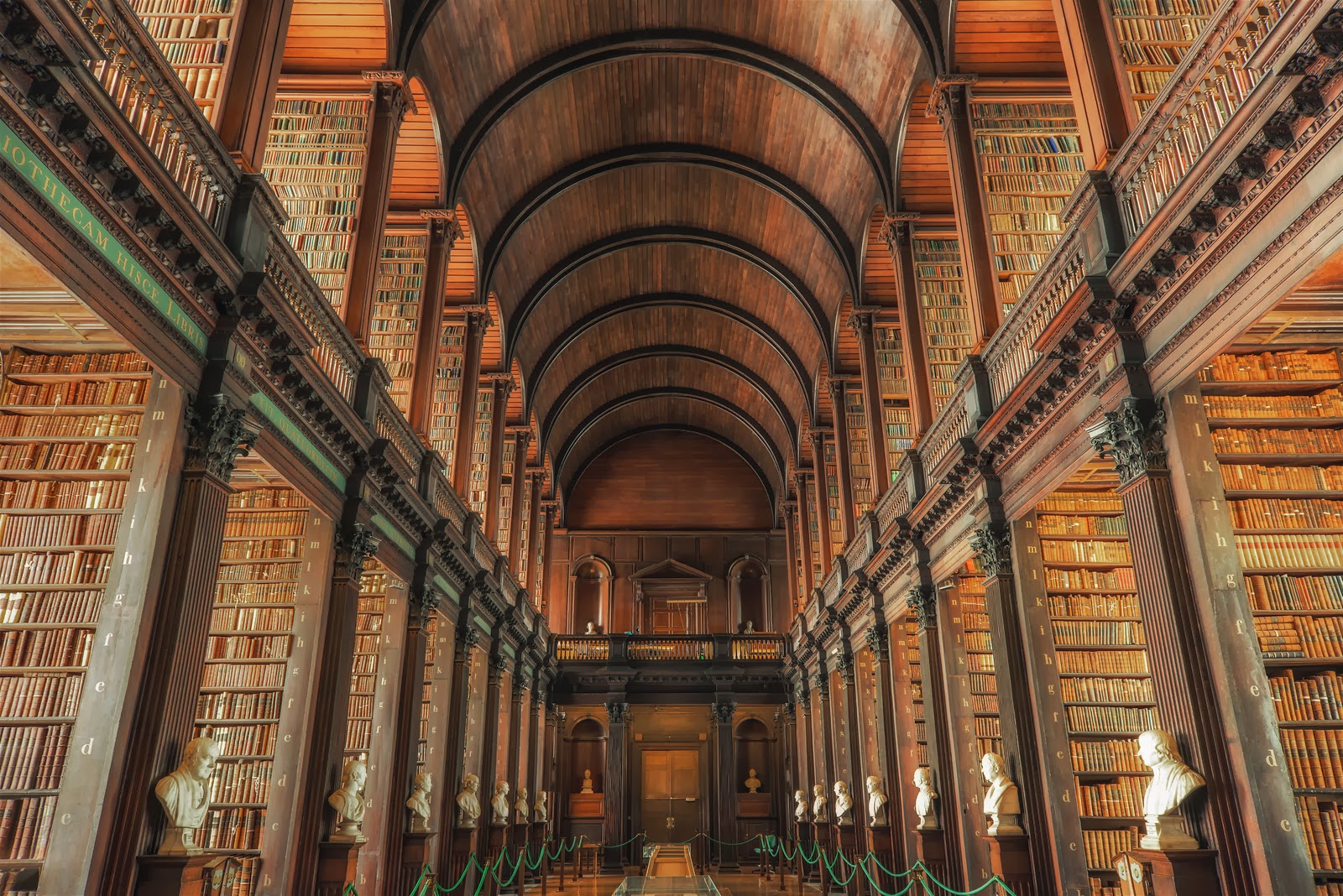
3. The Long Room, Dublin, Ireland. Two stories, marble busts of thinkers, and sliding ladders, oh my! Also located at a place called Trinity College (different from the Cambridge one), and sharing a building with the inimitable Book of Kells, they raised the barrel ceiling to accommodate more books! 200,000 of the college’s oldest, rarest books, to be exact…

4. The Chester Beatty Library, Dublin, Ireland. A little-known gem I discovered quite by accident, this library is resplendent more with inner than outer beauty. More than a simple collection of books, it’s a curiosity cabinet of antiquities from all over the world, including some incredibly old manuscripts. Imagine illuminated texts, an ancient copy of Augustine’s City of God, and fragments of Bible papyri from as early as AD 150–yes, people, that would be an almost 1900-year-old book. Er, scrap of a book.

5. The British Library, London, England. Last but not least, a classic among libraries. Along with the Library of Congress, the British Library is the second-largest library in the world. Yes, world. It’s a legal deposit and research library containing over 150 million items. Contemporary architecture (including a bench shaped like a folded-open book) pairs here with a mind-blowing collection of some of the world’s oldest manuscripts. Inside you’ll find everything from Beowulf to Jane Eyre, from Handel’s Messiah to the Magna Carta, from a Gutenberg Bible to Anne Boleyn’s copy of the New Testament. It’s the Louvre of libraries.

Oh, guess what? It’s a…

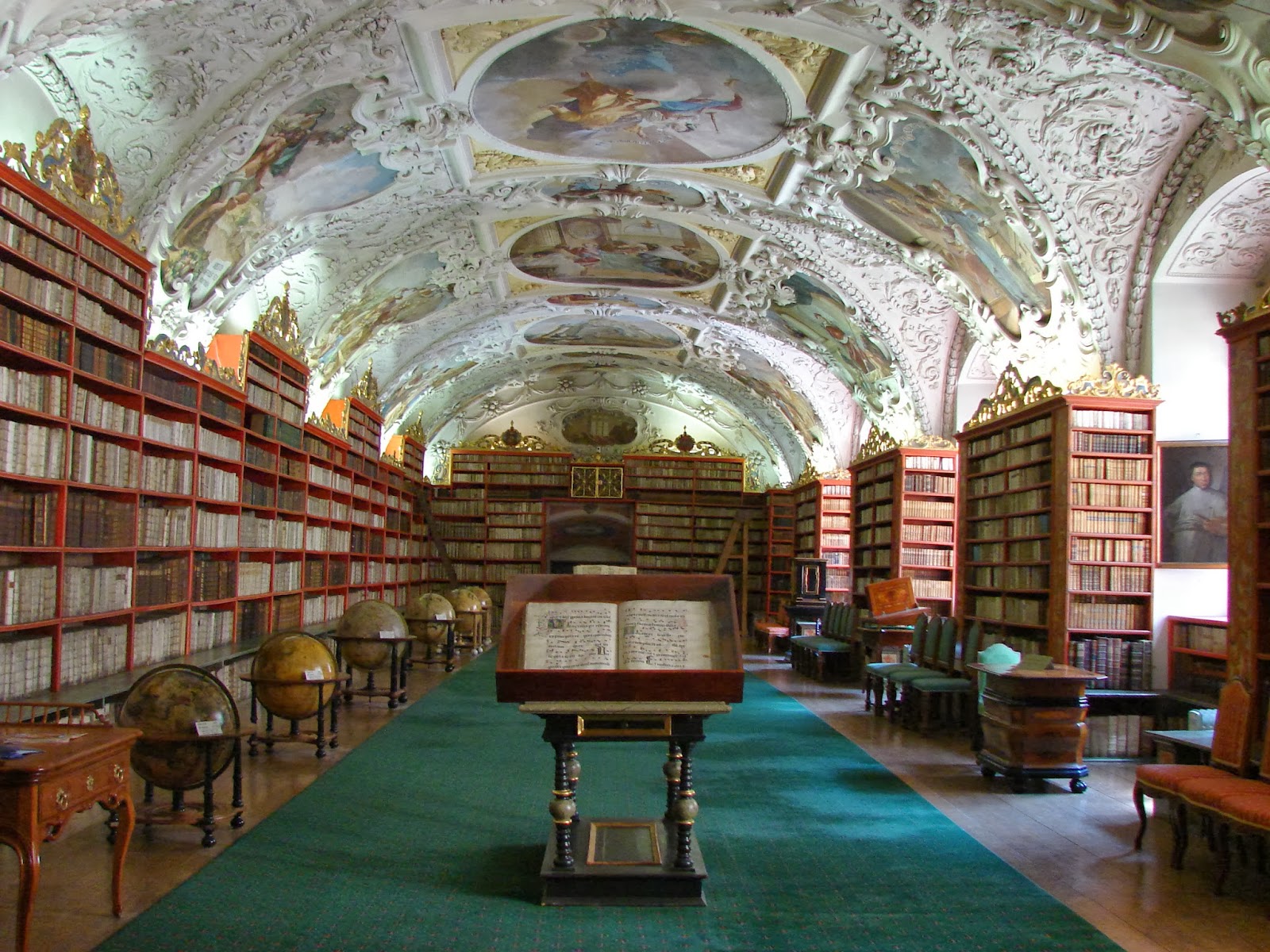
Bonus #6! The Strahov Monastery Library, Prague, Czech Republic.

This one may not be in Britain, but it sure belongs in a tour of the most beautiful libraries. Tucked away in a hilltop monastery in Prague, surrounded by whitewashed walls and the waving stems of yellow roses, is this little-known gem. After a climb up a steep hill, one is rewarded with this sight:

Globes, illuminated manuscripts, a book wheel, and a painted ceiling! It became an important point of inspiration for my novel. And made me think of this scene from Beauty and the Beast: 


Photo credit: Jessica Ta


Happy Friday! Which of these libraries (the Disney one included!) would you visit if you had the chance? 

Literature, Kniterature

Today I’m tickled to host my second-ever author interview! My good friend Audry Nicklin has designed, written, and published Lit Knits, a book of ten knitting patterns inspired by works of classic literature that allow you to “wear your favorite story.” 

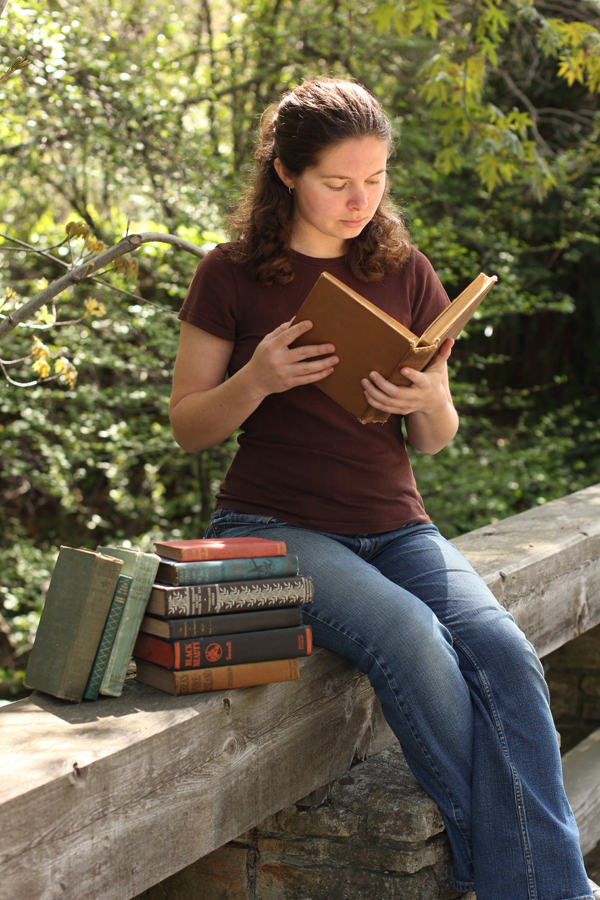
What a delicious stack of old books!
Ever since I decided I wanted to be a writer at age 14, I’ve loved reading interviews with authors. I love to get inside their heads and learn their habits and tips. Maybe it’s my secret hope that the literary prowess will rub off. 

Let’s go behind the scenes of a real live author’s creative process. Welcome to my virtual living room, Audry! 

1. We all know that a book takes a long time to produce. How long has your book been in the making, from concept to publication?


This book has been a long time coming. It took me roughly 2.5 years from concept to publication. And within that 2.5 years, I was also working part time at a yarn shop and submitting patterns to other publications.
2. How did you get the idea for Lit Knits?

After reading Anne of Green Gables in early 2011, I was inspired to make a shawl that had bits of the story knit into it. So I made up a stitch pattern that looked like the house, Green Gables. Below that I knit a texture of a fence followed by a field of flowers leading down to the Lake of Shining Waters. 

The “Avonlea” shawl from Lit Knits. I love Anne of Green Gables!
After completing the shawl, I started working on a pair of mittens inspired by the white rabbit in Alice’s Adventures in Wonderland. One thing led to another and I realized that I had a solid theme for a collection of patterns. It did take some time to figure out how to make the collection as cohesive as possible. I thought about doing a knit for A Tale of Two Cities by Dickens and one for The Raven by Poe. But Anne of Green Gables and Alice’s Adventures in Wonderlandare considered classic children’s literature, so I kept within that theme.

3. Of the 10 patterns in the book, which is your favorite?


I can’t say that they are all my favorite, can I?

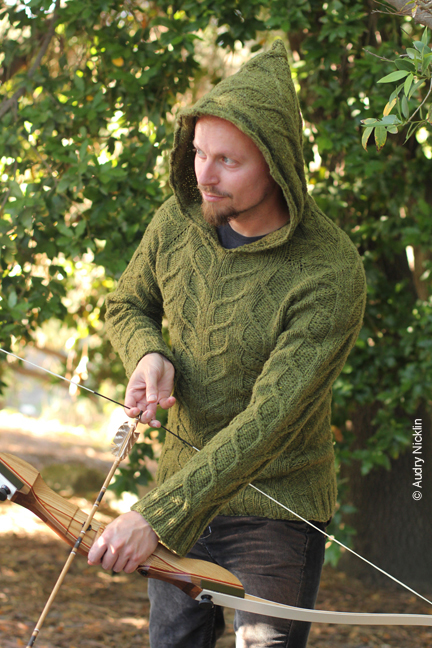
Each pattern represents a different part of my knitting journey, so I like each one for a different reason. “Down The Rabbit Hole” is based on one of my favorite childhood stories. But the “Robin Hoodie” represents the culmination of all my knitting abilities. I couldn’t have written that pattern when I started the book. But I gained enough experience while writing the other patterns to make it a reality. 

The “Robin Hoodie,” the culmination of all of Audry’s knitting abilities.
4. What would be the 11th work of literature you would add if you could?

This collection almost had 12 patterns. Before I designed each garment, I read the book I wanted to base the knit on. I read Little Women and Heidi, but when it came down to it, I had trouble designing knits that didn’t look kitschy. So I cut the collection down to 10 patterns.

5. The photography in your book is incredible. However, we all know that serene images don’t always come from serene photo shoots. What were some funny stories that happened while you were taking pictures for this book?

Well, you were part of one of the more amusing photo shoots. Since the socks you modeled were Black Beauty themed, we needed to have horses in the background. After getting permission to go to a field where there were horses, we couldn’t find them! It took a good half hour of circling around groves of trees before we found the herd. Then three curious horses came over to investigate. Just as we would shoo one away from the equipment, another one would sneak up and have a look. I still have horse spit stains on my camera bag.


Glamor? More like cold mist, grass stains, allergies, and horse spit. Photo credit: Juliet Nicklin
I know you were cold during that shoot since it started to mist by the end of it, and I had horrible allergies for two days afterwards because I spent the entire time with my face practically rubbing the grass. And I never did get those grass stains out of my jeans.

6. I know you made extreme efforts to use authentic props in your photo shoots. What was the coolest prop you collected for this book?

I was lucky to have all sorts of neat props for this book. But my favorite prop was the real Piece of Eight that I used in the “Sail To Treasure Island” shoot. It came from my Opa’s coin collection and was minted in 1744 during King Philip V of Spain’s rule. 

The “Sail To Treasure Island” blanket, its inspiring book, a compass, and a real Piece of Eight. 

7. Okay, let’s get into your secrets of creative success. On a “normal” day, what does your creative routine look like?

I know some people like to have strict time schedules. I find that keeping up with a schedule stresses me out, so I just have an order I do things. I’ll get up mid to late morning, shower, and walk the dog, Scooter. Then I walk myself to and from a local coffee shop to get tea, after which I eat lunch and read a little bit of a book before I sit down and work. I typically make a list of what needs to be done the night before, so I just start working down the list. Then it is a second dog walk followed by more work. After eating dinner, I might watch a little TV with Scooter while knitting. (He gets grumpy if he doesn’t get at least a half hour of TV time.) 

Audry’s four-legged creative muse, Scooter.
Depending on what stage I’m at in a design, I might be doing “work” knitting or “personal” knitting. After TV time with Scooter, he and I head to bed, where I might work into the wee hours if things are going well. If not, I give up and go to bed. Before my head hits the pillow, I’ll typically list a few things that need to get done the next day.

8. 2 1/2 years of dedicated work is a lot. What kept you from quitting on this project when the road got tough?

My options were to either finish the book or go look for another job. Working on the book looked like the better option. After a while, I had told so many people about the book that it would have been terribly embarrassing to not finish. So avoiding humiliation is what kept me going after a while. That, and I didn’t want to disappoint my parents.

9. Self-publishing v. traditional publishing is a big conversation in the book world these days. Why did you choose to self-publish rather than seek traditional publication? Are you glad you did?

I chose to self-publish because I didn’t want to sign over the rights to my work. The thought that a publisher could do one print run and let the book go out of print was a little too much to take. However, this also means that I am in charge of all the promotion. So while part of me is frustrated that I don’t have the resources to promote Lit Knits as widely as a publisher could, I’m still satisfied that I’ve chosen to self-publish. I’ve been lucky that my background is in print design. I don’t think I could have done it myself without that experience.

I’d say she did a pretty good job designing her own cover.

10. Now that Lit Knits is done, do you have another creative project in the works? Can you give us any hints?

I think I’ll always be working on some sort of knit. I have 2-3 more book ideas, but at the moment, I’m working on some single-pattern proposals for knitting magazines. It’s been interesting seeing how each of my previous jobs has led to the next. I look forward to seeing where this book takes me.
Thanks for having me, Alina!


My pleasure! It was a fun privilege for me to both copyedit the manuscript of Lit Knits and model a pair of socks. But above all, seeing my friend successfully pioneer her own book enterprise inspires me to take my own novel seriously and see it to completion. 

If you love to knit, know someone who does, or just like whimsical pictures of cool, literature-inspired clothes, check out the book on Audry’s web site. She’s got a special preorder deal going until September 25. You can also find her author page on Facebook.
Have more questions? Leave a comment! Audry and I will both be around for some Q&A! 
Unless otherwise noted, all photos are courtesy of Audry Nicklin.