
Blogiversary

This Saturday, September 1st, marks a very special occasion.

It’s my first blogiversary!

Twelve months of blogging, oh my. It gives me cause to look back and trace the journey.
Image courtesy of FreeDigitalPhotos.net and Anusorn P. Nachol

Twelve months ago, I was fresh out of college, sitting down at my computer to start a career as a freelance writer/editor. I was finishing up the messy first draft of a 100,000-word children’s novel. Since then, I’ve picked up work as a tutor in addition to accepting freelance projects. The novel is now in its 3rd draft and is 25,000 words shorter. I’ve made new friends in the blogosphere and learned to use Twitter and Goodreads. In the last 12 eventful, rocky, sometimes nail-biting months, I’ve also learned a few things.

I remember rewriting my first blog post probably ten times. I was too nervous to share an imperfect work with the world. Now, whether I like it or not, I don’t have time to make each post perfect. Aunt Josephine tries to make sure my content is grammatically error-free, but sometimes my ideas come out half-baked. I guess that’s part of growth–admitting that not everything you do is perfect.

My first batch of blog posts were mostly academic. I stuck to writing about books, teaching, and the employment crisis of twenty-somethings. I thought I could only contribute what I knew. In December, though, I took a leap of faith and wrote about grieving during the holidays. Since then, a friend pointed out, I’ve invested more of myself into my posts. Books, Reading, and Writing are still some of my biggest labels, but if you read the sidebar, you’ll now notice topics like Caregiving, Conflict, and Singleness joining the repertoire. These posts, while sometimes raw, challenge me to honesty in my writing.

It’s also nice to get read. While it’s not something I have total control over, it’s nice to know that this blog isn’t a total waste of space on the Internet. Thanks to you, Best Beloved Readers, this blog has gone from 250 readers a month last September, to nearly 1000 this month. Over 8000 people have visited this blog in the last year! That’s exciting to me, and I’m grateful to you for continuing to read faithfully. A writer without readers may become, in Shakespeare’s words, “a tale / told by an idiot, full of sound and fury, / signifying nothing.” (Macbeth V.5)

Thankfully, that doesn’t appear to be the case. I’ve recently been honored to receive 2 blogging awards: One Lovely Blog and Very Inspiring Blogger. Many thanks to my friend Ellen V. Gregory, an Aussie writer who muses about books, writing, and occasionally cats, for passing them on.

I was supposed to share 7 things about myself in order to receive this award, but I think reviewing 12 months of blogging kind of covers my bases 🙂

And now I must nominate 15 other lovely bloggers for these awards. I’m going to break the rules again. I’ll give a shout-out to a few blogs I’ve especially enjoyed reading lately, but if you want to play, leave me a comment! I think you deserve the chance.

A few good blogs for your perusal:

Bekah Graham (Word-of-the-Day Toilet Paper), Rabia Gale (Writer at Play), Tami Clayton (Taking Tea in the Kasbah), Angela Wallace (Elemental Magic), and The High Calling (Everyday Conversations about Work, Life, and God).

Here’s to another twelve months of blogging!

What have the last 12 months held for you? 

Roots

I spent last weekend forgetting what decade I live in.

My paternal grandparents are very interested in family ancestry, and my grandmother is writing a book on it. Naturally, being the English major of the family, I am the editor (read: Aunt Josephine).

Family history is an interesting thing. On my mother’s side, I know my heritage is Eastern European, but a few generations back, it becomes impossible to trace the exact lineage. Both of my maternal grandparents had Jewish roots in Hungary, and during World War II, not only were many printed records destroyed, but many living records as well. Several of my Jewish great-uncles disappeared during the war, and it is only too easy to imagine what happened to them. When I walked through the sobering Jewish Museum in Berlin two summers ago, it was like staring into a chilling mirror of an alternate reality. A few decades later, a few different decisions, and it was easy to imagine my own picture on those elegiac walls.

The Jewish Memorial in Berlin

Since much of my maternal ancestry is shrouded in history’s fog, my paternal grandmother’s research becomes even more interesting to me. Far from being a dusty chronicle of births, deaths, names, and dates, my grandmother’s book tells the stories of the people who are partly responsible for my existence, as far back as the research goes. I heard stories about my father’s childhood wish for a pet snake, my grandmother’s employment under a chauvinistic Kansas newspaper editor, my great-grandfather’s shocking decision to send his daughters to college, and generations of farmers, pioneers, and immigrants before that.

My paternal grandmother’s family in 1945. She is standing on the left.

Being a young person in an individualistic culture can feel like being adrift, an unmoored raft on a lonely sea. Finding out where you come from–who went before you and how they confronted life’s challenges–brings a certain sense of security, of knowing your place in a larger web of people. It’s like belonging to a clan in Scotland’s clan system, or giving directions to a new place based on other familiar landmarks. Learning the stories of family members, even those long gone, helps me to better understand my own story by placing it as a succeeding chapter to theirs.

Besides, they are irresistibly interesting.

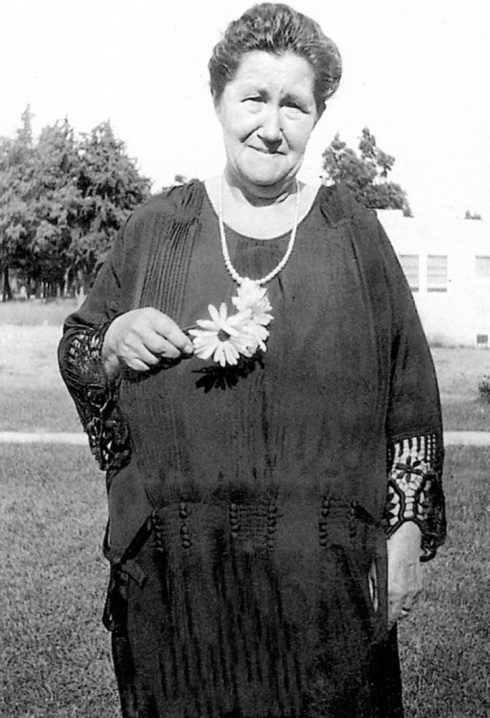
This is my grandmother’s grandmother, Cora (1856-1952). She grew up as a pioneer girl who lived with a fear of marauding Indians to the very end of her life. In her old age, she loved candy and spoiling her granddaughter, making handmade doll clothes and putting away pretty items for her hope chest. For a section of my childhood, I was convinced that I was Laura Ingalls and went nowhere without my checkered red dress and sunbonnet. I still treasure the doll clothes that my own grandmother made by hand. I wonder if echoes of personality can reverberate across generations. 

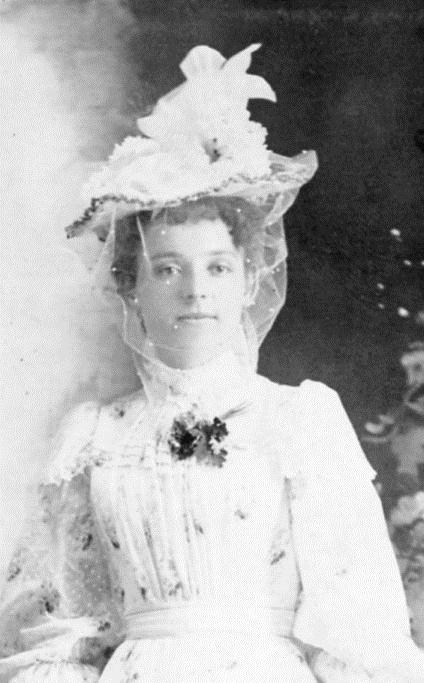
Great-grandmother Ada (1872-1962) was an educated working woman before the turn of the century. A seamstress by trade, she probably made this dress/hat she is wearing in her wedding photo. Married “late” (age 24!), she was a good listener and loved to read. As a gift, she gave my grandmother a diary which she kept daily through high school. I now have a copy. Perhaps there’s a bit of physical resemblance between us, too?

It is good to have history. It is good to be a part of something greater than yourself. I am blessed not to be a chapter without a prologue.

What is your family story? Do you know anything of your roots? 

Writer/Editor

My business card says Alina Sayre, Freelance Writer/Editor. 
It doesn’t say that those two halves of my brain have separate personalities. 
But before you ship me off to the asylum with multiple personality disorder, I’d like you to meet them. 
The writer in me is named Cordelia, after Anne from Anne of Green Gables by L.M. Montgomery (played by Megan Follows in the 1985 film). At her first meeting with her new guardian, Marilla, eleven-year-old Anne introduces herself this way:

“Will you please call me Cordelia?” she said eagerly.
Call you Cordelia! Is that your name?”
“No-o-o, it’s not exactly my name, but I would love to be called Cordelia. It’s such a perfectly elegant name.”
Cordelia is a dreamy, imaginative person with plenty of capacity for feeling and believing. She watches the habits of people and observes the world with eyes hungry for detail. No nook or cranny is too obscure to find wonder there. Sometimes she gets carried away with wild schemes, like dyeing her hair green, or flies into unexpected rampages, but overall she is a poetic and reflective person. She lets beauty “soak into her soul” and makes up stories about herself, her family, the neighbors, and any interestingly unsuspecting person. Consider yourself warned.
The other half, Madame Editor, is a middle-aged Victorian woman named Aunt Josephine (played by Meryl Streep in the film version of Lemony Snicket’s A Series of Unfortunate Events). Her watchword is:
“Grammar is the greatest joy in life, don’t you find?”

Aunt Josephine’s idea of a good time is an afternoon spent adjusting commas in accordance with The Chicago Manual of Style (16th ed., of course). She flinches at the improper use of their/there/they’re and goes into raptures over a sentence that diagrams correctly. Her ideal man is one who says, “Why…grammar is the number one, most important thing in this here world to me” (even if he turns out to be a sham fisherman). 

How these two people co-exist inside my head is a mystery to me. They certainly don’t get along very well. Both are high-strung and occasionally fly into a temper when their opinion is contradicted. I’ve learned that the key to a happy mental life and successful writing sessions is to keep them apart. Do not cross this line. Do NOT cross this line. 

When I’m writing, usually Cordelia gets to come out first, because Aunt Josephine isn’t actually very good at coming up with original sentences. Cordelia, by contrast, could gush out words until the moon turns blue. With over 500,000 English words to choose from and an innumerable number of life observations and human subjects to choose from, she can imagine herself into any world she chooses at any time of day. But eventually it’s time for her to come away from the keyboard and give someone else a chance.

Then Aunt Josephine comes out to play. While she may look like an ogre as she ruthlessly slashes away, cutting out whole words, sentences, and paragraphs, she actually has a huge respect for writing and language. She simply believes that language forfeits its full power if it is overused or improperly used. Brevity is the soul of wit, and good grammar doesn’t hurt either. Sometimes she bosses Cordelia into submission, but when the dust settles, they usually agree that the end manuscript is better for their joint efforts. 

I saw a cartoon where a pencil point and its eraser were having dinner together. On the phone, the pencil point says, “Can I call you back? I’m having dinner with my editor.” Life in my brain is like that. As long as the two halves of the pencil work separately and respect each other’s abilities, they continue to co-exist safely and (sometimes) happily.


Does your brain have multiple sides to it? How does it help or hinder your creative process?

Brave

My novel’s characters are getting braver. 
In college, I had a writing professor who continuously told me that my stories needed more conflict, that nothing happened in them. 
I didn’t tell him that that was because I’m terrified of conflict. 
Free image courtesy of Stuart Miles/FreeDigitalPhotos.net
Actually, I’ve spent most of my life tiptoeing around other people’s disappointment. Conceding. Scrambling to deliver. Shying away from honesty about my needs, feelings, and limitations. 
As I revise my novel, I’m seeing that fear in my characters. In my last draft, they’d get frustrated, feel beaten down, get worked up almost to the point of an argument–and then dodge, preferring to dwell inside the safety of their own heads. 
Not in this draft. Not as much, anyway.
In the last month of my life, it seems as if opportunities for conflict have abounded. Mounting stress and limited energy have sometimes left me in a corner, with no choice but to say “no” or crumble. 
Turns out, though, that “no” can feel pretty good. (This video about “no” makes me laugh.)
“NO” is one of the hardest words for a people-pleaser to pronounce. WHAT?? I’m NOT Superwoman??!! 
Guess not.
People aren’t always going to be happy with me. It’s not always good for me to say yes. It’s not always possible. And that’s OK. Even if it makes people mad on occasion. The people who really matter will stick around, love me even when I’m not perfect.
And guess what? It’s even OK for me to ask other people for help sometimes, too! Wonders abound. 
While I was at camp this past week, volunteering as a counselor, I had the chance to walk a prayer labyrinth: an interactive tool for meditation that involves prayer in motion. As my feet walked, one in front of the other, in between the double line of stones, I got such a picture of what it means to set limits. All I can do is walk between my rocks. They’re my boundaries. I can’t control what goes on beyond them. I just need to keep walking in a lane just wide enough for my feet. Those are my limits. And it’s OK to let other people know I have them.
Touchstone Maze
 © Copyright Carol Walker and licensed for reuse under the Creative Commons License 
Sometimes that means conflict.
And conflict…I guess…can actually be a good thing. Admitting that has given me such a boost of confidence.
I’m still not great at this whole say-no thing. I end up folding a lot more than I’d like to admit. But at least I don’t get nauseous anymore when I’m trying to write an argument scene. Not usually. 
My characters are learning right along with me to step up and slap conflict in the face rather than tiptoe around it. 
And here’s a sneak peek at the results. 

“Can I help too?” Vivian asked eagerly.

“You?” Captain Daevin laughed. “Help with carpentry? It’s awfully dusty work, and you’re in this charming dress. Leave the men’s work to the men. Don’t fret your pretty head about it; you probably couldn’t follow the calculations anyway.”

She whirled on him.

“I beg your pardon? At the Library I was raised to Scholar Sixth Level in half the usual time. I can read in eighteen languages, and I most certainly will not leave this work to the men! What do you think I am; a painting on the wall, existing only to be admired? Thank you, sir, but I have no fear of a little dust, dress or no dress. Here.”

She thrust her straw hat into his hands and turned her back on him, her face flushed, eyes blazing. 

“Now, what can I do to help?”

Slack-jawed, Jude handed her a hammer and a bundle of nails. Captain Daevin, still blinking in surprise, backed out of the room, her hat still in his hands. 

Turning Down the Heat

You may wonder where I’ve been this week.

I’ve been learning to rest. 
Workaholism, I read somewhere, is a drug just like nicotine or caffeine. It’s a stimulant we use to hide our exhaustion, our depression, our frustration. It keeps us busy so that we don’t have to think about what’s going on below the surface, what’s wrong with our pace of life. 
But it’s only a temporary fix. The busyness only keeps a lid on life to a certain pressure point. After that, all the junk we’ve been sitting on–anxiety, estrangement, dissatisfaction, disappointment, uncertainty–overflows like a boiling pot of spaghetti that explodes in a sizzling deluge all over the stove. 
So if overworking, outrunning our problems is only a mask, how do we deal with them? How do we keep our internal pots from boiling over? 
I still have a lot to learn on this topic, but I took a few days this week to intensively focus on these things. Unlearning old habits is hard, but impending burnout is good motivation. These tips might seem obvious from the outside, but it’s amazing how effective they are when you really put them into practice!
1. Don’t turn on your computer and cell phone until you’re ready to make contact with the world in the morning. You can’t control the volume of calls and e-mails you receive in a day, but you can set some times that are technology-free. It relieves stress and restores some quiet times of focus.
2.  Make a new to-do list every day on a separate post-it or paper. Make it detailed, including all the tasks you expect of yourself in one day: Get up. Eat breakfast. Fold laundry. Then enjoy the satisfaction of checking items off and throwing away the list at the end of the day. If you didn’t finish every last thing, it’s OK: you’ll have a fresh one tomorrow. This kept me from feeling disappointed about what I didn’t accomplish during the day and helped me to realize all that I did. (It also kept me from committing to more things than I could fit on one page.) 
3. Include time for rest in the day. Spend a half-hour or an hour curled up with a book, watching your favorite TV show, taking a nap, or cuddling with pets. I found myself working more energetically, cheerfully, and efficiently during the day when I took a break somewhere in the middle. 
4.  Don’t sign up for too many things. It’s better to do each activity of your day with enjoyment, margin time, and time to stop and appreciate people than to try and cram 50,000 things into 24 hours. Say no when too many tasks threaten to overwhelm you. 
5. Surprise your family (or whoever you live with) with little, spontaneous acts of love, affection, and service. Empty the dishwasher. Bring in the garbage cans. Leave encouraging notes. When you have fewer things crammed into your day, it’s easier to find time for this, and it helps reduce your loved ones’ stress load, lifting the overall mood of home. (You’d be surprised how this comes back around, too!)
What are your secrets for setting boundaries in your life? How have you learned to pace yourself and rest? 
I’ll be out of town this coming week, so look for my next post on August 6!

Cleaning Out

For some reason, summertime always ends up being clean-out time in my life. None of this spring or fall cleaning business. Summer rolls around and I get the instinct to reset my environment, sort through the junk and piles–at least partially.

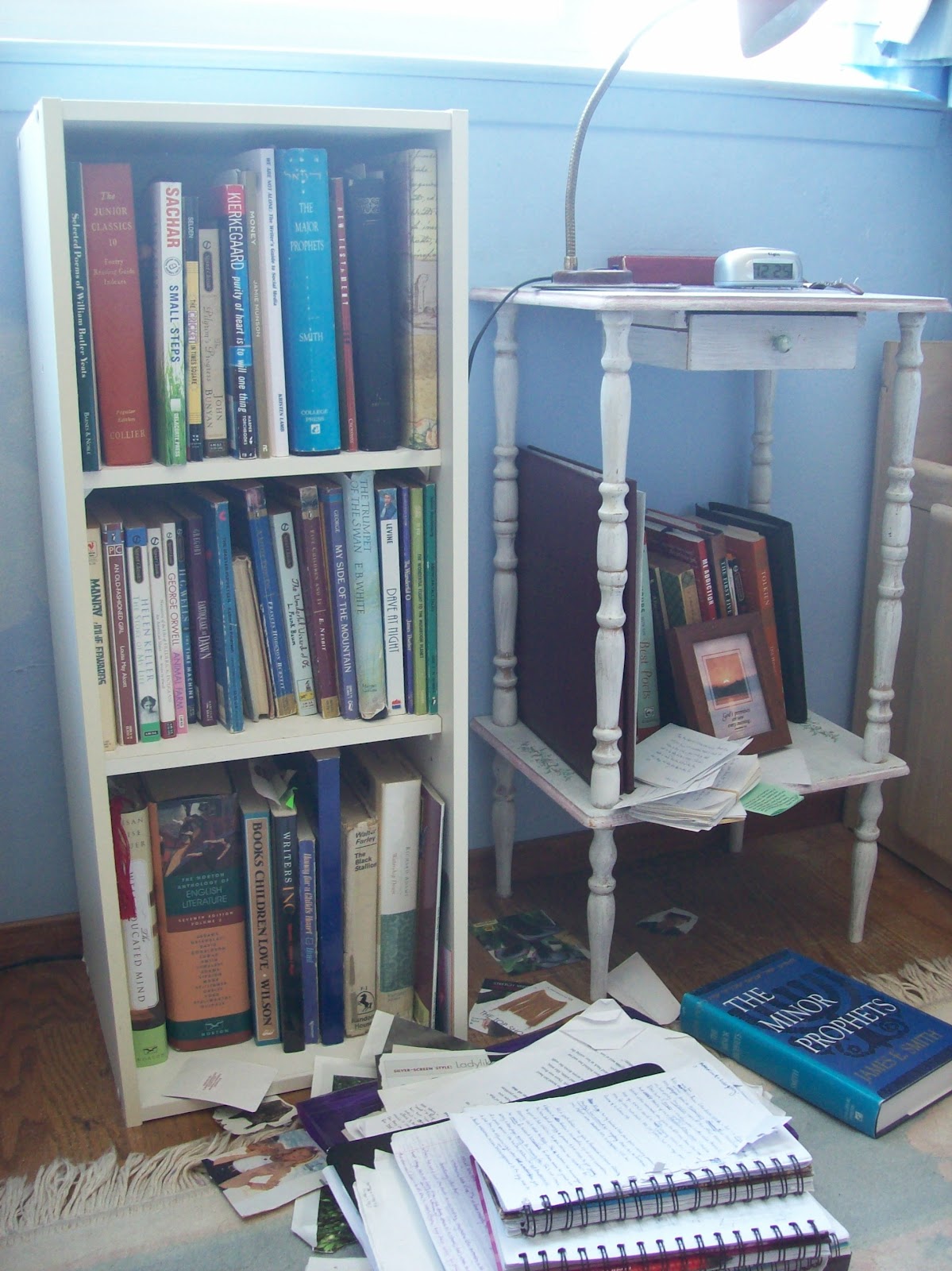
Some things are hard to clean out, especially books and papers. That’s why my room/office sometimes looks like this:


I’m a word person, and words are special to me. That means I keep old letters, journals, and books. (Sometimes it also means I have newspaper ads from 5 years ago…)

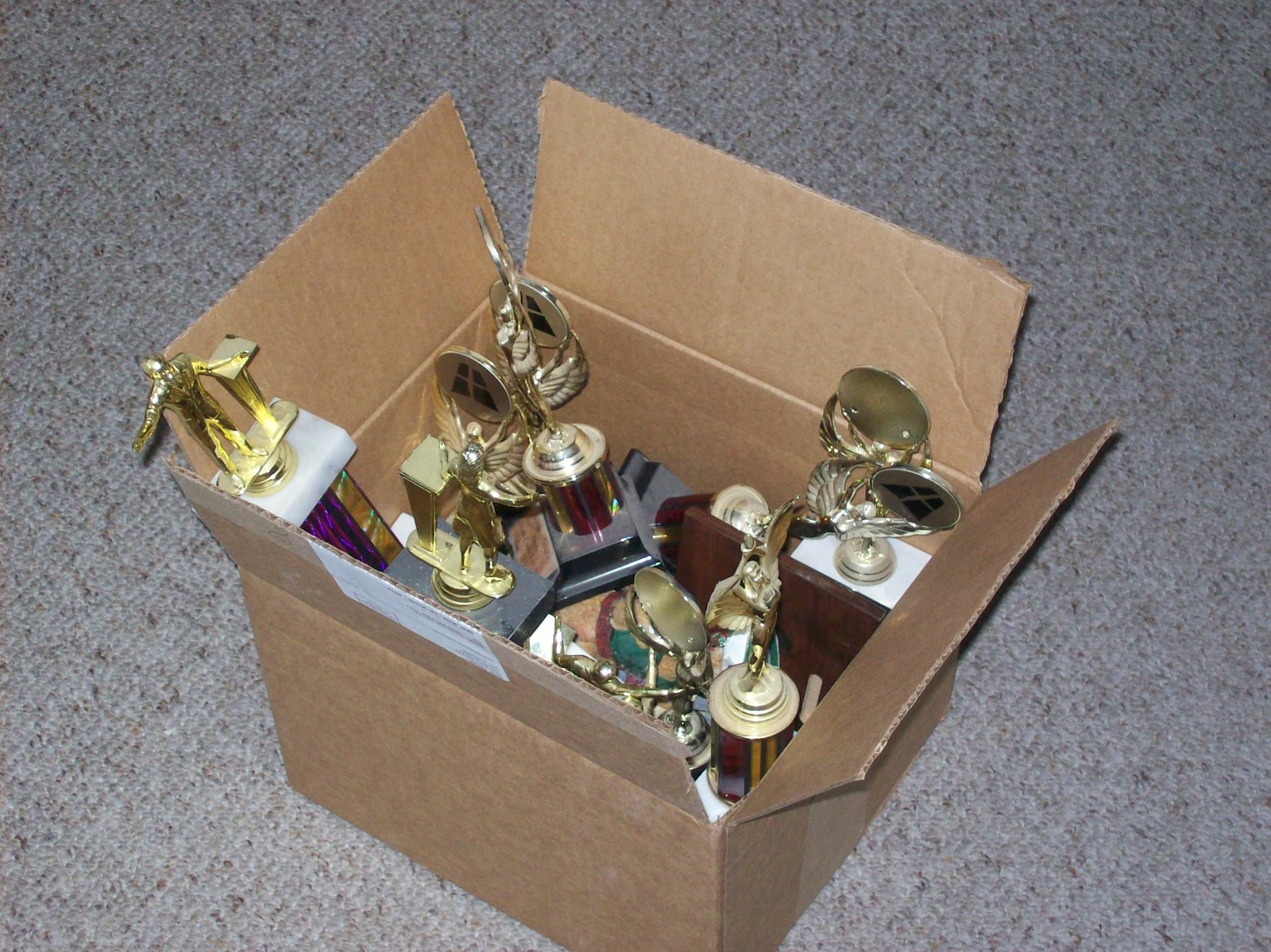
But there’s one collection of things that I recently found was much easier to throw out than I thought it would be: my high school speech and debate trophies. My mom, eyeing them gathering dust on the shelf, coolly suggested that I look through them. In under ten minutes, most of them had ended up in a cardboard box headed for the garbage.


I was surprised to feel so little attachment. At those weekend-long speech and debate tournaments, we students lost sleep, skipped meals, battled nerves, developed grudges, and drove hundreds of miles to turn our countless hours of practice into one of these trophies. Shiny affirmations of our excellence, they brought fifteen delicious minutes of fame in front of cheering friends and flashing cameras, plus bragging rights. 

Six-plus years later, I didn’t remember where most of these trophies came from. When I hustled them off the shelf, they looked just like what they were: plastic and dust. I actually laughed a little at how nervous I used to be, hoping to make it to semifinals, finals, the awards platform. I was suddenly really, really glad that I spent my time in high school working for other things as well: public speaking skills, the practice of giving glory to God, strong friendships. These things remain useful and valuable to me almost every day of my adult life.  

Of course, I did keep a few trophies–a few pieces of plastic that reminded me of special moments. A First Speaker award from a debate tournament where all the other competitors were pre-law-school boys. A cup from the national tournament where I dragged my giant portfolio of visual aids onto the airplane as my carry-on. A first place trophy from my 18th birthday, where an auditorium full of people surprised me by singing Happy Birthday to me on the awards platform. But I kept them because they’re memories, not because they’re trophies. 


Anyway, my room still looks like a mess, so I’m signing out. Throwing out trophies just reminded me how much I want to spend my time now working for things that will last, that will still matter even when all the microcosmic stress and work is done. 

So I’ll cherish the old rugged cross
‘Til my trophies at last I lay down
I will cling to the old rugged cross
And exchange it someday for a crown.
~George Bennard, ‘The Old Rugged Cross,’ 1912

Braveheart, Camels, and a Baby Announcement

Back in January, I blogged about my top 5 goals for 2012. Along with reading through the entire Bible, finishing my novel, and reading Gone with the Wind, one of my goals was to be able to buy a car. 


Part of being accountable for goals is reporting on your progress.


So I think it’s time you knew…

~Introducing~ 


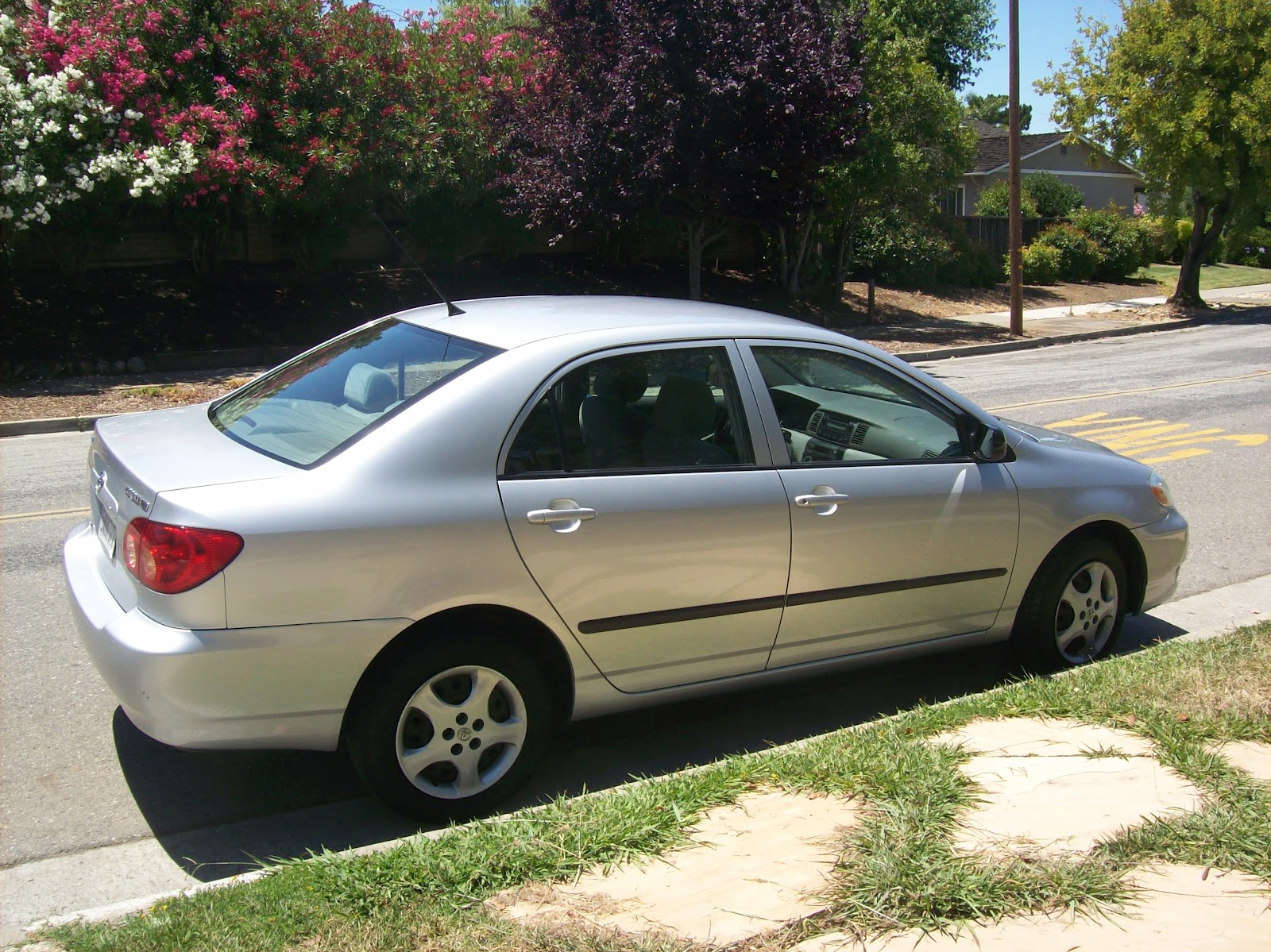
Name: Toyota Corolla 
Weight: 2530 pounds
Length: 173.8 inches
Age: 6 years
Mileage: 92k
Personality: Amazing


That’s my baby (post title got ya, didn’t it?) As you might guess, I’m pretty excited. 

I’ve learned so much about mechanics, business, and stewardship throughout the search and purchase process. But all cylinders, gauges, gears, hoses, and gadgets aside, a car is so much more than a box on wheels. 


To put it in the words of Captain Jack Sparrow:


“It’s not just a keel and a hull and a deck and sails. That’s what a ship needs. But what a ship is–what a ship really is–is freedom.” 


It’s come in different forms throughout history: a horse, a camel, a buggy, a bicycle, a stagecoach, a Model T. But getting your first one opens up whole new horizons. The opportunity to go new places, accept new work, and expand your reach is a timeless experience. 

It feels like progress, it feels like love, it feels like…

Do you remember getting your own first car/mode of transportation? What was that first taste of freedom like for you? 

Definition: Twentysomething

I’ve had a lot of conversations lately where people I haven’t seen in a while stop talking. They look at me. They squint. Then they go, “You’re not in college anymore, are you?”

Nope, Toto. Not in college anymore. 


In fact, I’ve passed the 1-year mark since college graduation. I have over 12 months of experience living in the “real world.” And the topic of twentysomethings, “boomerang kids,” and the new, extended adolescence keeps coming up in conversation. Adults of the last generation often shake their heads when I tell them I’m living at home, cobbling together freelance English work. “That’s not how it was when I was growing up,” they say. “Kids moved out to go to college and never came back.” 

And we twentysomethings look at each other in desperate frustration. 

The thing is, we’ve been handed a different world than the one our parents grew up in. With digital technology making many human-powered industries obsolete and a global economy that’s in the tank, many of the jobs our parents inherited no longer exist. Opportunity has looked in the mirror and found itself slimmer. 

Life between college graduation and age 30 has always been fraught with decisions. But in this day and age, it’s even more charged with expectations and anxiety. Being a twentysomething can feel like setting out on a cross-country roadtrip with only a city map (or spotty satellite signal, if you take your GPS). You’re young, a little stupid, pretty naive, and doing ping-pong between immense enthusiasm and deflating depression. Most of your life experience comes from hearsay. And yet the decisions in these pivotal years set the course for the rest of your life. I find this quotation by Soren Kierkegaard, Danish theologian and one of my most-admired authors, very true: “Life can only be understood backwards, but it must be lived forward.” 


This is the time when soap-bubble dreams, spacious and unlimited, start to pop or settle down into the more tangible, more limited suds of reality. To choose your life’s course, you want to be a little informed about what you’re supposed to be doing here…what life is about…how to be happy and find meaning on a road that can feel confusing, dangerous, and sometimes disappointing. 

So what do you do with a time when it feels like you’re blindly charting the course for the rest of your life? 

Meg Jay, a clinical psychologist writing for the LA Times, pounces on this decade of frustration and anxiety to scold twentysomethings for not growing up at a satisfactory pace (you can read the whole article here). Stop acting like kids and start passing the milestones that will make you an adult, she says.

And what are those milestones? “Make money, get married, buy a house, go to graduate school, start a business, save for college and retirement, and have children.” 

So life is about making money and wearing a ring on your left hand? Whoops. 


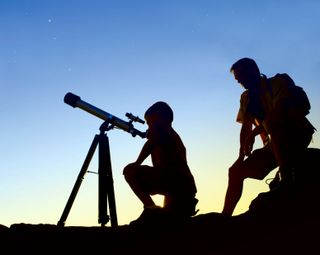
An article by economist John Kay paints quite a different picture of purpose (read it here). Forget racking up a fat bank account or having 10 kids. He says that happiness is reached only by a principle he terms “obliquity.” It’s like looking at faint stars: when you aim your eyes directly at them, they disappear from your vision. But when you look just to the side, focusing on something else, you can see them quite clearly. 

Kay quotes John Stuart Mill in saying that “aiming thus at something else, [happy people] arrive at happiness along the way.” To be happy, to enjoy this space of years we are granted, we need to not make “being happy” our goal. We must aim at something bigger than ourselves, bigger than our finances, our relationships, our legacies, in order to truly hit on what matters, what will satisfy the big, dark, frustrated hole inside most twentysomethings. 

Son-dad-stargazing

Not that finding love or having a savings account can’t be part of that bigger goal. I caught an episode of the show “Secret Millionaire” last night and was inspired to see the enormous power for good in the hands of people blessed with wealth. But buying a house and saving for retirement aren’t like the hokey-pokey: they’re not what it’s all about. 

Kind of a paradox, isn’t it? In order to really be satisfied with life, we have to lose ourselves in working for something bigger. We’re whole only in self-forgetfulness. Jesus said almost just that: “Whoever wants to save his life will lose it, but whoever loses his life for me will find it.” 

So yes, I’m a twentysomething, a year out of college, still living at home, learning how to make a living by my pen. But ask me what I’m doing that’s bigger than myself. Who knows? I might even ask you the same question. 

Flying Books

Well, I’ve got my nose to the grindstone in the midst of book-writing, proofreading, and tutoring, so today this video is going to do the talking for me 🙂 
This animated movie, produced by Moonbot Studios, won the Academy Award for Best Short Film. It’s entitled The Fantastic Flying Books of Mr. Morris Lessmore. Moonbot’s website describes it as “a love letter to books…about the curative power of story.” 
Interesting, because it’s wordless. 
Enjoy!

What do you think? How did you react to this film?

Cracks in the Floor

Last Thursday I went hiking with one of my dearest friends. We have a favorite trail that takes us through four miles of hill country, but the highlight is the lake at the halfway point. Jade-green and hidden by hills until you’re almost on top of it, it’s always a spectacular sight, like a snippet of the Amazon in California.

This time, though, there was something extra-special about it. A whole flock of seagulls (inexplicably far from the sea) was camping out on the water. Then, as one body, the flock rose into the air, fluttering on wings that “gleam and dart,” as W.B. Yeats would have it. Moving like an airborne whirlpool, they formed a column of light and air over the lake. Something about that moment–the surprise sight of so many birds in an unexpected place, their movement in perfect unity, the way their half-translucent wings caught the light–was unspeakable. It was like a glimpse of the Old Testament’s pillar of cloud, the visible presence of God that guided the wandering Israelites through the desert.

The sight got me thinking about such moments, moments that jump the gap between heaven and earth. Life here isn’t perfect by any stretch of the imagination. The road is peppered with suffering, unfairness, betrayal, fallings-short. But more than any rational argument or logical progression, it’s beautiful moments like these that make me certain that there is a God–a God of tenderness, breathtaking beauty, and an astounding imagination. C.S. Lewis called these moments “joy.” I like to think of them as cracks in the floor of heaven.

I caught sight of another one the weekend before. I spent the weekend in Seattle, driving down to the Portland area for the wedding of a former roommate and dear friend. Though there was a lot of preparation and clean-up work involved, when all the cheese cubes were arranged and the dozens of chairs unfolded, the wedding was beautiful. One of the things the bride and groom did during the ceremony was braid a three-stranded cord to symbolize the intertwining of their lives with each other and with God. Watching a friend step out in love and faith to make a decision that will last a lifetime, transforming before my eyes from an individual into a couple bound together for life was one of those moments that was piercing in its shock, its newness, and its beauty. 

That continued as they danced their first dance, sometimes uncertain in the steps, but completely oblivious as they rocked in their own world. Human love is one of those mysteries that leaves us curious, wondering, and feeling the eternal echoes reverberating within. Clearer even than a swirl of white birds over a hidden lake, it’s one of those things that stops us in our tracks and hushes our words. Those moments are enveloped in bubbles, untouched by the incompletenesses and disappointments life can bring. They make us pause, look up, and catch a glimpse of light sparkling through the cracks overhead.

What cracks in heaven’s floor have you caught sight of lately?